
How to Add Warmth to Your Home Without Redecorating
Posted by Ava Johnson on 24th Aug 2026
How to Add Warmth to Your Home Without Redecorating
A home doesn’t need a complete makeover to feel fresh, warm, and inviting. In fact, some of the most welcoming rooms aren’t the ones that have been perfectly decorated all at once. They’re the ones that have evolved over time, filled with pieces that have found their place through everyday living.
If a room is feeling a little flat or unfinished, the instinct may be to start shopping for something new. But before you replace furniture, repaint the walls, or rethink your entire decorating scheme, take another look at what you already have.
Before you redecorate, restyle.
Moving a favorite chair, bringing forgotten pieces out of storage, rearranging a coffee table, or simply making a room feel a little less staged can have a surprisingly big impact. The goal isn’t to add more. It’s to create a home that feels comfortable, personal, and collected.
Here are a few simple ways to add warmth to your home without starting over.
Rearrange Before You Replace
One of the easiest ways to change the feeling of a room is also completely free: rearrange it.
We naturally become accustomed to seeing our furniture in the same place. After a while, it can be difficult to imagine a room any other way. But even small shifts can change how a space feels and functions.
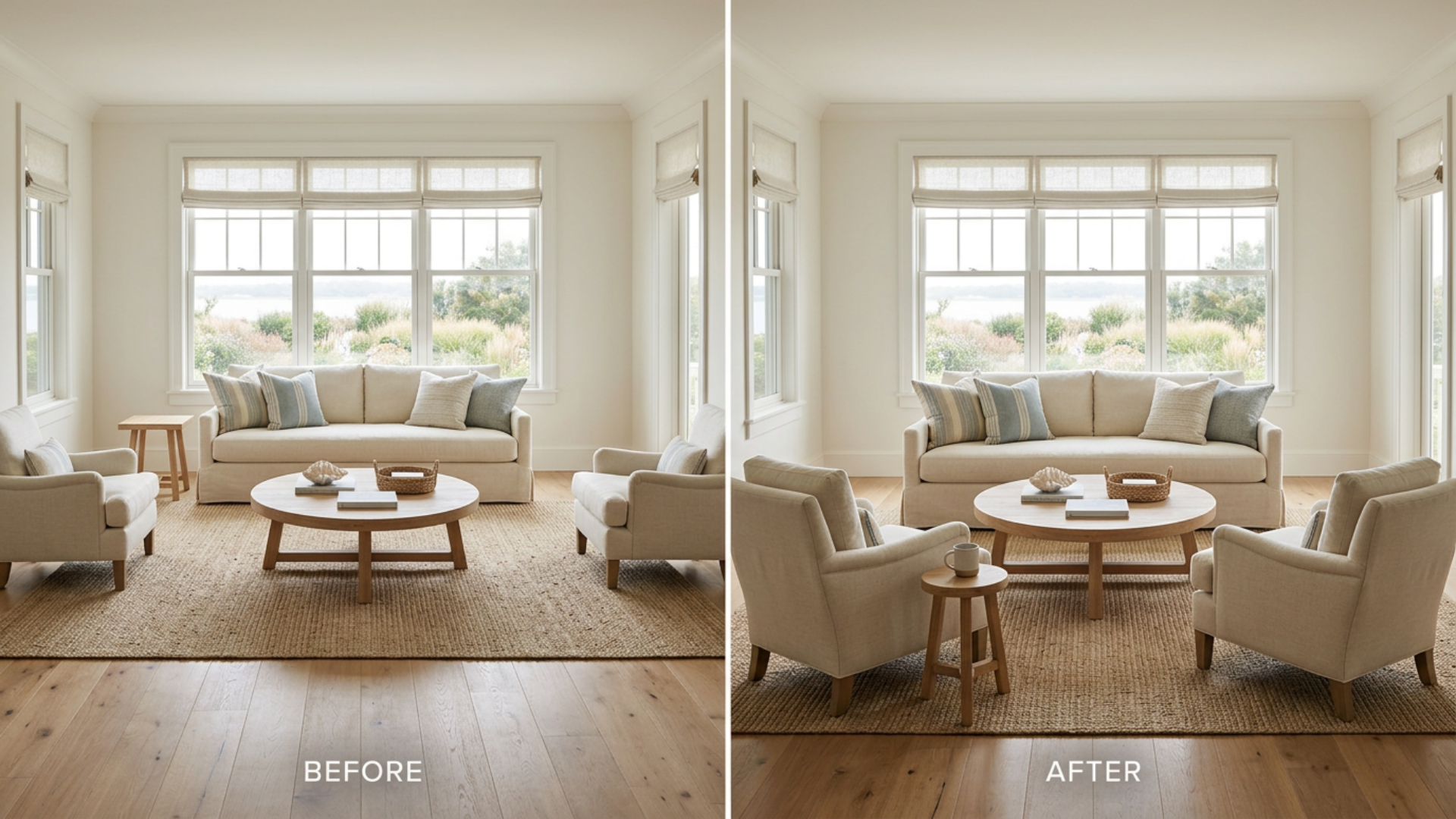
Start by looking at the room as a whole. Does all of the furniture hug the walls? Could two chairs be pulled closer together? Would an occasional table be more useful beside a favorite reading chair? Could a bench currently sitting in a hallway work beautifully at the end of a bed?
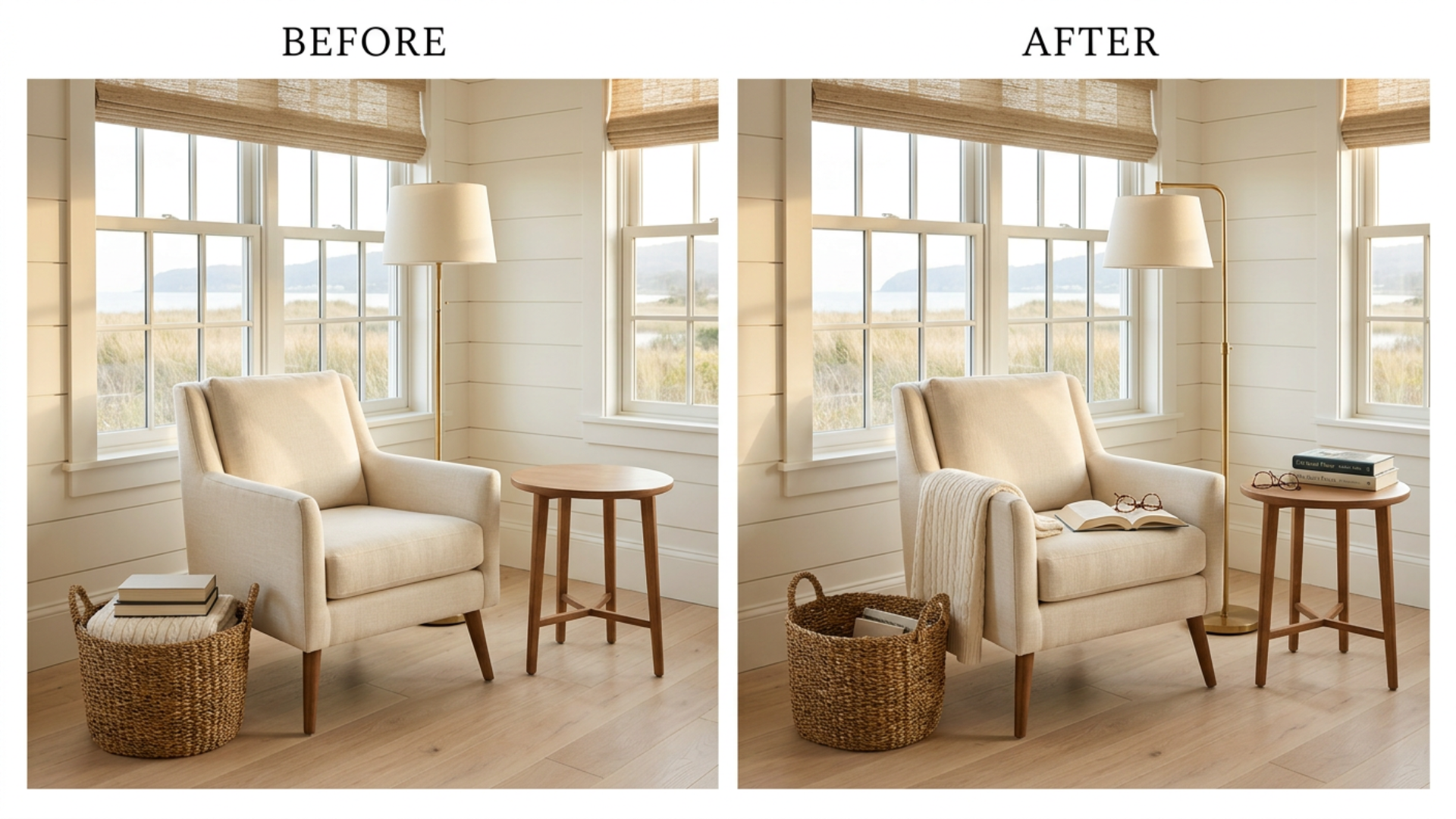
Try creating smaller moments within a larger room. A chair, small table, and lamp can turn an unused corner into a comfortable place to read. Pulling living room seating slightly closer together can make the entire room feel more intimate and conversational.
Don't limit yourself to moving pieces within the same room, either. Shop your own home. The small table in the guest bedroom might be exactly what the living room needs. Artwork from the hallway may feel completely different above a dresser. A bench, basket, lamp, or mirror can take on new life simply by moving to another space.
Before deciding that something is missing, experiment with what you already own.
Soften the Room with What You Already Have
There is a difference between a room that looks beautiful and one that makes you want to settle in and stay awhile. Often, that difference comes down to softness.
Instead of buying an entirely new collection of pillows, throws, or bedding, look at the textiles you already have and consider how you’re using them.
A throw folded perfectly over the back of a sofa may look polished, but casually draping it over the arm can immediately make the room feel more relaxed. Pillows don't need to be arranged with perfect symmetry. Mixing a few different sizes or moving favorites from one room to another can create a more natural look.
In the bedroom, turn down the duvet slightly to reveal the sheets and layers beneath it. Add a folded quilt from another room to the foot of the bed. In the living room, bring a basket of throws closer to the sofa rather than storing them away.
These are subtle changes, but they signal that a room is meant to be lived in.
The same principle applies throughout the home. Pull a chair slightly away from the wall. Leave a favorite book on the side table. Place a cushion on a bench. Let beautiful, useful things become part of the room rather than keeping everything tucked away.
Warmth often comes from allowing a little bit of everyday life to show.
Make Everyday Spaces Feel More Lived In
Some rooms can have beautiful furniture and still feel as though something is missing. Often, they simply need the smaller details that make a space feel personal and useful.
Think about how you actually live in each room.
If you like to have coffee on the sofa in the morning, a small table within reach makes the space feel more comfortable. If you read before bed, a stack of books on the nightstand feels natural rather than decorative. A tray on a coffee table can hold the things you regularly use while also giving the surface a sense of purpose.
Instead of decorating every surface, create a few thoughtful groupings.
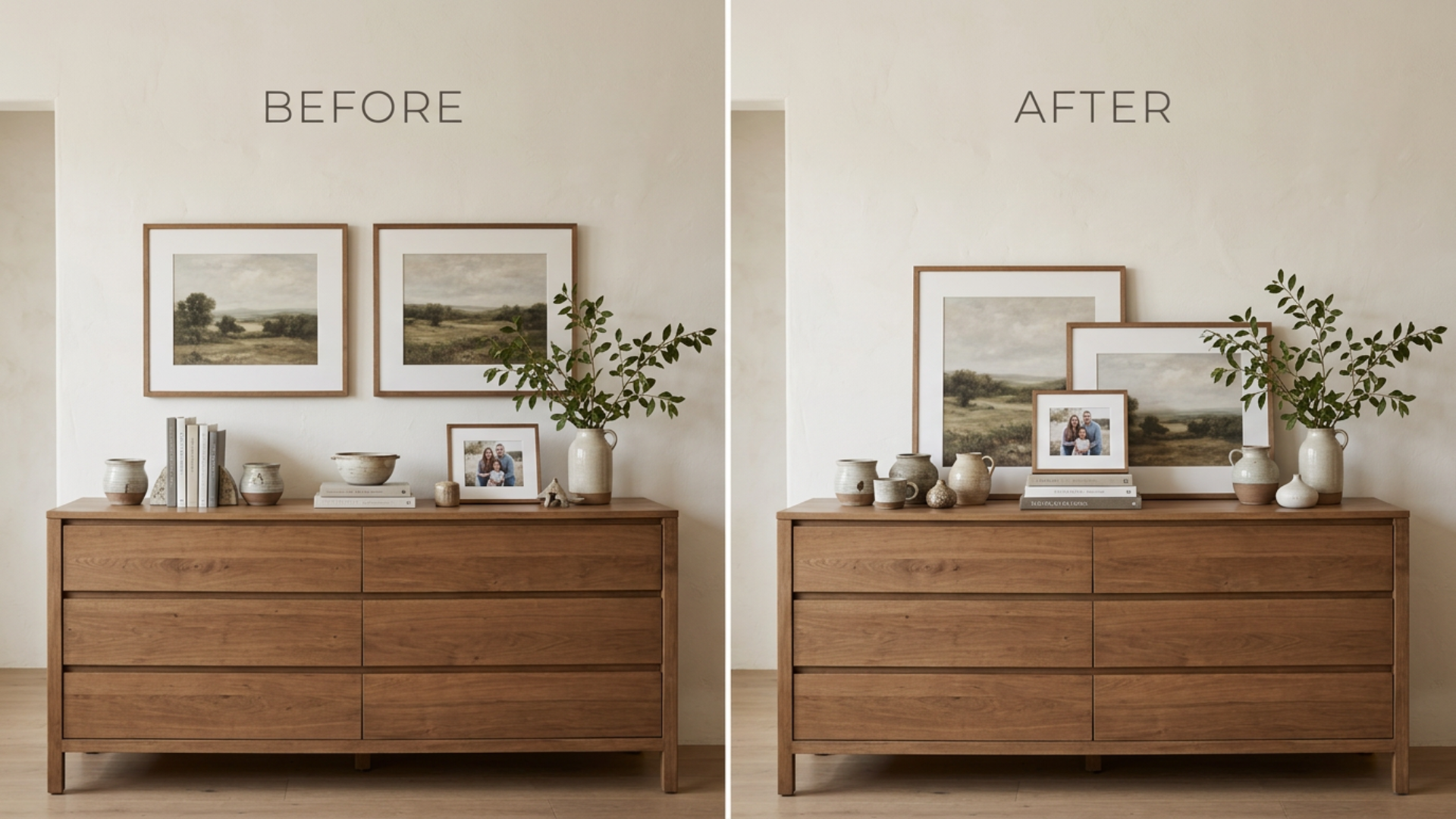
On a coffee table, that might mean a stack of books, a favorite bowl, and a small vase. A dresser could hold a lamp, framed photograph, and decorative box. A console might need only a beautiful vessel with branches and one or two objects you love.
Don't worry about making everything perfectly symmetrical or coordinated. A home often feels warmer when there is a sense that objects have been gathered over time.
This is also where function and beauty can work together. Baskets can hold extra blankets. A beautiful bowl can collect keys. A small stool can serve as both a decorative accent and an extra surface when needed.
When the things you use every day are thoughtfully incorporated into a room, the space begins to feel effortless rather than styled for appearance alone.
Bring Your Personality Forward
One of the best ways to make a home feel cozy and inviting has very little to do with decorating trends.
Surround yourself with things that tell your story.
That might mean artwork you've owned for years, photographs from a favorite trip, books you return to again and again, a piece inherited from family, or something you discovered while traveling. These pieces don't have to be valuable or perfectly coordinate with the rest of the room. Their meaning is what gives them character.
If your favorite objects are tucked away in cabinets or closets, bring a few back into view.
Try placing an old ceramic bowl on a stack of design books. Lean a small piece of artwork against the wall rather than hanging it. Frame a photograph you've always loved. Pair an inherited piece with newer furniture rather than feeling that everything needs to belong to the same period or collection.
The most interesting homes rarely look as though every piece was purchased at the same time. They contain a mix of old and new, refined and relaxed, decorative and useful.
That contrast is what creates a collected feeling.
Rather than asking whether every object perfectly matches your decorating style, ask whether it feels like you. A home becomes warmer when the people who live there are visible in its details.
Edit, Then Add
When a room doesn't feel quite right, our instinct is often to add something.
Another pillow. Another accessory. Another piece of furniture.
But sometimes the quickest way to create warmth is to remove a few things first.
Take a look at shelves, tabletops, and furniture arrangements. Is every surface filled? Are there too many small objects competing for attention? Is a room holding furniture simply because you've always kept it there?
Editing gives the pieces you truly love more room to stand out.
Clear a coffee table and add back only a few favorite objects. Remove one piece of furniture and see whether the room feels more open. Simplify a crowded dresser or console. Create a little breathing room around a beautiful chair, table, or cabinet.
Then live with the room for a few days.
You may discover that it doesn't need anything else. Or you may notice one specific gap—a darker corner that needs a lamp, an empty chair that could use a pillow, or a large bare area that needs something to ground it.
At that point, adding something new becomes intentional rather than simply filling space.
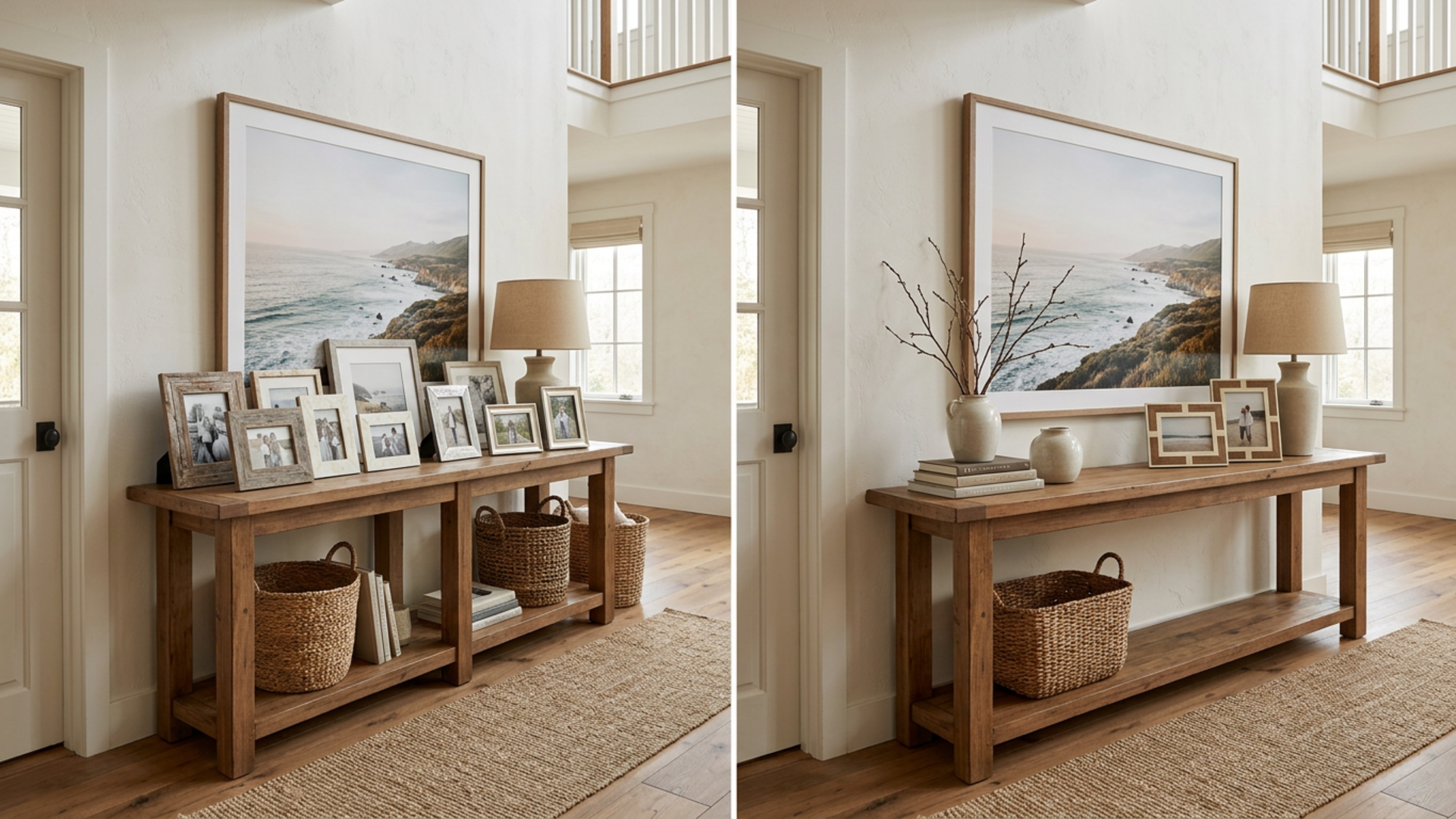
Before You Redecorate, Restyle
Creating a warmer home doesn't have to begin with a shopping list.
Start by moving something. Bring a favorite piece out of another room. Rearrange the books on your coffee table. Pull your chairs a little closer together. Drape a throw where you'll actually use it. Display something meaningful that has been tucked away.
Then give the room a little time.
The homes that feel the most inviting aren't necessarily the newest or the most perfectly decorated. They are spaces that have evolved naturally—where furniture, objects, and everyday comforts come together in a way that feels personal.
Before you redecorate, restyle.
You may find that the warmth you've been looking for was already there. It simply needed to be brought forward.