
How To Choose the Right Lighting for Every Room: A Complete Room-by-Room Guide
Posted by Ava Johnson on 22nd Jun 2026
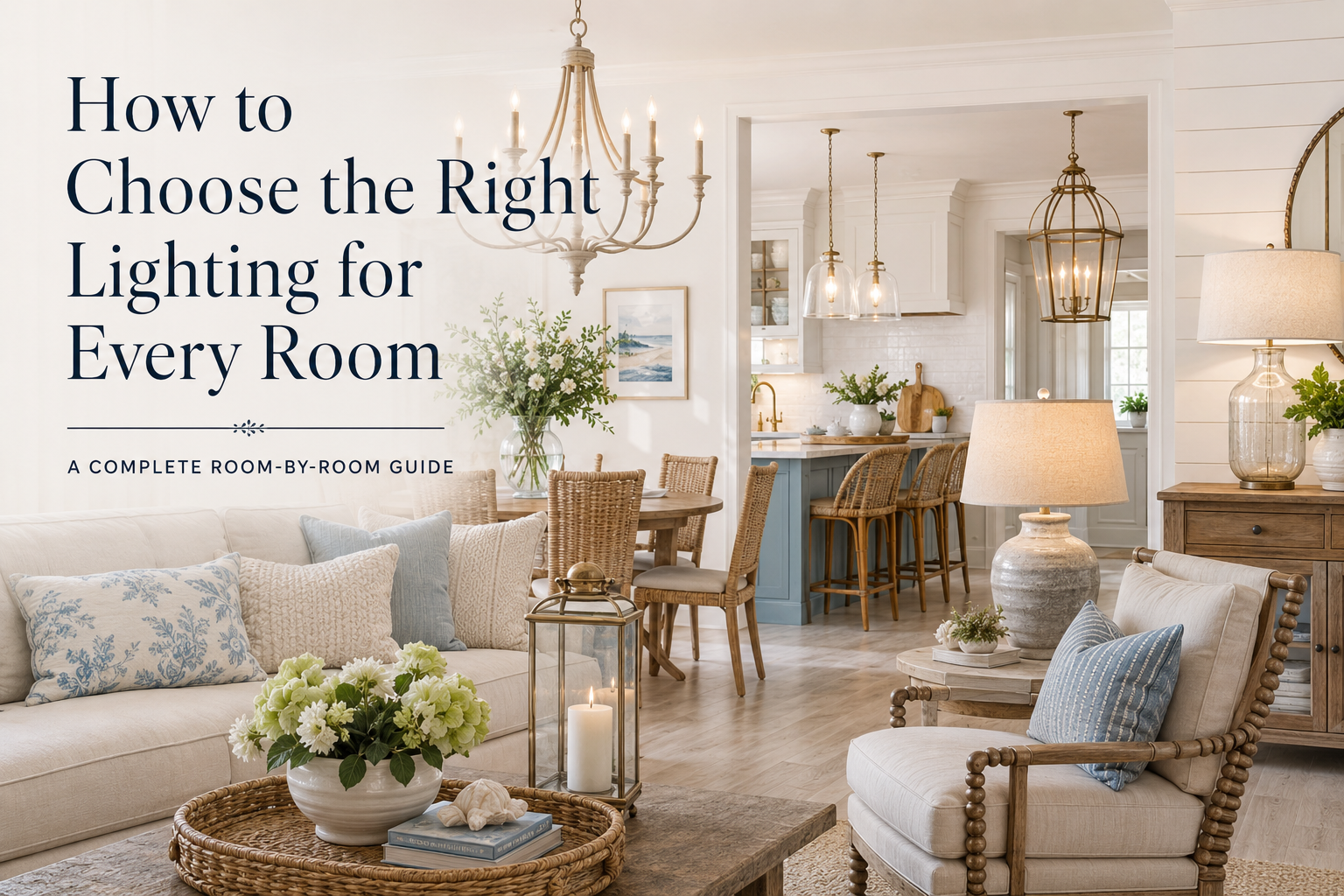
How to Choose the Right Lighting for Every Room: A Complete Room-by-Room Guide
Lighting does far more than illuminate a space—it sets the mood, enhances functionality, and highlights the beauty of your home's design. Whether you're furnishing a coastal retreat, a modern farmhouse, or a traditional family home, choosing the right lighting can transform how every room feels and functions.
The key is understanding that every room has different lighting needs. A kitchen requires bright task lighting, while a bedroom benefits from a softer, more relaxing glow. By combining the right fixtures with thoughtful placement, you can create a home that feels warm, inviting, and beautifully balanced.
In this room-by-room lighting guide, we'll walk through how to choose the right lighting for every room in your home.
Start with the Three Layers of Lighting
Before selecting fixtures, it's important to understand the three essential layers of lighting that designers use to create a well-lit space.
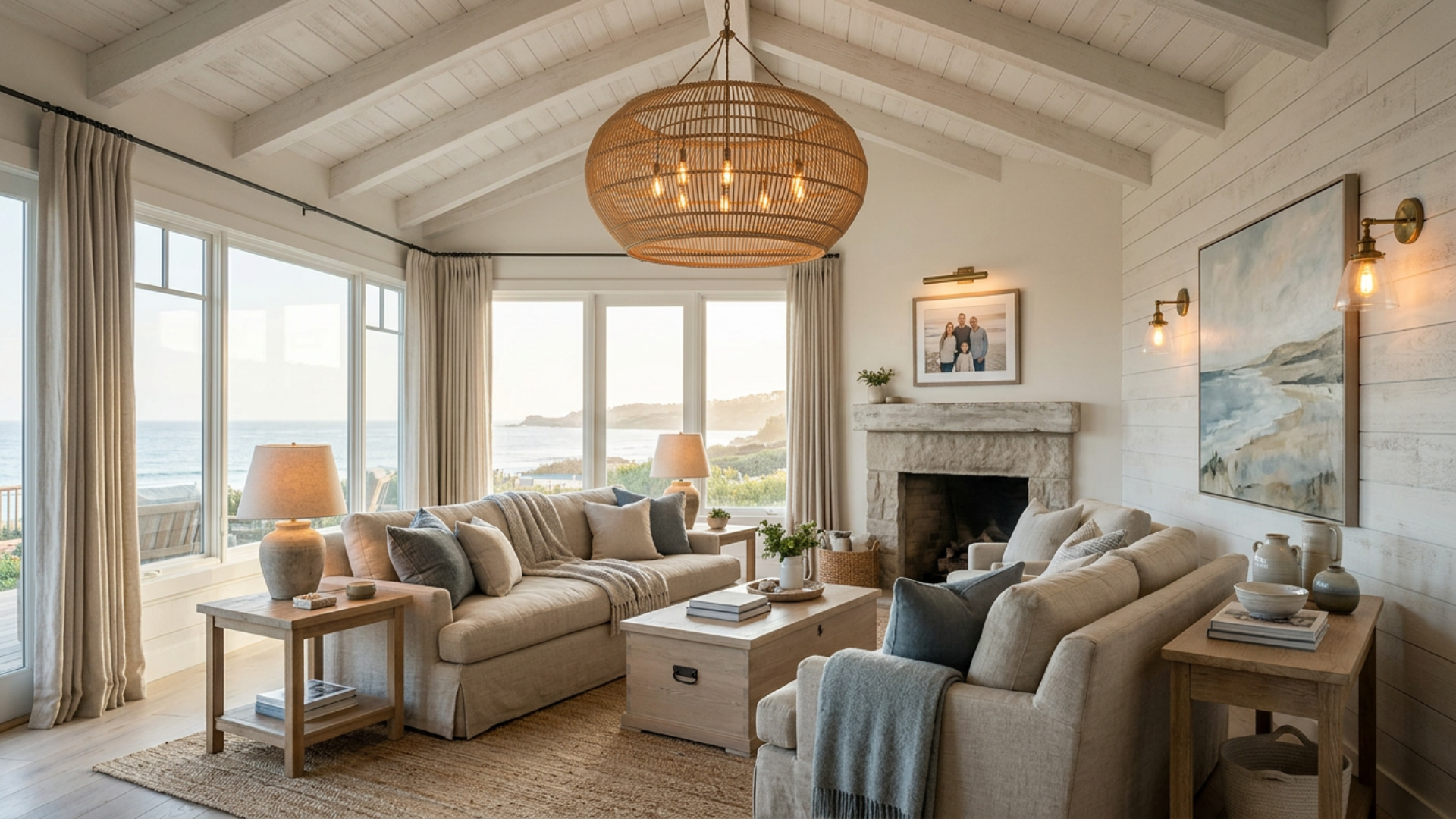
Ambient Lighting: Ambient lighting provides overall illumination for a room. This is typically your primary light source and may come from chandeliers, ceiling fixtures, recessed lighting, or lanterns.
Task Lighting: Task lighting is designed for specific activities such as reading, cooking, working, or applying makeup. Examples include table lamps, bedside sconces, pendant lights over a kitchen island, and vanity lighting.
Accent Lighting: Accent lighting adds depth and visual interest. Picture lights, wall sconces, and strategically placed lamps can draw attention to artwork, architectural features, or decorative objects.
The most inviting spaces incorporate all three layers rather than relying on a single overhead fixture.
Living Room Lighting Ideas
The living room is often the heart of the home, making layered lighting especially important.
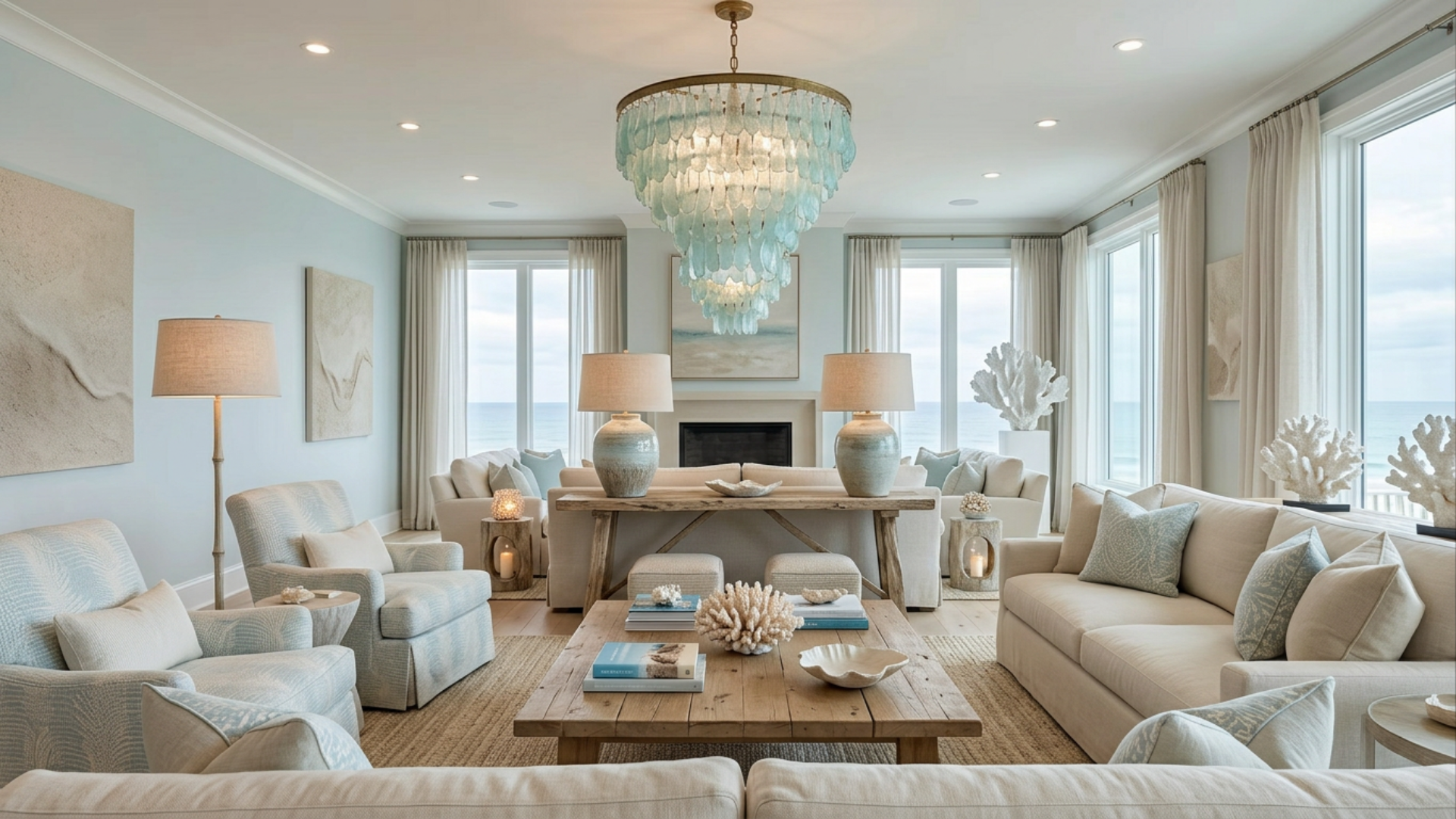
Start with an overhead fixture that establishes the room's overall style. In coastal homes, lantern-style chandeliers, woven pendants, and fixtures with natural textures create a relaxed atmosphere. Farmhouse interiors often benefit from classic chandeliers with wood or metal accents.
Once ambient lighting is in place, incorporate table lamps and floor lamps throughout the room. Position lamps near seating areas to provide comfortable reading light and create a warm glow during the evening.
A common lighting mistake is relying solely on recessed lighting. Adding decorative lamps introduces warmth and dimension that overhead lighting alone cannot achieve.
Living Room Lighting Tips
- Use multiple light sources throughout the room.
- Include dimmers whenever possible.
- Add table lamps to side tables and consoles.
- Scale chandeliers appropriately to the room size.
- Mix decorative and functional lighting.
Dining Room Lighting Ideas
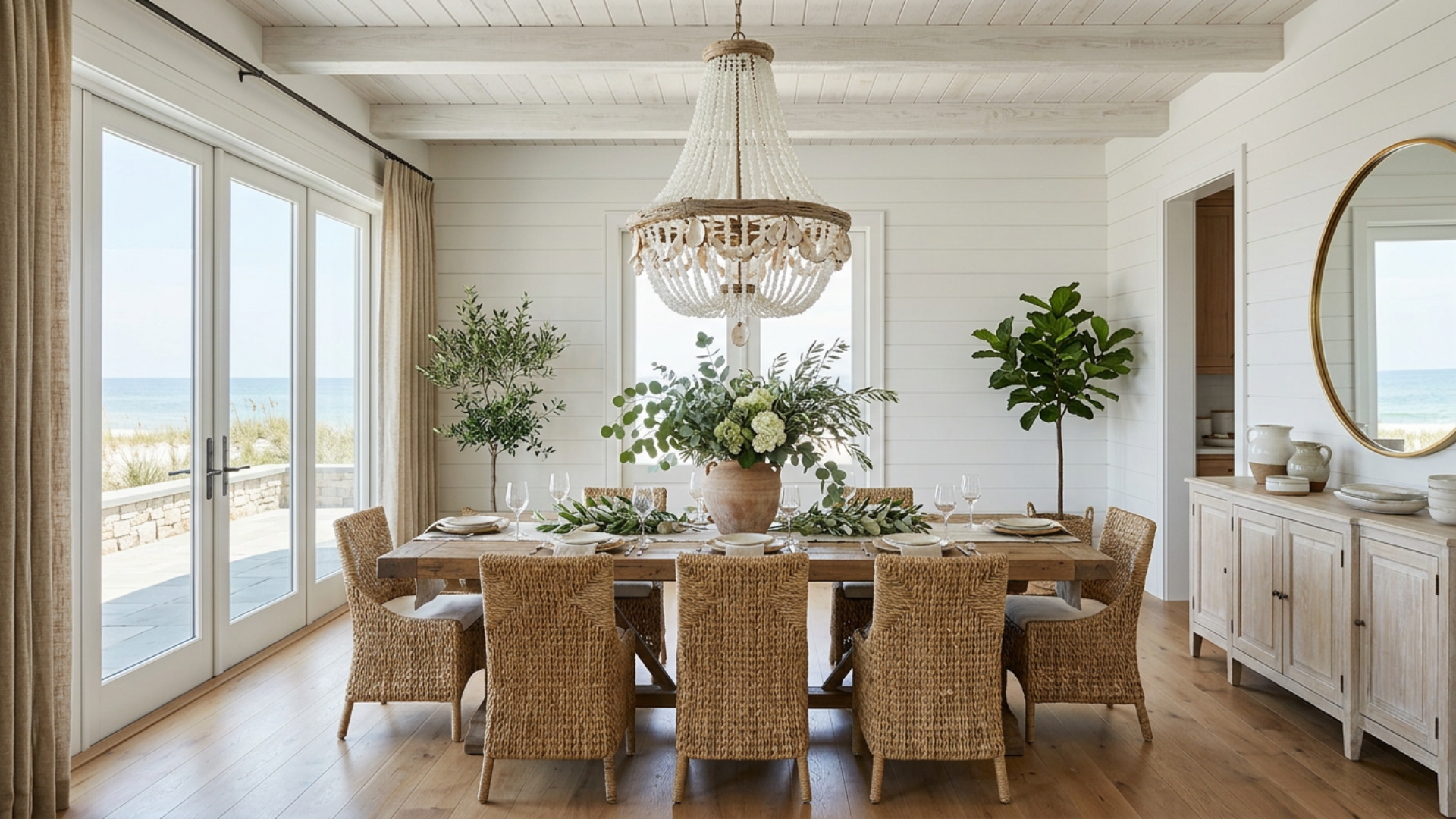
The dining room chandelier is often the focal point of the space.
When selecting a chandelier, size matters. As a general rule, the fixture should measure approximately one-half to two-thirds the width of the dining table. This creates visual balance without overwhelming the room.
Height is equally important. Most dining room chandeliers should hang approximately 30 to 36 inches above the tabletop in rooms with standard ceiling heights.
For coastal dining rooms, consider lantern-style fixtures, glass chandeliers, or natural woven materials. Farmhouse dining spaces often look beautiful with wood-and-metal combinations or traditional candle-style chandeliers.
To add warmth and ambiance, consider supplementing the chandelier with buffet lamps or wall sconces.
Dining Room Lighting Tips
- Center the fixture over the table, not the room.
- Maintain proper hanging height.
- Choose a fixture that complements the table's scale.
- Use dimmers to transition from everyday meals to entertaining.
Kitchen Lighting Ideas
The kitchen requires some of the most functional lighting in the home.
A successful kitchen lighting plan combines ambient, task, and accent lighting to ensure every workspace is properly illuminated.
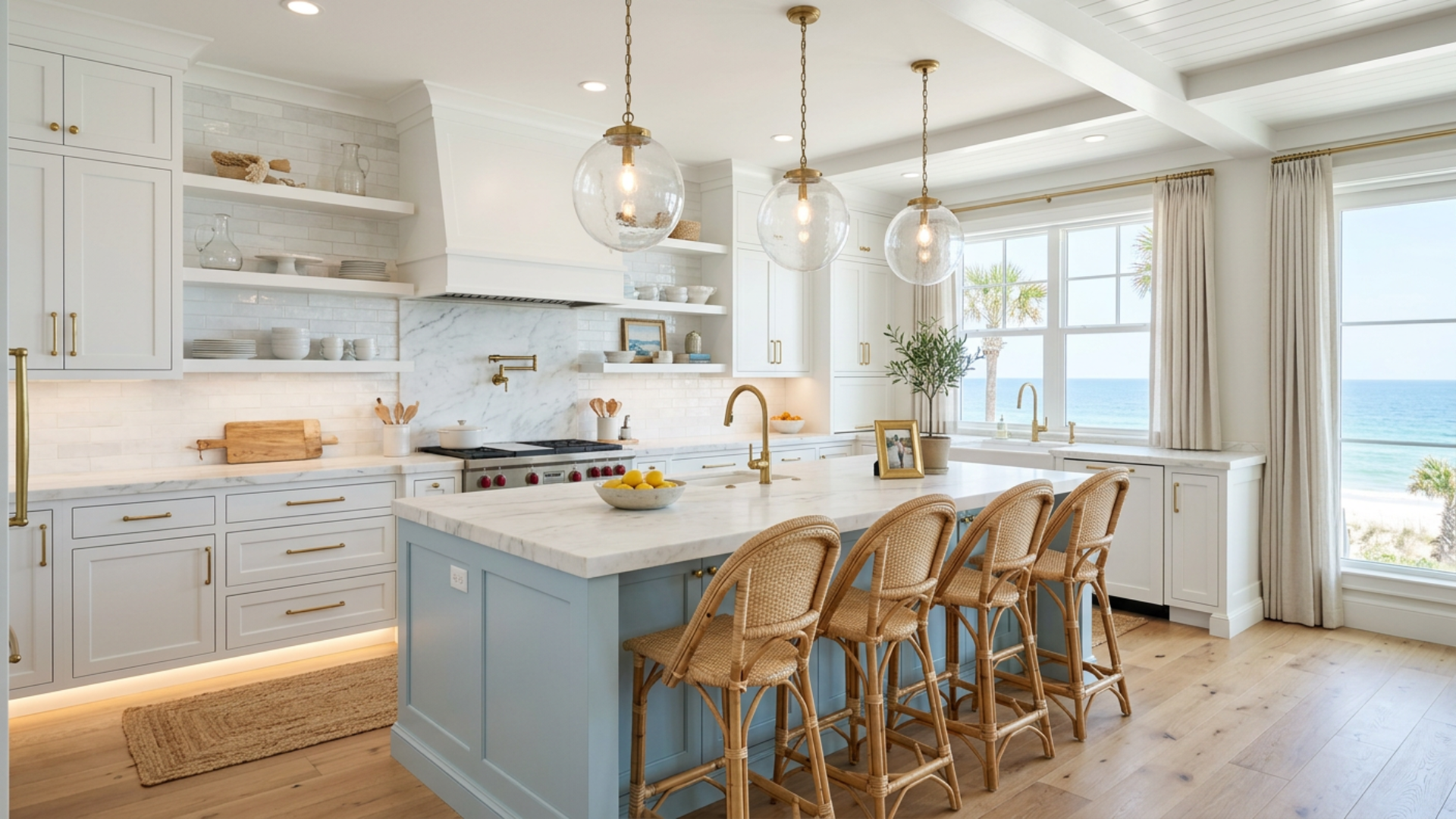
Pendant lights above an island provide both style and functionality. Depending on the size of the island, two or three pendants often create the most balanced look.
Under-cabinet lighting is another valuable addition because it illuminates countertops and eliminates shadows created by overhead fixtures.
When choosing kitchen lighting, consider how the fixtures will coordinate with nearby dining and living spaces for a cohesive design.
Kitchen Lighting Tips
- Install pendant lights above islands and peninsulas.
- Include under-cabinet lighting for task work.
- Layer decorative and functional fixtures.
- Select durable finishes that complement cabinetry and hardware.
Bedroom Lighting Ideas
Bedrooms should feel restful, comfortable, and inviting.
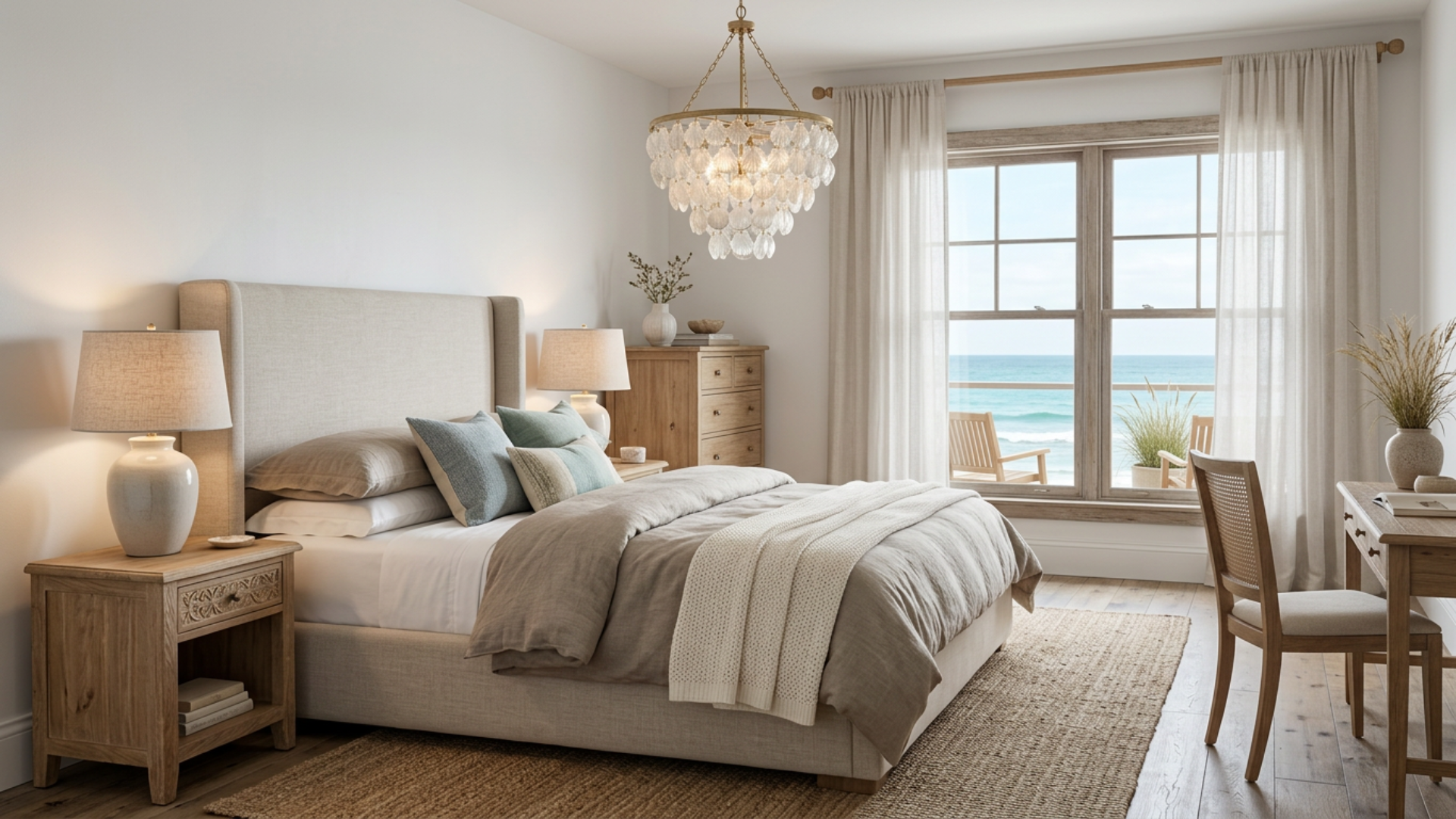
Rather than relying on a single overhead fixture, create layers of soft lighting throughout the room. A statement chandelier or ceiling fixture can establish the room's style, while bedside lamps and reading sconces provide practical illumination.
Table lamps remain one of the easiest ways to introduce both beauty and functionality into a bedroom. They create a softer, more intimate atmosphere than overhead lighting alone and provide convenient light for reading and relaxing.
In coastal bedrooms, consider lamps with ceramic, woven, or glass bases paired with linen shades. Farmhouse-inspired bedrooms often incorporate turned wood, painted finishes, and timeless silhouettes.
Bedroom Lighting Tips
- Include bedside lighting on both sides of the bed.
- Use warm light bulbs for a relaxing atmosphere.
- Layer overhead fixtures with lamps and sconces.
- Scale bedside lamps appropriately to nightstand size.
Entryway and Foyer Lighting Ideas
Your entryway creates the first impression of your home.
Whether you have a grand foyer or a small hallway, the right lighting establishes a welcoming atmosphere from the moment guests arrive.
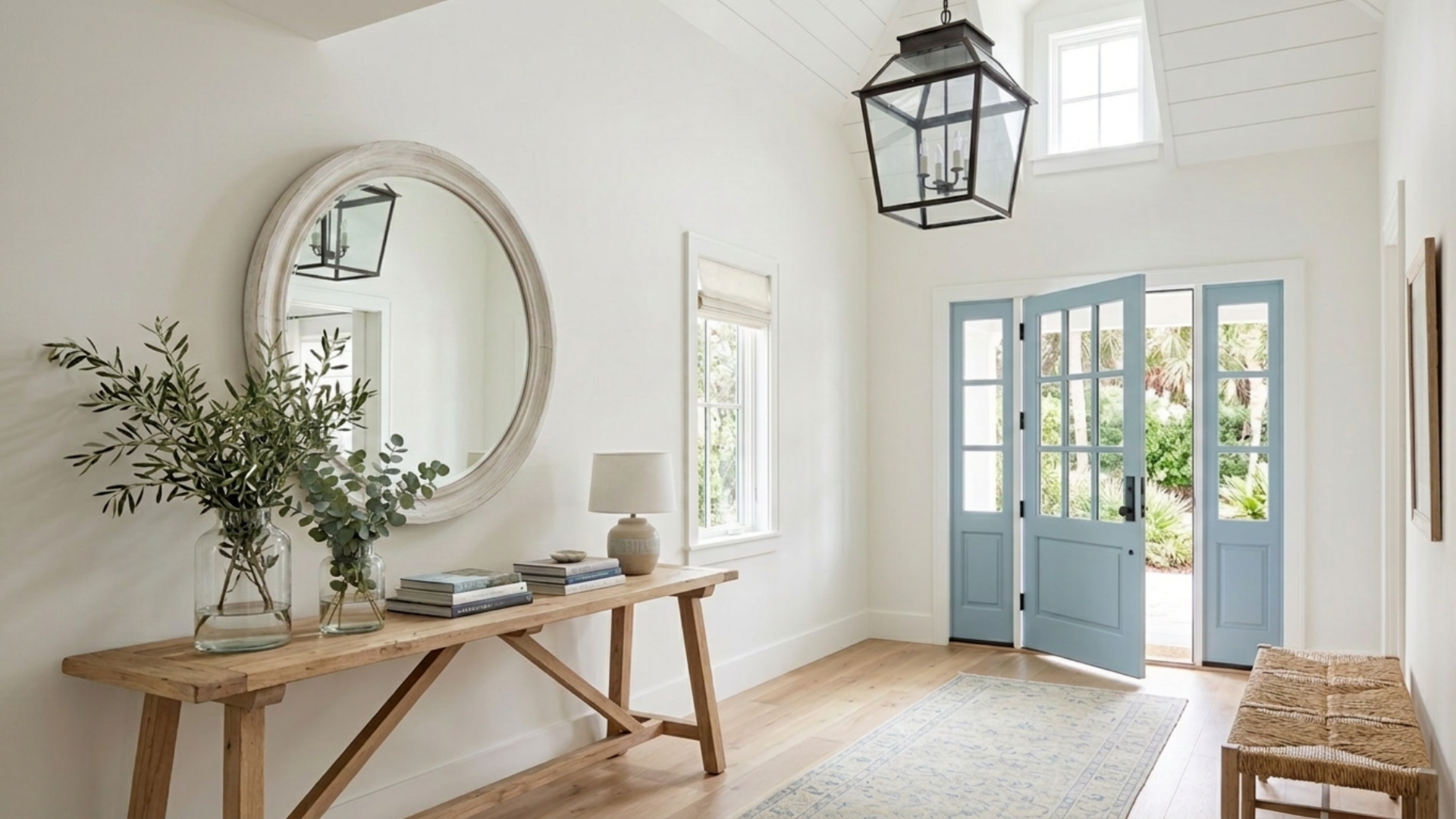
Lantern-style fixtures remain one of the most popular choices for coastal and farmhouse homes because they feel timeless and versatile. In larger foyers with higher ceilings, chandeliers can create dramatic impact while maintaining elegance.
Supplement overhead lighting with table lamps on console tables whenever possible to create additional warmth and visual interest.
Entryway Lighting Tips
- Choose a fixture scaled to the ceiling height.
- Consider lantern-style fixtures for timeless appeal.
- Add layered lighting with console lamps.
- Ensure sufficient brightness for safety and function.
Bathroom Lighting Ideas
Bathrooms require a balance between functionality and style.
Vanity lighting plays the most important role, as it directly affects grooming and daily routines. Sconces mounted on either side of the mirror often provide the most flattering illumination because they reduce shadows on the face.
Overhead lighting should supplement vanity lighting rather than replace it.
For a cohesive look, select finishes that coordinate with faucets, mirrors, and hardware throughout the space.
Bathroom Lighting Tips
- Prioritize vanity lighting.
- Reduce shadows with side-mounted sconces.
- Include overhead lighting for general illumination.
- Match finishes to existing hardware.
Coastal and Farmhouse Lighting Styles
Both coastal and farmhouse interiors embrace timeless design, but each approaches lighting a little differently.
Coastal Lighting
Coastal lighting often incorporates:
- Natural woven materials
- Glass accents
- Linen shades
- Lantern silhouettes
- Light, airy finishes
The goal is to create a relaxed atmosphere that feels bright and welcoming.
Farmhouse Lighting
Farmhouse lighting often features:
- Wood and metal combinations
- Traditional silhouettes
- Black iron finishes
- Vintage-inspired details
- Warm, inviting character
Both styles emphasize craftsmanship, comfort, and enduring appeal, making them easy to blend throughout the home.
Common Lighting Mistakes to Avoid
Even beautiful fixtures can fall short if they are improperly selected or installed.
Choosing Fixtures That Are Too Small - Undersized lighting can make a room feel disconnected and unfinished.
Relying on a Single Light Source - Rooms feel more inviting when multiple layers of lighting are used together.
Ignoring Fixture Height - Proper hanging height is critical for chandeliers and pendants.
Forgetting About Dimmers - Dimmers allow you to adjust the mood and functionality of a room throughout the day.
Prioritizing Style Over Function - The best lighting plans balance beauty and practicality.
Final Thoughts
The right lighting enhances every aspect of your home, from daily routines to special gatherings. By layering ambient, task, and accent lighting throughout your spaces, you can create rooms that feel both functional and welcoming.
Whether you're selecting a statement chandelier for the dining room, adding table lamps to a cozy bedroom, or refreshing an entryway with a timeless lantern, thoughtful lighting choices help bring your home's personality to life.
With a balanced approach and room-specific planning, you'll create a beautifully illuminated home that feels warm, comfortable, and inviting for years to come.