

How to Create a Cozy Bedroom for Fall
Posted by Ava Johnson on 14th Sep 2026
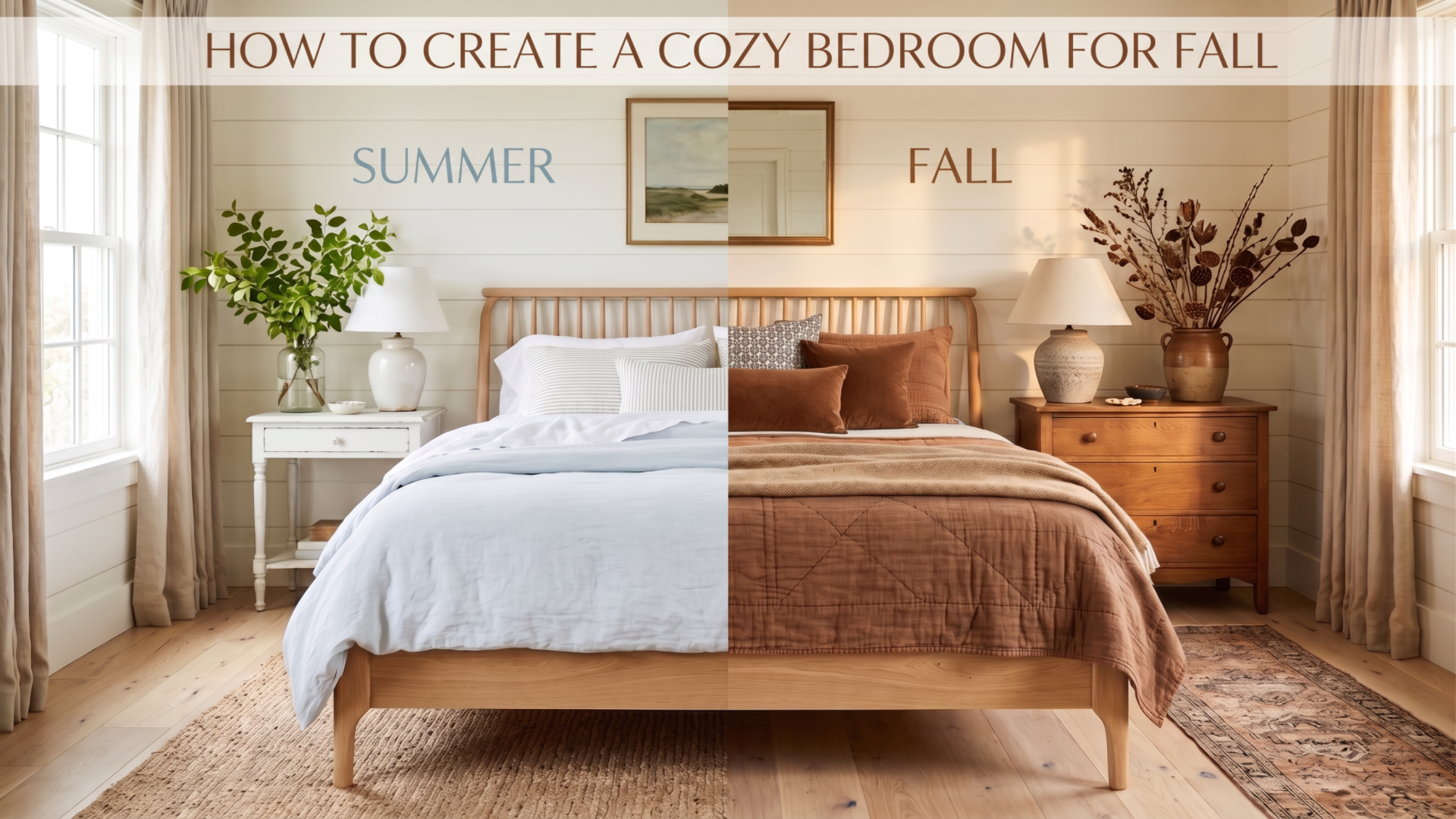
How to Create a Cozy Bedroom for Fall
A bedroom that feels perfect in July doesn't always feel quite right by October.
In summer, we naturally gravitate toward spaces that feel light, breezy, and uncluttered. Bedding gets lighter. Windows stay uncovered or loosely dressed. Colors often feel sun-washed and fresh. We want our bedrooms to feel cool at the end of a warm day.
Fall asks something different from the same room.
As temperatures drop and daylight becomes softer and shorter, we begin to crave a bedroom that feels warmer, more enveloping, and a little more layered. The good news is that creating a cozy fall bedroom doesn't require redecorating. Instead, think of it as a seasonal shift—keeping the foundation you love while changing how the room looks, feels, and functions.
Here are six ways to take your bedroom from summer into fall.
1. Trade Summer Simplicity for a More Layered Bed
In summer: The goal is cool and uncomplicated.
A summer bed might include cotton or linen sheets, a lightweight coverlet, and just a few pillows. Extra blankets are tucked away, and the overall look tends to be crisp and simple.
For fall: Build warmth one layer at a time.
You don't necessarily need to replace your summer bedding. Start with the same foundation and add to it. Bring back the duvet or quilt that disappeared for the warmer months. Fold a blanket across the lower third of the bed. Add a heavier throw that can actually be used on cool evenings.
The visual change matters almost as much as the physical warmth. Where a summer bed benefits from open space and simplicity, a fall bed can handle more dimension. Try combining different weights rather than simply adding more pillows: crisp sheets beneath a quilt, a lofty duvet folded at the foot, or a woven blanket draped casually across one corner.
The result should look inviting enough to climb into—not overly styled.
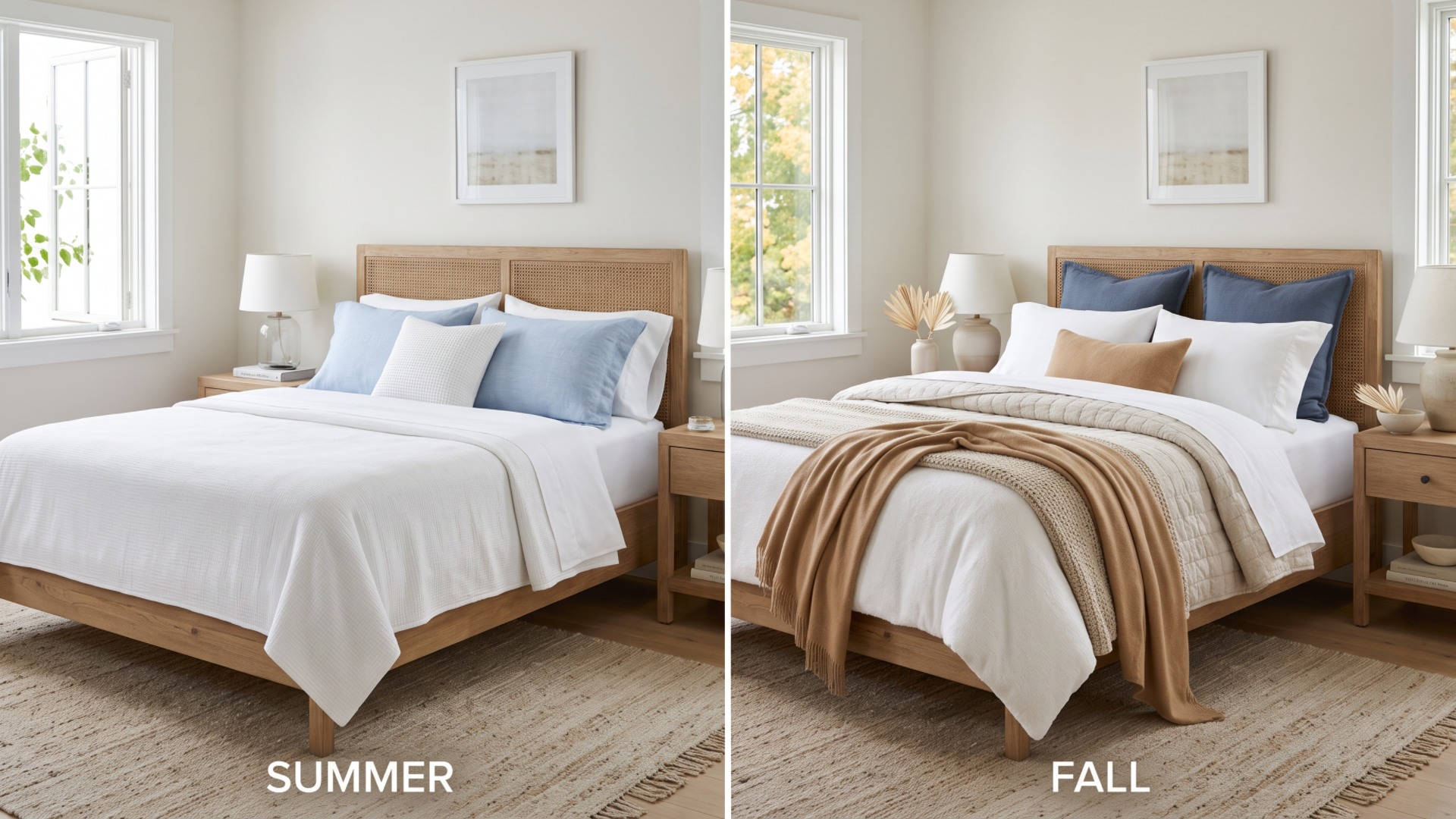
2. Take Your Colors from Sun-Washed to Grounded
In summer: Whites, pale blues, sandy neutrals, and other faded colors help a bedroom feel fresh and airy.
For fall: Keep those colors, but give them more depth.
There is no need to replace a coastal palette with traditional autumn orange and burgundy. Instead, look at the colors already in the room and move them one or two shades deeper. Pale blue can be joined by slate or navy. Ivory feels richer beside camel or tobacco. Light sage can deepen into olive. Pale natural wood can sit alongside a darker or more weathered finish. This approach is particularly effective in coastal and farmhouse interiors because the room still feels like itself—it simply feels more appropriate for the season.
Even one deeper color can change the balance. Try replacing a pale summer throw with a rich blue one, introducing a warm brown pillow to an ivory bed, or swapping bright botanical artwork for something moodier and more textural.
You're not creating a fall theme. You're changing the temperature of the palette.
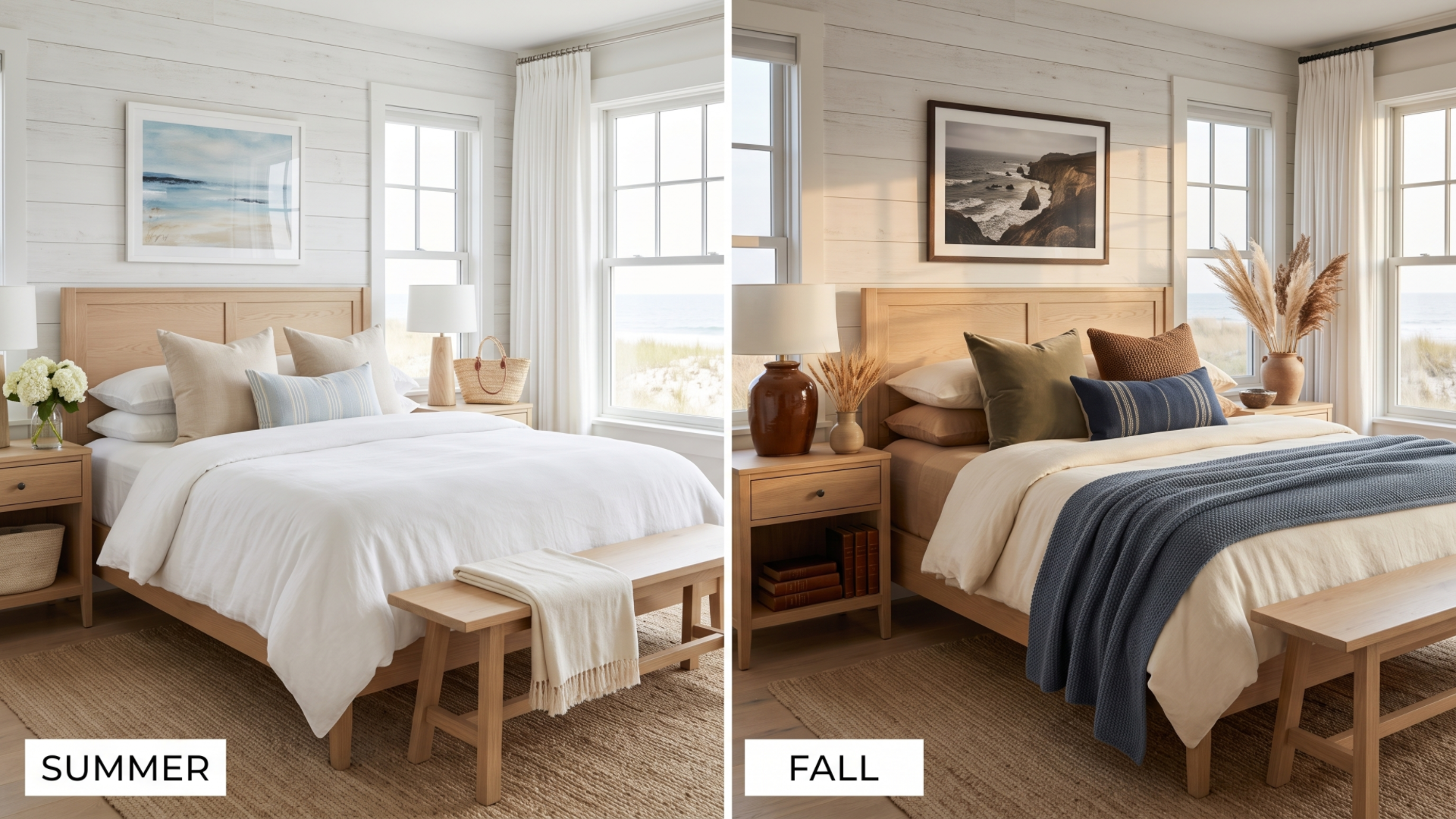
3. Change What Happens at the Windows
In summer: We want as much daylight and airflow as possible. Windows often feel best when they're open, bright, and minimally dressed.
For fall: The windows become part of what makes the bedroom feel sheltered.
As the days shorten, reconsider how your window treatments contribute to the room. If you use sheer panels during summer, adding linen or woven drapery can immediately give the room more visual weight. If you already have curtains, simply closing them earlier in the evening changes the atmosphere. This doesn't mean replacing your window treatments every season. Layering is often enough. A woven shade paired with drapery, for example, can feel breezy when the curtains are pulled back during summer and much more cocooning when they're closed on a fall evening.
It's a subtle change, but an important one: summer bedrooms tend to emphasize the connection to outdoors, while fall bedrooms can feel wonderful when they create a stronger sense of retreat.
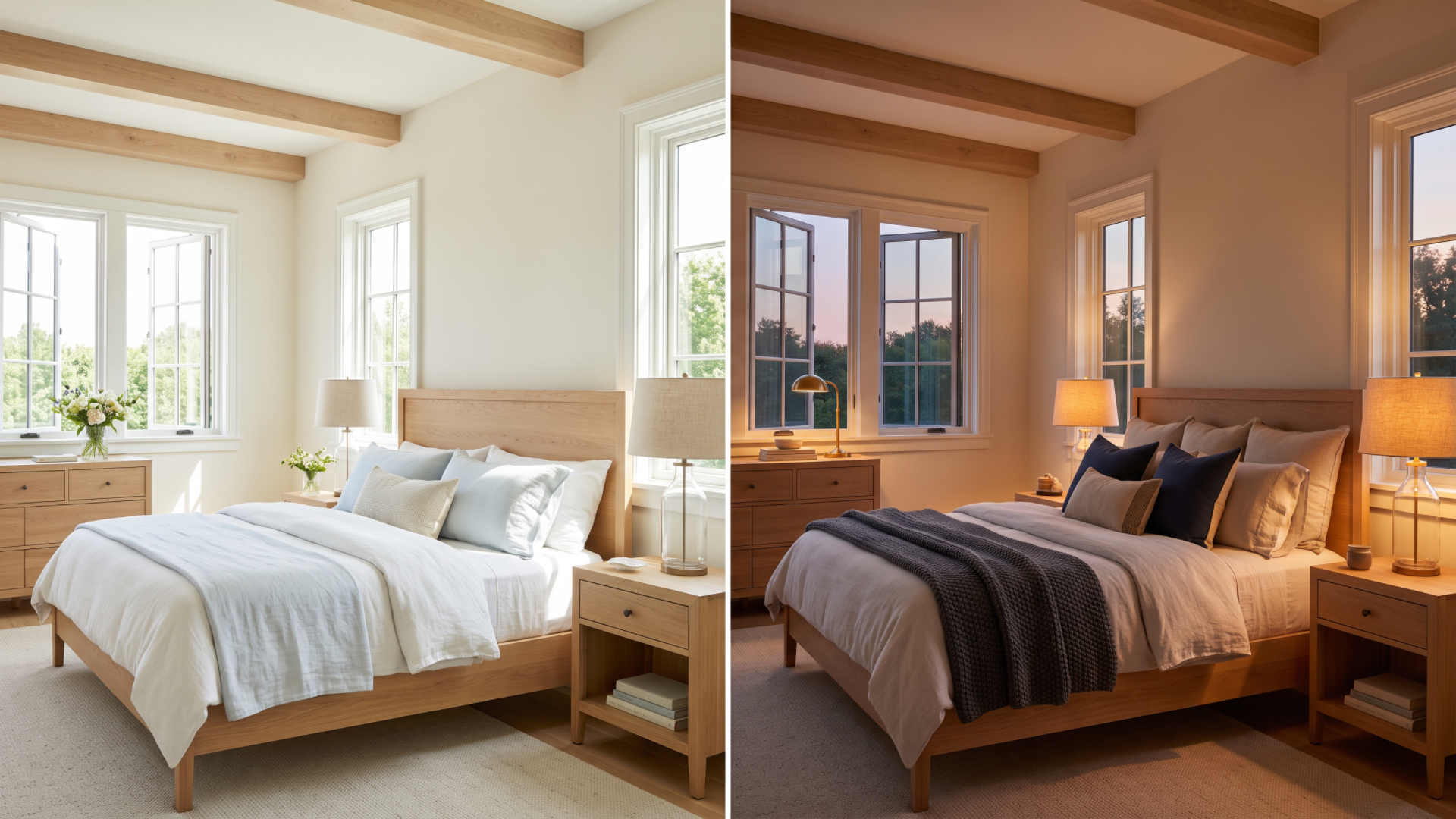
4. Shift from Daylight to Lamplight
In summer: Natural light does much of the work.
Long evenings mean we often don't turn on bedroom lamps until late, and bright daylight keeps the room feeling energetic well into the evening.
For fall: Artificial lighting becomes part of the design again.
This is the season to pay attention to what your bedroom looks like after sunset. Rather than automatically turning on an overhead fixture, create smaller pools of warm light around the room. Bedside lamps become more important. A floor lamp beside a chair can turn an unused corner into a reading spot. A lamp on a dresser can soften an area that feels dark once the sun goes down.
Consider where the room feels shadowy in fall that didn't during summer. That is often where another source of light belongs. Warm bulbs and fabric shades can also make a significant difference. The objective isn't necessarily to make the room brighter. It's to make the lower light levels of fall feel intentional.
5. Reconsider What's Underfoot
In summer: Bare floors can feel clean, cool, and refreshing.
For fall: Softness underfoot becomes part of the experience of the room.
If you rolled up a heavier rug for summer, fall is the perfect time to bring it back. If your rug stays year-round, you can still think about how it contributes to the seasonal shift. A bedroom rug with a little more texture, warmth, or pattern visually grounds the space as the rest of the room becomes more layered. This is especially noticeable first thing in the morning. Stepping onto a generous rug beside the bed creates a very different feeling than stepping onto a cool wood floor.
And if you love the lighter cotton or woven rug already in your bedroom, there's no rule that says it has to disappear. Fall decorating doesn't always mean switching products. Sometimes it's simply about pairing those lighter pieces with heavier textures elsewhere.
6. Edit the Summer Details Instead of Adding “Fall Décor”
In summer: Bedrooms often include fresh greenery, light baskets, coastal accessories, pale ceramics, and a relatively spare approach to styling.
For fall: Edit before you add.
Rather than filling the room with pumpkins, leaves, and explicitly seasonal decorations, look at what already feels particularly summery and make a few substitutions.
Fresh green branches might give way to sculptural dried branches. A brightly colored book on the nightstand could be replaced with a small stack in earthy tones. A lightweight woven basket might hold an extra blanket. Pale artwork could be exchanged for a piece with richer color or deeper contrast.
You can even change what you remove. Leaving a few more books on the nightstand or a blanket casually draped over a chair can make a fall bedroom feel less pristine and more lived in. The objective is not to announce that autumn has arrived. It is to let the room quietly reflect what's happening outside.
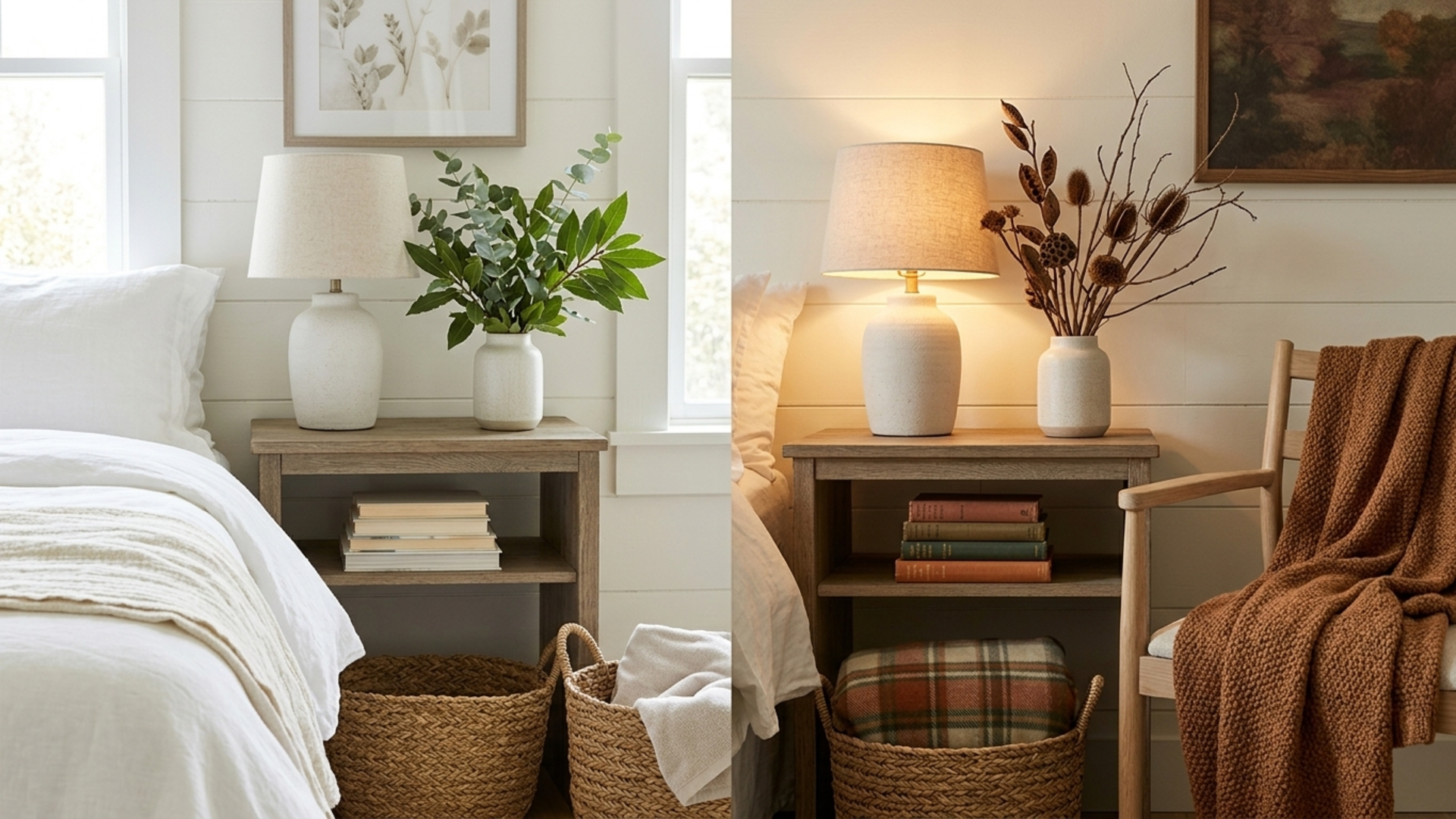
Let Your Bedroom Follow the Season
One of the pleasures of creating a home over time is allowing it to change throughout the year.
A summer bedroom should feel different from a fall bedroom because we use those spaces differently. In July, we want cool sheets, open windows, fewer layers, and plenty of daylight. By October, we're ready for heavier bedding, deeper color, softer light, and spaces that feel a little more enclosed.
You don't have to choose between the two—or redesign your bedroom four times a year.
Start with a timeless foundation: a bed you love, well-made furniture, a beautiful rug, quality bedding, and lighting that works for the room. Then allow the smaller details to shift with the season.
The best fall bedroom isn't one that looks decorated for fall. It's one that makes you want to stay in bed just a little longer on a cool morning.