

How to Decorate with Dark Wood Furniture Without Making a Room Feel Heavy
Posted by Ava Johnson on 23rd Nov 2026
For years, light woods, whitewashed finishes, and pale neutrals have defined the look of coastal and contemporary interiors. But there's something undeniably appealing about the return of darker wood tones. Rich walnut, deep espresso, weathered mahogany, and warm brown finishes bring a sense of history, depth, and sophistication that lighter materials sometimes cannot achieve.
The challenge, of course, is finding the right balance. Too many dark furnishings can make a room feel crowded or visually heavy, particularly when paired with dark flooring, saturated walls, or oversized silhouettes. Yet when thoughtfully incorporated, dark wood furniture can have precisely the opposite effect. It can ground a space, introduce beautiful contrast, and make lighter elements feel even more luminous.
The secret isn't avoiding dark furniture. It's understanding how to surround it with the right colors, textures, proportions, and finishing touches.
Whether you're decorating a coastal cottage, a modern farmhouse, or a more traditional home, these design principles will help you embrace darker wood finishes without sacrificing the airy, welcoming atmosphere you love.
1. Create Contrast with a Lighter Color Palette
One of the most effective ways to decorate with dark wood furniture is to give it room to breathe. Light-colored walls, soft upholstery, and pale textiles create a beautiful counterpoint to richer wood finishes, allowing their natural grain and craftsmanship to stand out.
Warm whites, creamy ivories, and subtle oatmeal tones are particularly flattering alongside dark walnut and espresso finishes. Unlike stark, cool whites, these softer shades complement the warmth of the wood, creating a space that feels harmonious rather than overly contrasted.
For a coastal-inspired interior, consider introducing muted blues, sea-glass greens, or sandy neutrals. These colors bring a relaxed quality to darker furniture, helping it feel equally at home in a breezy beach house or a sophisticated year-round residence.
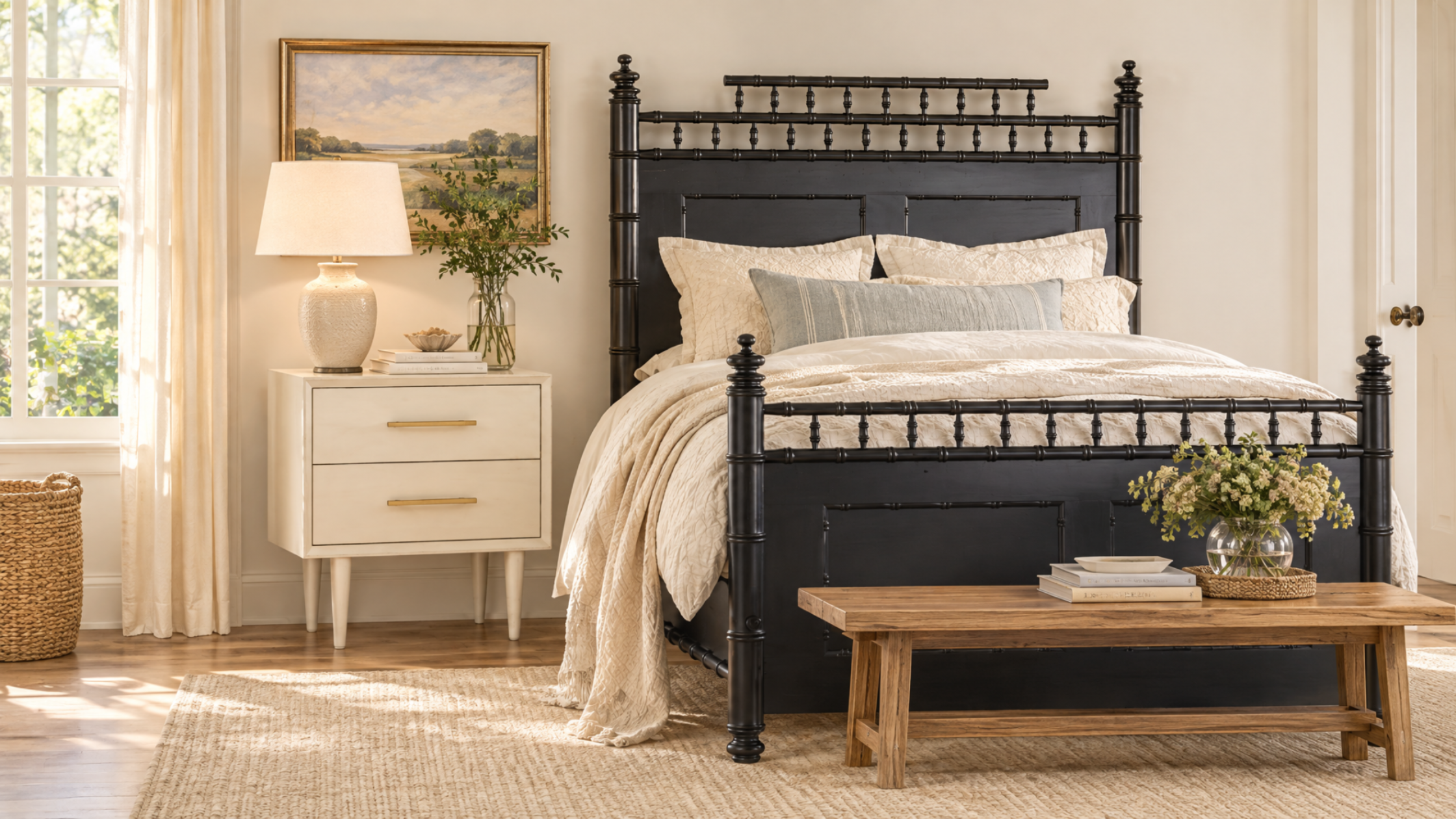
A bedroom is a wonderful place to explore this balance. The Savannah Bed, with its rich wood presence, can become a beautiful focal point against soft white walls. Layer it with ivory bedding, natural linen pillows, and a lightweight throw to create an inviting retreat that feels serene rather than formal.
The key is allowing the dark wood to provide contrast while keeping the surrounding palette fresh and understated.
2. Balance Dark Wood with Natural Textures and Softer Shapes
Color is only part of the equation. Texture plays an equally important role in determining how a room feels.
Dark wood furniture often has a strong visual presence, especially when it features substantial proportions or traditional detailing. Introducing softer materials helps balance that weight, creating a room that feels layered and comfortable rather than overly structured.
Think relaxed linen upholstery, woven baskets, natural fiber rugs, ceramic lamps, and gently textured fabrics. These elements introduce movement and dimension without competing with the furniture.
A light-colored rug is especially effective because it visually separates darker pieces from the floor. The Alora Natural Hand Knotted Wool Rug is a beautiful example of how a natural, understated foundation can soften a room anchored by richer wood finishes.
Furniture shape matters, too. Curved edges and graceful silhouettes can make even a substantial dark wood piece feel more approachable. The Large Bowfront Chest offers an opportunity to introduce this principle, with its gently rounded profile providing a softer alternative to more angular cabinetry.
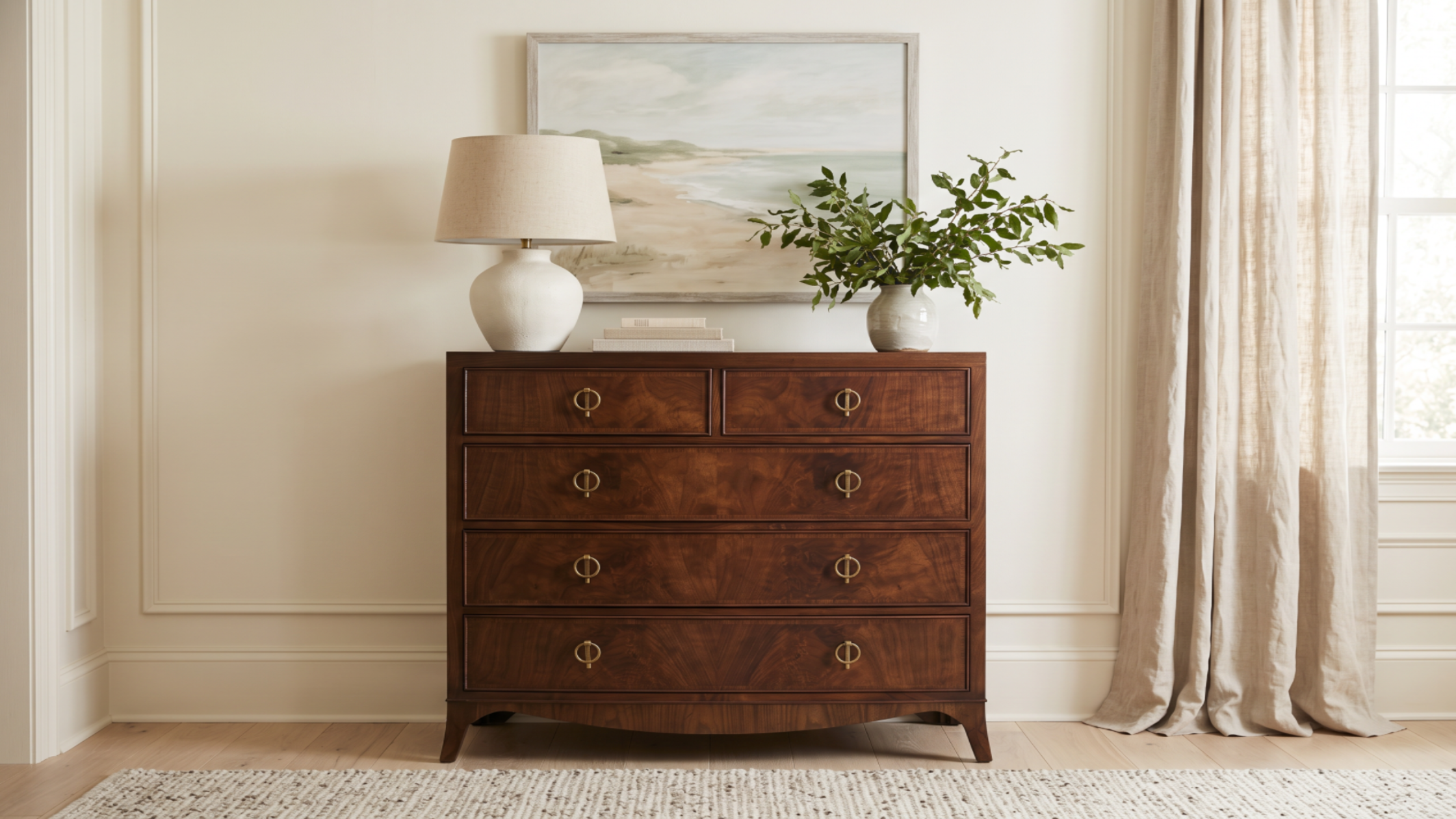
Paired with a light ceramic lamp, an oversized mirror, or a simple arrangement of greenery, a dark chest can feel elegant and inviting without overwhelming the room.
The goal is not to disguise the richness of the wood but to balance it with materials that introduce softness and ease.
3. Mix Wood Finishes for a More Collected, Designer Look
One of the most common decorating misconceptions is that all the wood furniture in a room needs to match.
In reality, some of the most interesting interiors feature a thoughtful mix of wood tones. Combining darker finishes with lighter woods, painted furniture, or natural materials creates a layered appearance that feels collected over time rather than purchased as a matching set.
The trick is to create intentional contrast.
For example, a dark wood bed can look particularly beautiful alongside a painted or lighter-finished nightstand. Rather than competing, the different finishes allow each piece to establish its own identity.
Consider pairing the Savannah Bed with the London Nightstand in a light finish. The contrast introduces visual breathing room around the bed while maintaining a cohesive, sophisticated look.
You can carry this approach throughout the room by incorporating a natural wool rug, woven accents, and perhaps a bench in a complementary finish.
When mixing woods, pay attention to their undertones. Warm browns generally pair beautifully with natural oak, honey-colored woods, and creamy painted finishes. Cooler brown tones can work well with weathered gray woods and softer neutral finishes.
Rather than matching every piece, look for a common thread through the room's color palette, materials, or overall design style.
A collected interior should feel connected, but never overly coordinated.
4. Let One Dark Wood Piece Become the Statement
Sometimes, the most effective way to incorporate dark wood furniture is to allow a single piece to take center stage.
A beautifully crafted dining table, distinctive console, or substantial dresser can introduce depth and personality without requiring the entire room to follow the same darker palette.
In a dining room, for instance, a rich wood table creates a natural gathering point. The Beatrice Round Dinette Table can be styled with lighter upholstered dining chairs, a simple ceramic centerpiece, and a softly textured rug.
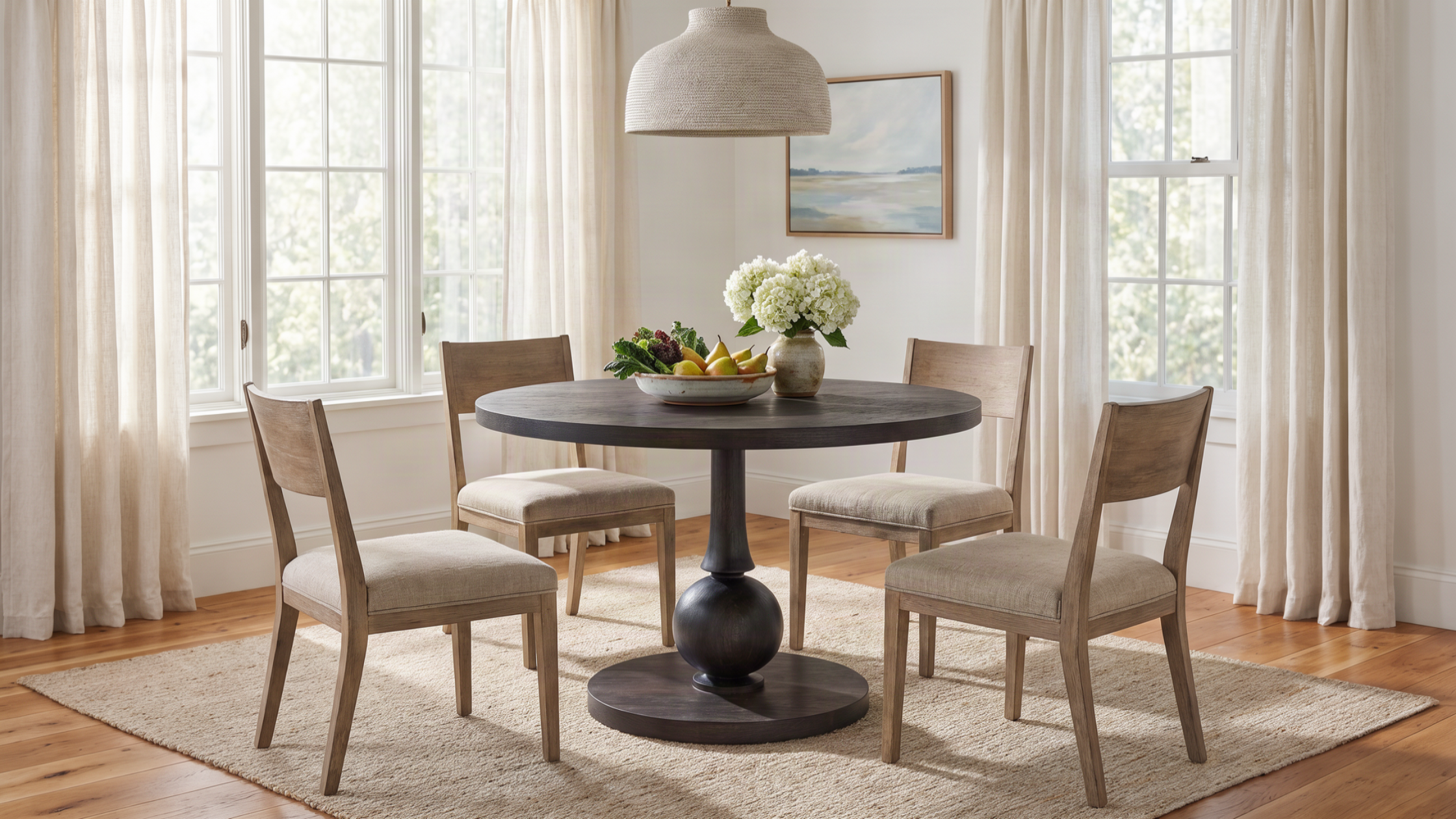
Its round silhouette helps create a welcoming arrangement, while the contrast between the table and surrounding elements keeps the room feeling open and balanced.
The same principle works beautifully in living rooms and entryways.
A dark wood console can provide an elegant anchor against a light wall, especially when paired with artwork, a mirror, or thoughtfully chosen accessories. The Clarke Three Drawer Console offers an opportunity to introduce richer wood tones without committing to an entire room of dark furniture.
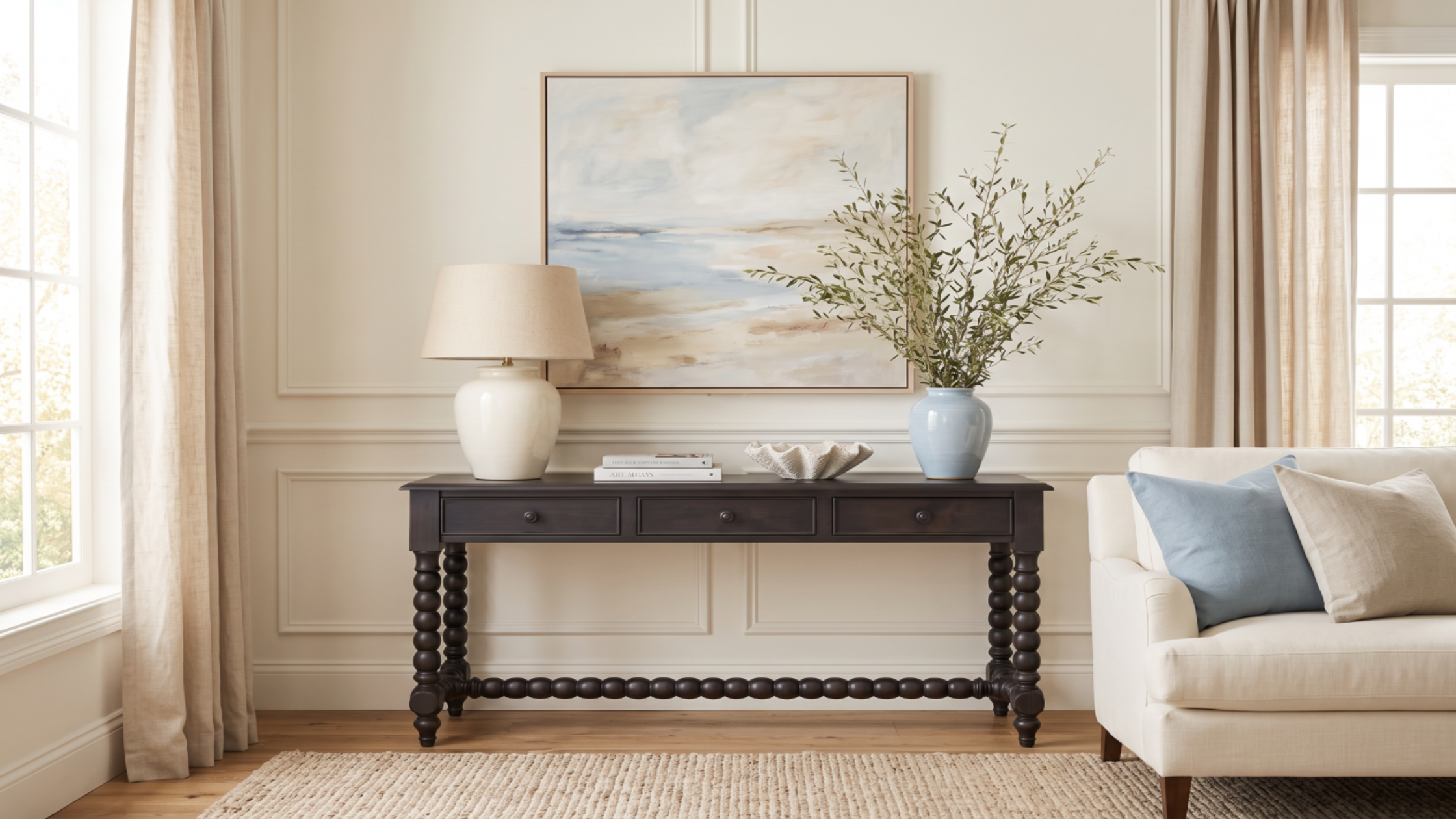
Keep the styling relatively simple. A large-scale piece of art, a sculptural lamp, and a few natural accents are often more effective than numerous small decorative objects.
When the furniture itself has character, it doesn't need much embellishment.
5. Use Lighting and Finishing Details to Keep the Room Airy
Even a beautifully balanced room can feel heavy if the lighting isn't right.
Dark wood absorbs more light visually than pale finishes, making natural and artificial lighting especially important. Whenever possible, allow daylight to move freely through the room by choosing lightweight window treatments and avoiding unnecessary visual barriers.
Sheer linen curtains, soft white shades, and strategically placed mirrors can all help brighten a space while maintaining a warm, relaxed atmosphere.
In the evening, layered lighting becomes essential. Rather than relying solely on overhead fixtures, combine table lamps, wall sconces, and accent lighting to create a softer, more inviting glow.
Accessories can further reinforce the balance.
Consider white ceramics against dark wood, fresh greenery beside a walnut chest, or a pale blue vase on a richly finished console. These small contrasts create visual interest while preventing darker furniture from dominating the room.
Artwork is another opportunity to introduce lightness. Pieces featuring soft landscapes, abstract neutrals, or subtle coastal colors can complement dark wood beautifully without making the space feel overly themed.
Above all, resist the temptation to fill every surface. A little negative space allows the furniture's shape, finish, and craftsmanship to shine.
A Beautiful Balance of Light and Dark
Dark wood furniture brings something special to a home: warmth, permanence, character, and a sense of timeless elegance. Whether it's a statement bed, a graceful chest, or a beautifully crafted dining table, these pieces can become the foundation of interiors that feel both sophisticated and welcoming.
The key is balance. Light walls, natural textures, mixed finishes, thoughtful lighting, and carefully chosen accessories allow rich wood tones to stand out without overwhelming the space.
And perhaps that's what makes dark wood so appealing. It doesn't require a particular decorating style or an entirely new color palette. It simply invites us to embrace contrast, appreciate craftsmanship, and create rooms that feel layered and lived in.
At Cottage & Bungalow, we believe beautiful interiors are built around pieces that bring character and lasting appeal to everyday living. Explore our collection of coastal and farmhouse furniture to discover timeless designs in a variety of wood finishes, colors, and styles.