
How to Design a Functional Bedroom: Layout, Furniture & Storage Tips
Posted by Ava Johnson on 17th Aug 2026
How to Design a Functional Bedroom: Layout, Furniture & Storage Tips
A beautiful bedroom should do more than look inviting—it should make everyday life feel easier. The best bedrooms balance comfort, style, and function, creating a space that feels restful at the end of the day while working effortlessly for your daily routine.
Thoughtful functional bedroom design begins with understanding how you use the room. Where do you need storage? How much space should you leave around the bed? Which pieces of furniture are truly necessary? Once those practical decisions are made, layers of color, texture, lighting, and personality can bring the room to life.
Whether you're furnishing a spacious primary suite or making the most of a smaller bedroom, these bedroom layout ideas will help you create a room that's comfortable, organized, and beautifully put together.
Start with the Bed
The bed is naturally the focal point of most bedrooms, so its placement should be the first decision you make.
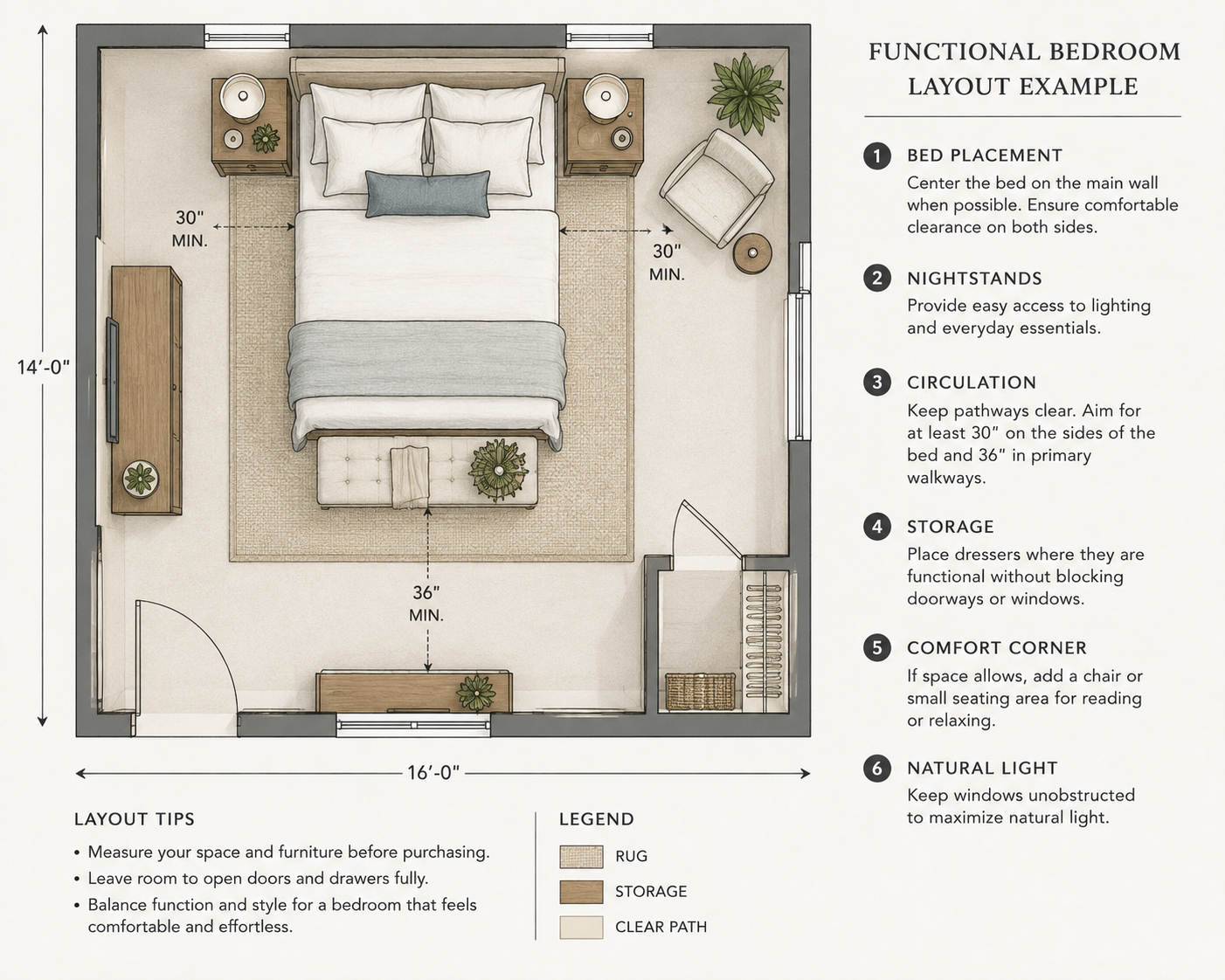
When possible, position the bed against the room's longest uninterrupted wall. Ideally, you should be able to see the bed when entering the room without having it interfere with doors, windows, closets, or natural pathways.
Before deciding on placement, consider how you'll move through the room. Leave enough space on either side of the bed to comfortably get in and out, and make sure drawers, closet doors, and bedroom doors can open without obstruction.
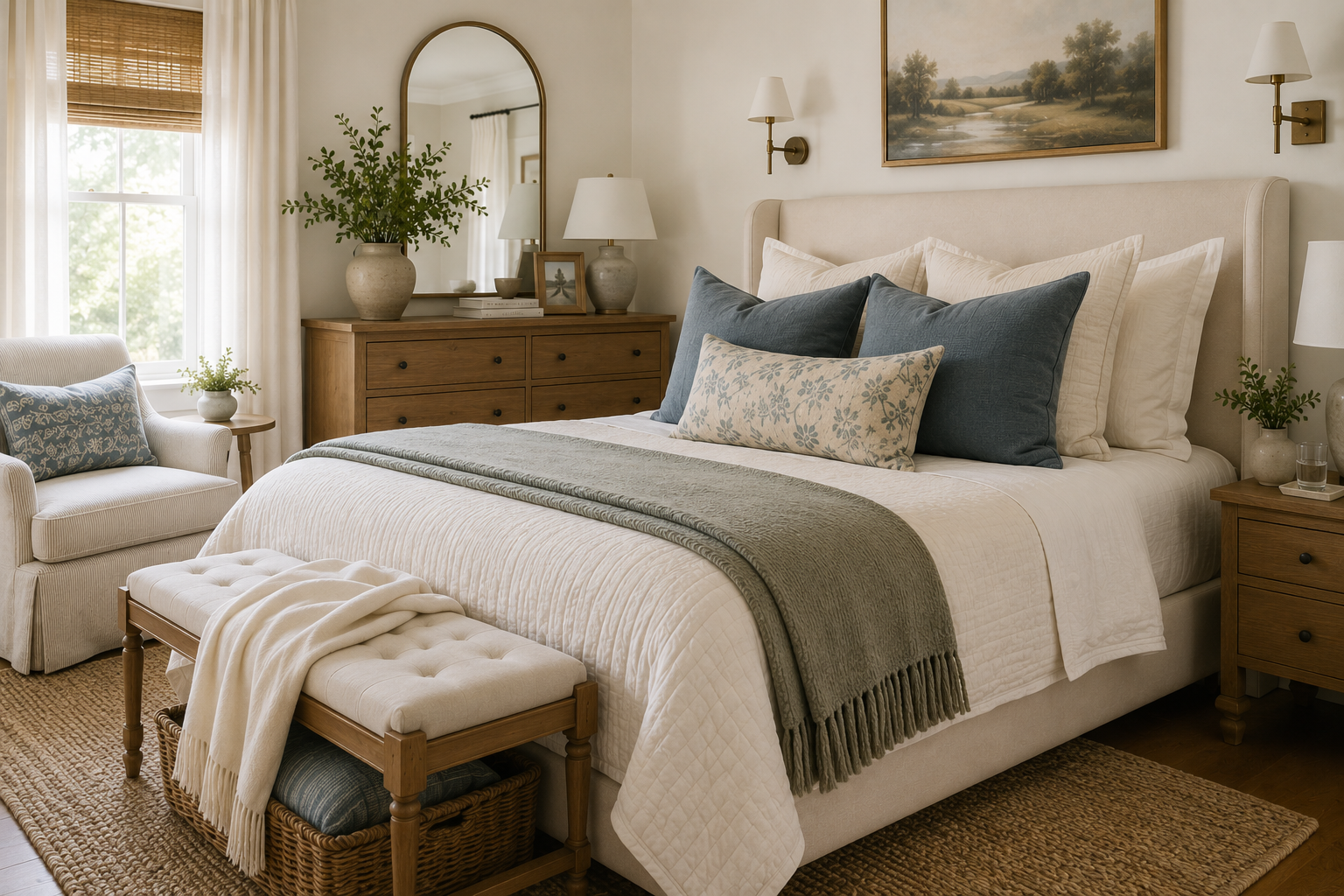
Symmetry can also help a bedroom feel calm and intentional. In a primary bedroom, placing a nightstand on each side of the bed creates balance while giving both people convenient bedside storage and surface space.
For smaller bedrooms, perfect symmetry isn't always necessary. A single nightstand, narrow bedside table, or compact chest can provide function without overcrowding the room.
Choose Bedroom Furniture with Purpose
One of the most important principles of functional bedroom design is choosing furniture based on what the room actually needs rather than simply filling available space.
Start with the essentials: a bed, bedside tables, and adequate storage. From there, consider whether additional furniture will genuinely improve how you use the room.
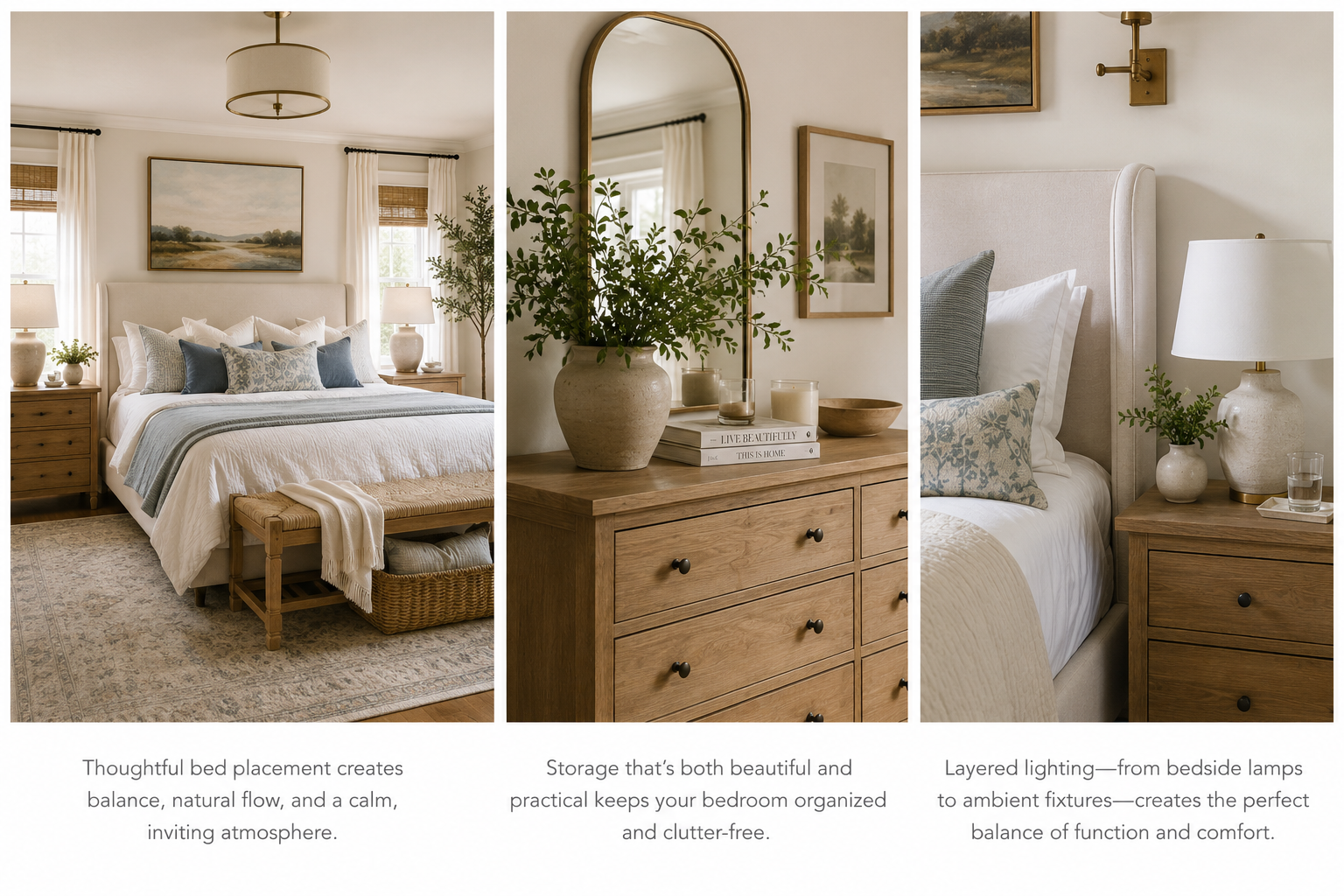
A dresser can provide essential clothing storage while creating a surface for a mirror, lamp, artwork, or a few decorative accessories. A tall chest may be a better choice when floor space is limited because it provides substantial storage with a smaller footprint.
If you have more room, a bench at the foot of the bed can be both beautiful and useful. It provides a convenient place to sit, put on shoes, or temporarily place extra pillows and blankets.
A comfortable chair can also transform an unused corner into a quiet reading spot.
The goal isn't to fit as much furniture as possible. A functional bedroom should have breathing room. Leaving some open space makes the room easier to navigate and often makes it feel larger and more relaxing.
Create Clear Pathways Through the Room
Good bedroom furniture placement should feel intuitive. You shouldn't have to navigate around furniture every time you walk from the doorway to the bed or closet.
Look at the natural pathways through your bedroom and keep them as open as possible. Pay particular attention to the space around the bed, between the bed and dresser, and in front of closets.
This becomes especially important in smaller bedrooms. Instead of squeezing in another piece of furniture, consider whether removing something would make the room function better.
Scale matters, too. Oversized furniture can overwhelm a small room, while pieces that are too small may feel disconnected in a larger bedroom. Measure your room before purchasing furniture and map out where each piece will sit. Even a simple floor plan can help you recognize potential problems before furniture arrives.
Make Storage Part of the Design
Clutter can quickly make even a beautifully decorated bedroom feel less relaxing, which makes thoughtful storage an important part of bedroom design.
Rather than relying entirely on closets, incorporate storage throughout the room in ways that feel intentional.
Choose nightstands with drawers when you need somewhere to keep chargers, books, glasses, and other everyday necessities out of sight. Dressers and tall chests provide flexible clothing storage, while storage benches or baskets can hold extra blankets and pillows.
For smaller spaces, look for opportunities to use vertical space. A tall dresser can provide more storage without taking up the width of a traditional dresser. Under-bed storage can also be helpful for seasonal bedding or less frequently used items.
The best bedroom storage ideas are often the ones you barely notice. When storage is incorporated naturally into your furniture, the bedroom stays organized without feeling overly utilitarian.
Layer Your Lighting
A functional bedroom needs more than one source of light.
Begin with ambient lighting, such as a chandelier, pendant, or flush-mount fixture, to provide general illumination. Then add bedside lighting for reading and winding down in the evening.
Table lamps are a classic choice, but wall-mounted sconces can be especially useful in smaller bedrooms because they free up valuable nightstand space.
If you have a dresser, reading chair, or desk, consider whether that area needs its own lighting as well.
Whenever possible, use warm bulbs and dimmers to create a softer atmosphere at night. The goal is to have enough light for practical tasks without losing the calm, restful feeling you want in a bedroom.
Ground the Room with a Rug
A rug can make a bedroom feel warmer, softer, and more complete while visually defining the sleeping area.
For most bedrooms, choose a rug large enough to extend beyond the sides and foot of the bed. This helps anchor the bed and surrounding furniture rather than making the rug appear to float beneath it.
Natural fibers, wool, cotton, and soft woven rugs all work beautifully depending on the look you're creating. In coastal and farmhouse-inspired bedrooms, subtle patterns and relaxed textures add dimension without overwhelming the room.
Beyond style, think about comfort. Stepping onto a soft rug rather than a cold floor is one of those small details that makes a bedroom feel noticeably more inviting.
Use Color and Texture to Create a Restful Atmosphere
Once the functional elements are established, focus on creating an environment that encourages rest.
Bedrooms are particularly well suited to soft, natural palettes. Warm whites, creams, sandy neutrals, muted blues, gentle greens, and natural wood finishes create a calm foundation that can evolve over time.
Instead of relying on bold color for interest, layer texture through bedding, rugs, furniture, window treatments, and accessories.
Crisp cotton sheets, a linen duvet, woven pillows, a natural fiber rug, and solid wood furniture can create plenty of visual depth even within a restrained palette.
Mixing materials also keeps a neutral bedroom from feeling flat. Painted furniture can sit beautifully alongside natural wood, while woven baskets, ceramic lamps, and textured fabrics add warmth and character.
Keep Bedside Essentials Within Reach
Small details often determine whether a bedroom truly functions well.
Think about what you reach for before bed and when you wake up. A bedside table should provide enough room for the essentials without becoming a collection point for clutter.
A lamp, glass of water, book, and perhaps a small decorative object may be all you need. Drawers or shelves can keep everything else close by but out of sight.
Also consider practical details such as access to outlets and charging devices. Planning for these everyday necessities during the design process helps prevent extension cords and chargers from becoming visual distractions later.
Add Personality Without Adding Clutter
A functional bedroom doesn't need to feel minimal or impersonal. In fact, the most inviting bedrooms usually include pieces that make the space feel collected over time.
Artwork, framed photographs, books, a favorite throw, or a beautiful vintage-inspired accent can give the room character.
The key is editing.
Rather than covering every surface, choose a few meaningful pieces and give them room to stand out. A large piece of artwork above a dresser may have more impact than several smaller accessories scattered throughout the room.
Natural elements are another easy way to bring warmth into the space. A woven basket, fresh greenery, or simple ceramic vase can soften the room without making it feel overly decorated.
Design a Bedroom That Works for You
The most successful bedrooms aren't designed around a rigid set of rules. They're designed around the people who use them.
Begin with the practical decisions—bed placement, furniture scale, pathways, storage, and lighting—before adding the decorative layers. When those fundamentals are right, everything else becomes easier.
Choose furniture you love and that serves a purpose. Give yourself enough storage to keep everyday clutter under control. Layer comfortable bedding, natural textures, and warm lighting to make the room feel inviting. Most importantly, leave enough space for the bedroom to breathe.
A thoughtful functional bedroom design brings beauty and practicality together, creating a space that feels organized without being overly structured and comfortable without sacrificing style.
When every piece has a purpose and every layer contributes to the overall feeling of the room, your bedroom becomes more than a place to sleep—it becomes a welcoming retreat designed to support the way you live.