
How to Layer Rugs for a Coastal Home
Posted by Ava Johnson on 20th Jul 2026
How to Layer Rugs for a Coastal Home
Few design techniques make a room feel more welcoming than thoughtfully layered rugs. In a coastal home, layering rugs is about more than adding softness underfoot—it's a simple way to bring texture, warmth, and personality into a space while maintaining the light, airy aesthetic that coastal interiors are known for.
Whether you're decorating a spacious living room, a cozy bedroom, or an inviting entryway, learning how to layer rugs for a coastal home can instantly elevate your design. By combining natural fibers with softer textiles and choosing colors inspired by the shoreline, you can create rooms that feel collected, comfortable, and effortlessly timeless.
Why Layer Rugs?
Layering rugs has become a favorite technique among interior designers because it adds depth without adding clutter. Instead of relying on bold furniture or heavy accessories, layered rugs introduce visual interest through texture and subtle contrast.
Beyond their beauty, layered rugs also serve practical purposes. They help define seating areas in open floor plans, soften hardwood floors, add warmth during cooler months, and make larger rooms feel more intimate.
Some of the biggest benefits include:
- Creating texture and dimension
- Defining living spaces within a room
- Protecting high-traffic flooring
- Adding warmth and comfort underfoot
- Refreshing a room without replacing your existing rug
For coastal interiors, this layered approach perfectly complements natural wood furniture, linen upholstery, and relaxed color palettes.
Start with a Natural Fiber Foundation
Every beautifully layered rug arrangement begins with a solid foundation. Natural fiber rugs are one of the hallmarks of coastal design because they bring organic texture without overwhelming the room.
Jute, sisal, and seagrass rugs provide a neutral base that works beautifully beneath furniture while allowing additional layers to shine. Their woven appearance echoes the textures found along the coast—from weathered driftwood to woven baskets—and creates an easy, relaxed atmosphere.
A larger natural fiber rug should anchor the room and extend beneath your main furniture pieces. Once that foundation is in place, you can add a smaller decorative rug that introduces softness, pattern, or color.
Because natural fiber rugs are durable and timeless, they work equally well in living rooms, bedrooms, dining spaces, and entryways.
Add a Softer Accent Rug
Once you've established your foundation, it's time to introduce comfort and personality with a second rug.
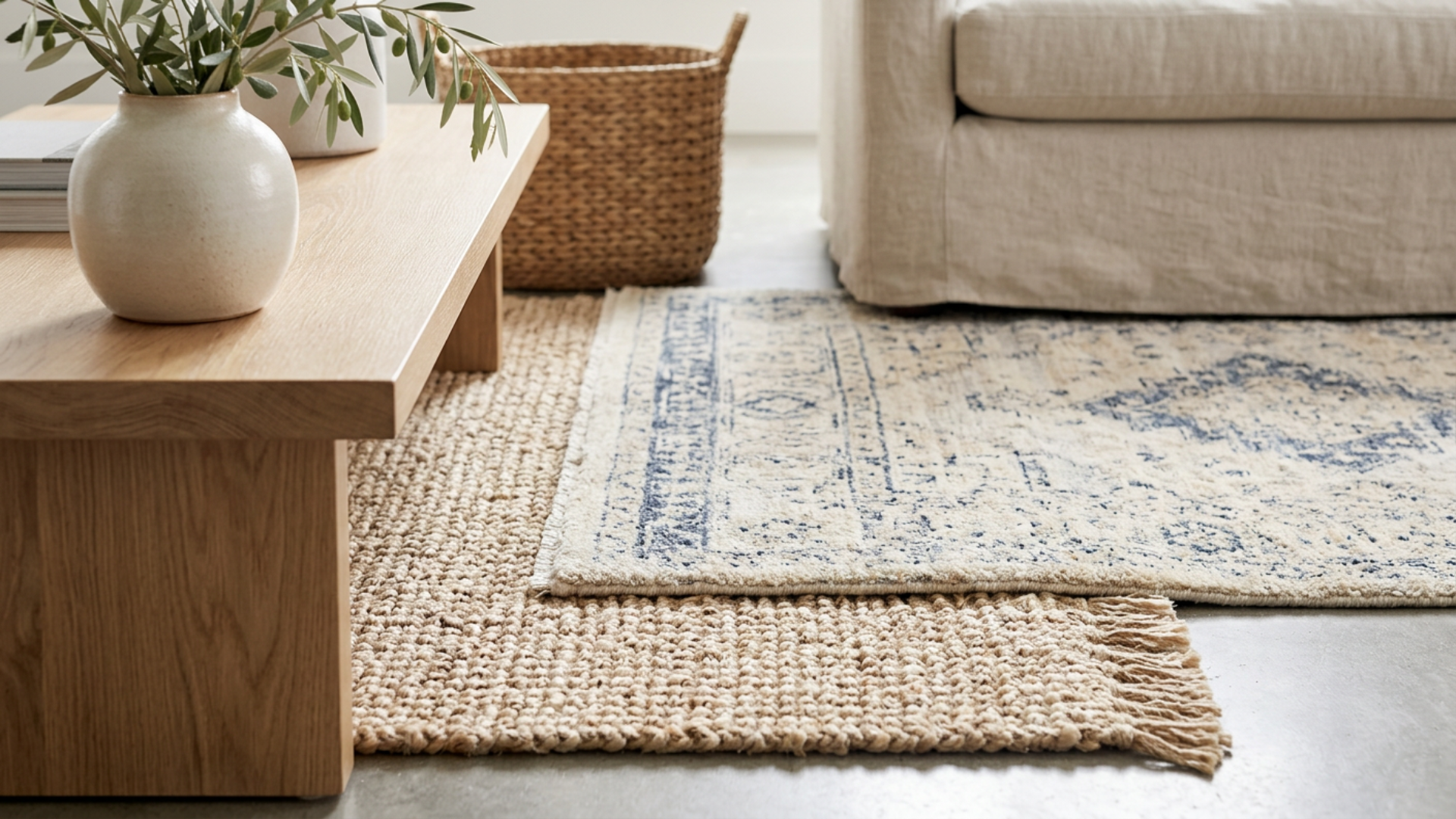
A wool, cotton, or handwoven flatweave layered over a jute base creates a balanced combination of texture and softness. The contrast between the two materials adds richness without making the room feel busy.
When selecting your top rug, look for understated patterns that complement a coastal aesthetic. Soft stripes, faded vintage designs, subtle geometric motifs, and tonal textures all add interest while maintaining a calm, relaxed atmosphere.
Rather than competing with the rest of your décor, your layered rugs should quietly enhance it.
Choose Colors Inspired by Nature
One of the reasons coastal interiors feel so calming is their connection to nature. The same philosophy should guide your rug selections.
Instead of dramatic color contrasts, choose tones that reflect the beach and surrounding landscape. Warm ivory, sandy beige, driftwood gray, muted blues, soft sage, and natural flax all layer beautifully together.
Keeping your rugs within a cohesive palette allows texture to become the focal point. If your furniture or artwork already introduces color or pattern, selecting more understated rugs helps maintain visual balance throughout the room.
The result is a space that feels bright, open, and effortlessly inviting.
Size Matters When Layering Rugs
One of the most common mistakes homeowners make when layering area rugs is choosing two rugs that are nearly the same size. The layered effect is most successful when the larger rug clearly frames the smaller one.
In a living room, begin with a generously sized jute rug that anchors the seating arrangement. A smaller patterned rug can then be centered beneath the coffee table, leaving several inches of the natural fiber rug visible around the edges. This creates a well-defined conversation area while adding visual depth.
In the bedroom, a large natural fiber rug positioned beneath the bed provides warmth and balance. Layering a softer rug across the lower portion of the bed or at its foot introduces comfort where it's needed most and gives the room a finished, designer-inspired appearance.
Dining rooms can also benefit from layered rugs, particularly beneath larger tables. Just be sure both rugs are large enough that chairs remain stable when pulled out, ensuring the layered look remains both beautiful and functional.
Mix Textures Instead of Bold Patterns
One of the defining characteristics of coastal interiors is restraint. Rather than filling a room with competing prints, designers rely on layered textures to create visual richness.
Some timeless combinations include:
- Chunky jute paired with soft wool
- Seagrass layered beneath a vintage-inspired flatweave
- Braided cotton over woven natural fibers
- Neutral woven rugs accented with subtle coastal stripes
These combinations create interest without overwhelming the room, allowing furniture, artwork, and architectural details to remain the stars of the space.
Layer Rugs Throughout Your Home
Although layered rugs are often associated with living rooms, this technique works beautifully throughout the home.
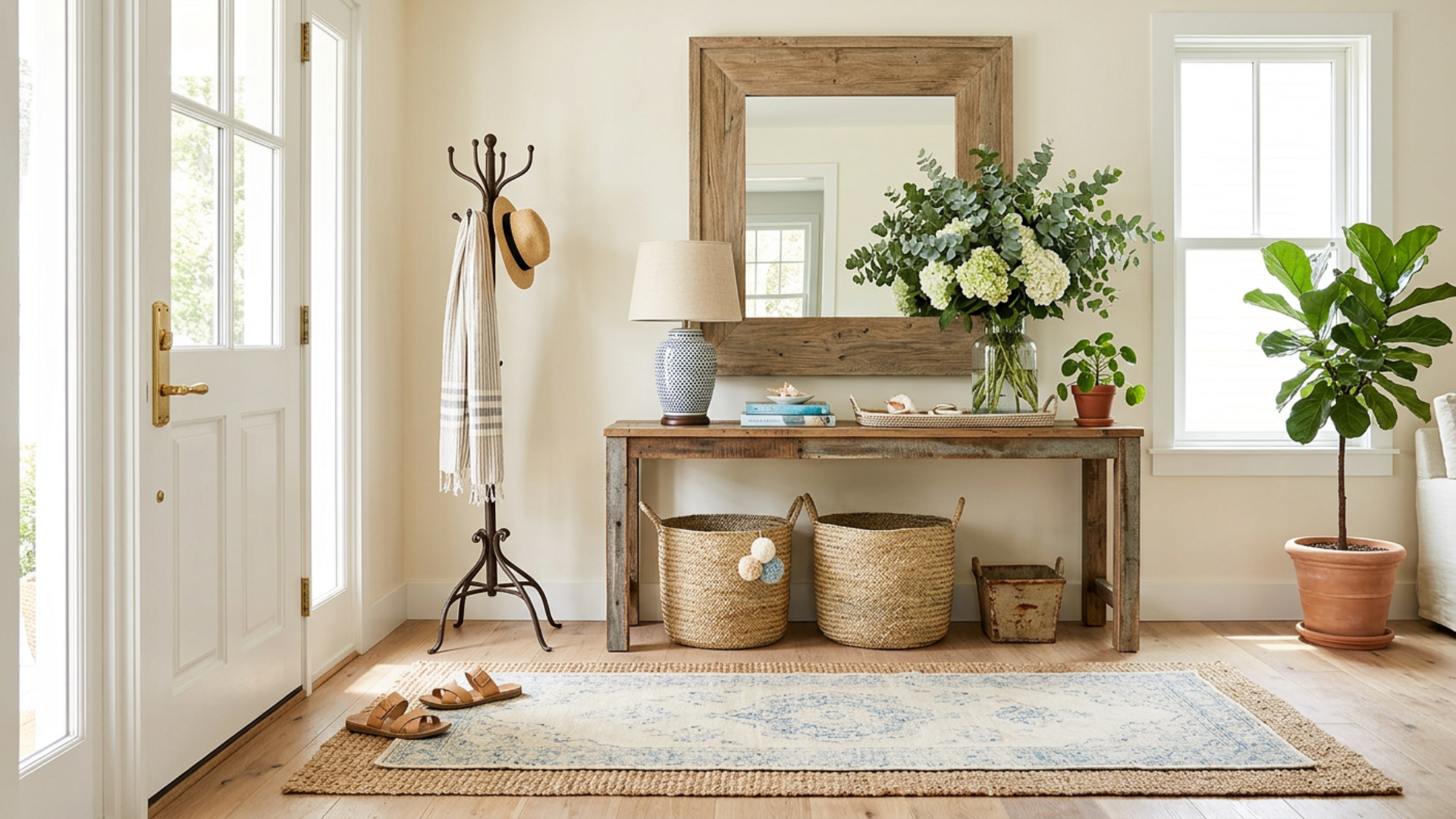
An entryway becomes instantly more welcoming when a patterned runner is layered over a woven natural fiber rug. Bedrooms feel softer and more luxurious with an accent rug placed beneath the foot of the bed, while home offices gain warmth and texture without sacrificing simplicity.
Even covered porches and sunrooms can benefit from layered outdoor-friendly rugs. Combining woven performance rugs with subtle patterns helps blur the line between indoor and outdoor living—a signature element of coastal design.
Repeating this design approach throughout your home creates a sense of continuity while allowing each room to express its own personality.
Designer Tips for a Timeless Coastal Look
The most successful layered rug designs feel effortless rather than overly planned. A few simple guidelines can help you achieve that relaxed, collected look:
- Let natural materials lead the design.
- Repeat colors found elsewhere in the room.
- Leave a visible border of the bottom rug around the top layer.
- Balance patterned rugs with solid upholstery.
- Mix textures more often than bold prints.
- Keep the overall palette light and cohesive.
These small decisions work together to create spaces that feel inviting, sophisticated, and lived in.
Complete Your Coastal Home
Layering rugs is one of the simplest ways to transform a room, but it becomes even more impactful when paired with other natural materials. Solid wood furniture, woven baskets, linen upholstery, rattan accents, ceramic lighting, and coastal-inspired artwork all reinforce the relaxed aesthetic while allowing layered rugs to anchor the space.
Learning how to layer rugs for a coastal home isn't about following rigid design rules—it's about creating a home that feels warm, comfortable, and uniquely yours. By starting with natural fibers, introducing soft textures, and embracing a calming coastal color palette, you can design spaces that feel timeless today and for years to come.
Whether you're refreshing a single room or reimagining your entire home, layered rugs offer an easy way to add character, comfort, and effortless coastal style. Explore Cottage & Bungalow's collection of handcrafted rugs and coastal-inspired furnishings to create spaces that invite you to slow down, relax, and feel at home.