

7 Steps to a Cozy, Collected Home: How to Layer Textures
Posted by Ava Johnson on 21st Sep 2026
7 Steps to a Cozy, Collected Home: How to Layer Textures
Some rooms feel inviting the moment you walk into them. They may have a simple color palette and relatively few pieces, yet somehow they feel warm, interesting, and complete. Often, the difference isn't more color or more décor. It's texture.
Learning how to layer textures in your home is one of the simplest ways to create a space that feels cozy and collected without making it feel busy. Natural wood brings warmth. A woven rug grounds the room. Linen adds softness. A ceramic lamp introduces a smooth, handcrafted surface. Together, these elements create depth that a perfectly matched room can sometimes lack.
The secret is to build those layers gradually.
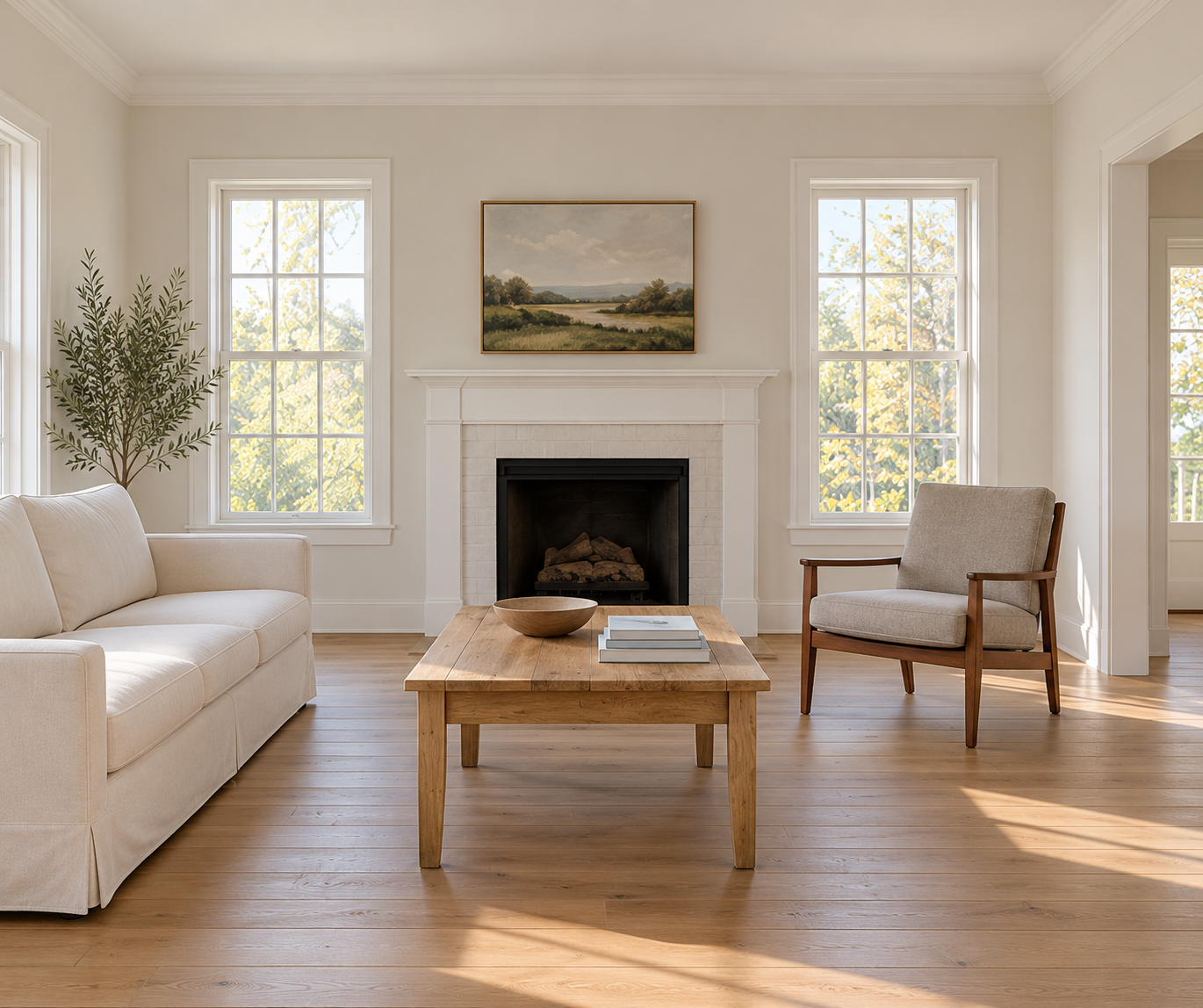
To show how, imagine one simple room: warm neutral walls, wood floors, a few essential pieces of furniture, and plenty of natural light. It's beautiful, but it doesn't quite feel finished yet.
Over the next seven steps, we'll transform that room—not by filling it with more things, but by thoughtfully layering texture, contrast, and character.
Step 1: Start with a Simple Foundation
Before adding layers, give them room to be noticed.
Begin with the elements that aren't likely to change often: wall color, flooring, and your largest furniture pieces. A quiet foundation of warm whites, sandy neutrals, soft grays, muted blues, or other nature-inspired shades allows different textures to become part of the design without overwhelming the room.
The goal isn't to make everything neutral. It's to create enough visual calm that you can appreciate the details that come next.
Look at our starting room. With its warm walls, natural light, and essential furniture, there's nothing particularly wrong with it. But it feels a little flat. That's exactly where texture can make a difference.
Texture pairing to try: Warm white walls + natural wood floors
Step 2: Ground the Room with a Textured Rug
The first layer we add is underfoot.
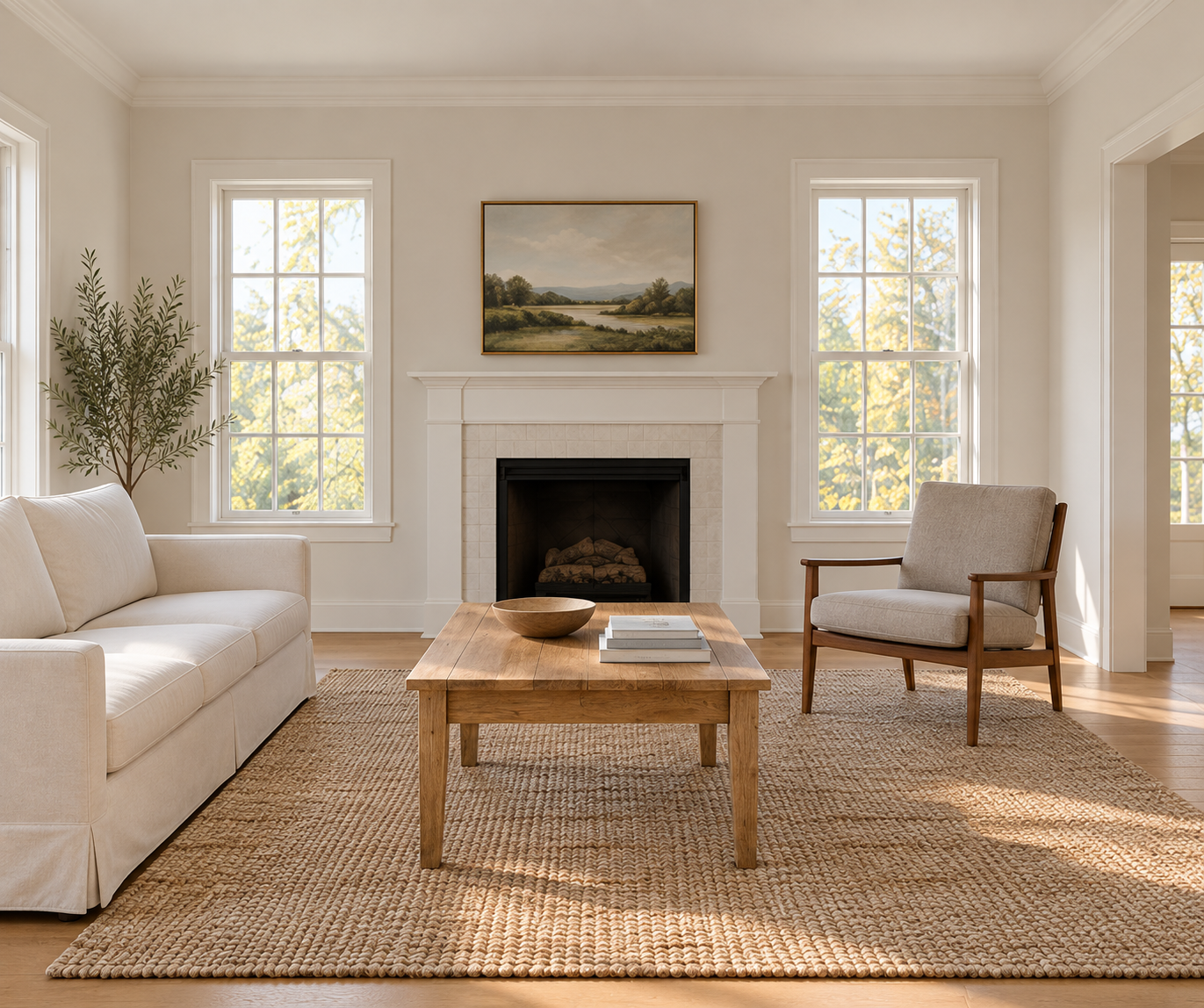
A rug can completely change how a room feels because it introduces softness, pattern, color, and texture across a relatively large surface. In our room, adding a woven rug immediately makes the furniture feel more connected and the space more grounded.
Consider the contrast you're creating. A jute rug brings organic texture to smooth wood floors. A wool rug introduces softness beneath substantial wood furniture. A subtly patterned rug adds movement without requiring a dramatic change in color.
This is also why rugs work so beautifully in coastal and farmhouse interiors. They add interest while preserving the relaxed, understated character of the room.
Rather than asking whether the rug perfectly matches everything around it, ask whether it adds a texture that's currently missing.
Texture pairing to try: Smooth wood floors + woven jute or wool
Step 3: Create Contrast with Furniture
Now that our room has a foundation, it's time to introduce another type of contrast.
One of the easiest mistakes to make when decorating is trying to match every furniture finish. A room often feels more collected when pieces complement one another without being identical.
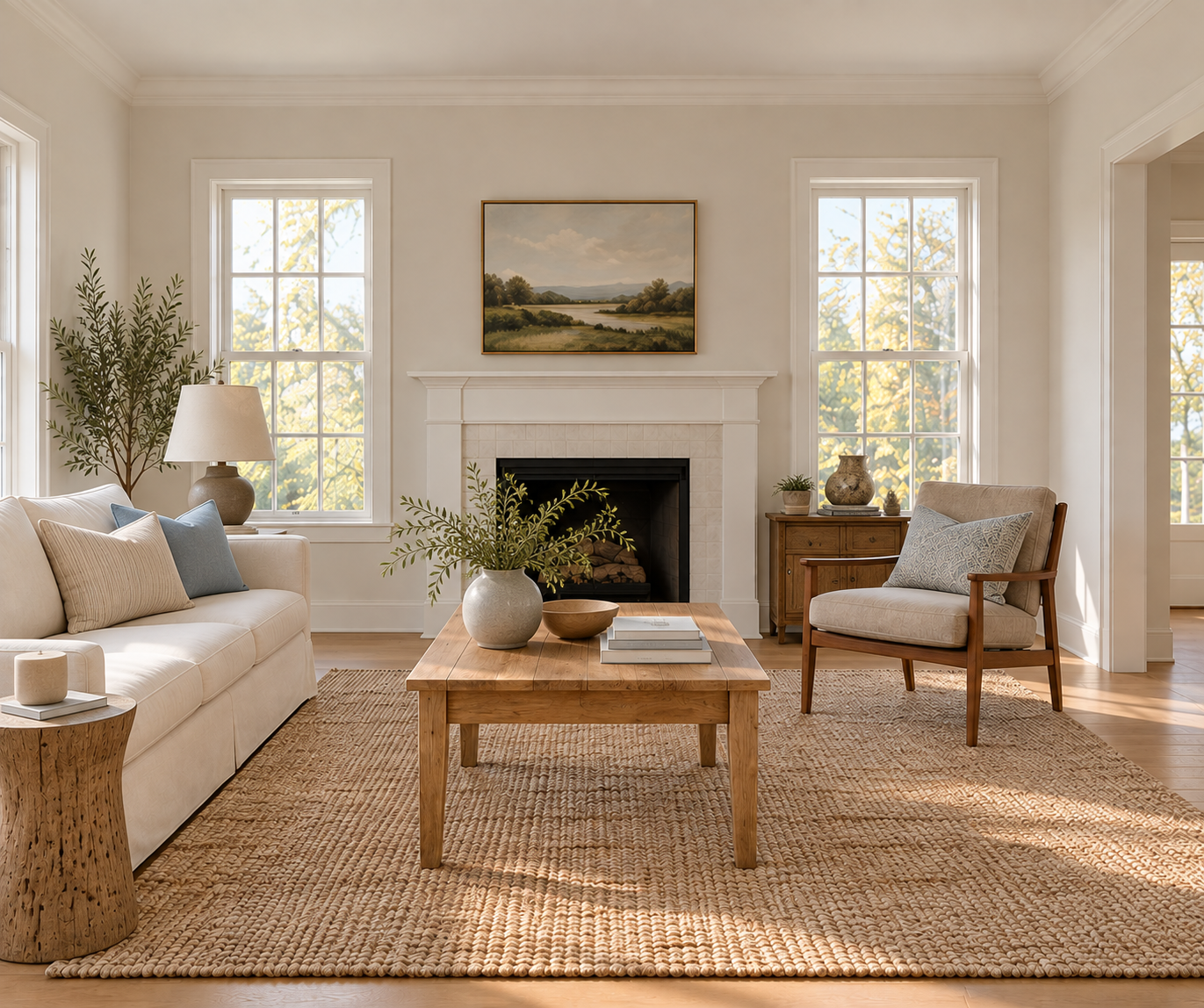
Pair a painted side table with a natural wood coffee table. Place an upholstered chair beside a substantial solid wood cabinet. Combine smooth finishes with visible wood grain, woven details, or gently distressed surfaces.
Solid wood is especially effective because the material provides its own texture. Grain, knots, variations in tone, and handcrafted details give furniture character before you've added a single accessory.
Our room is starting to change. The colors haven't shifted dramatically, but the mix of materials gives your eye more places to land.
Texture pairing to try: Upholstered seating + solid wood furniture
Step 4: Soften the Room with Textiles
This is where the room begins to feel noticeably cozier.
Add pillows, throws, curtains, or bedding—but instead of focusing primarily on color, pay attention to how each fabric feels and looks.
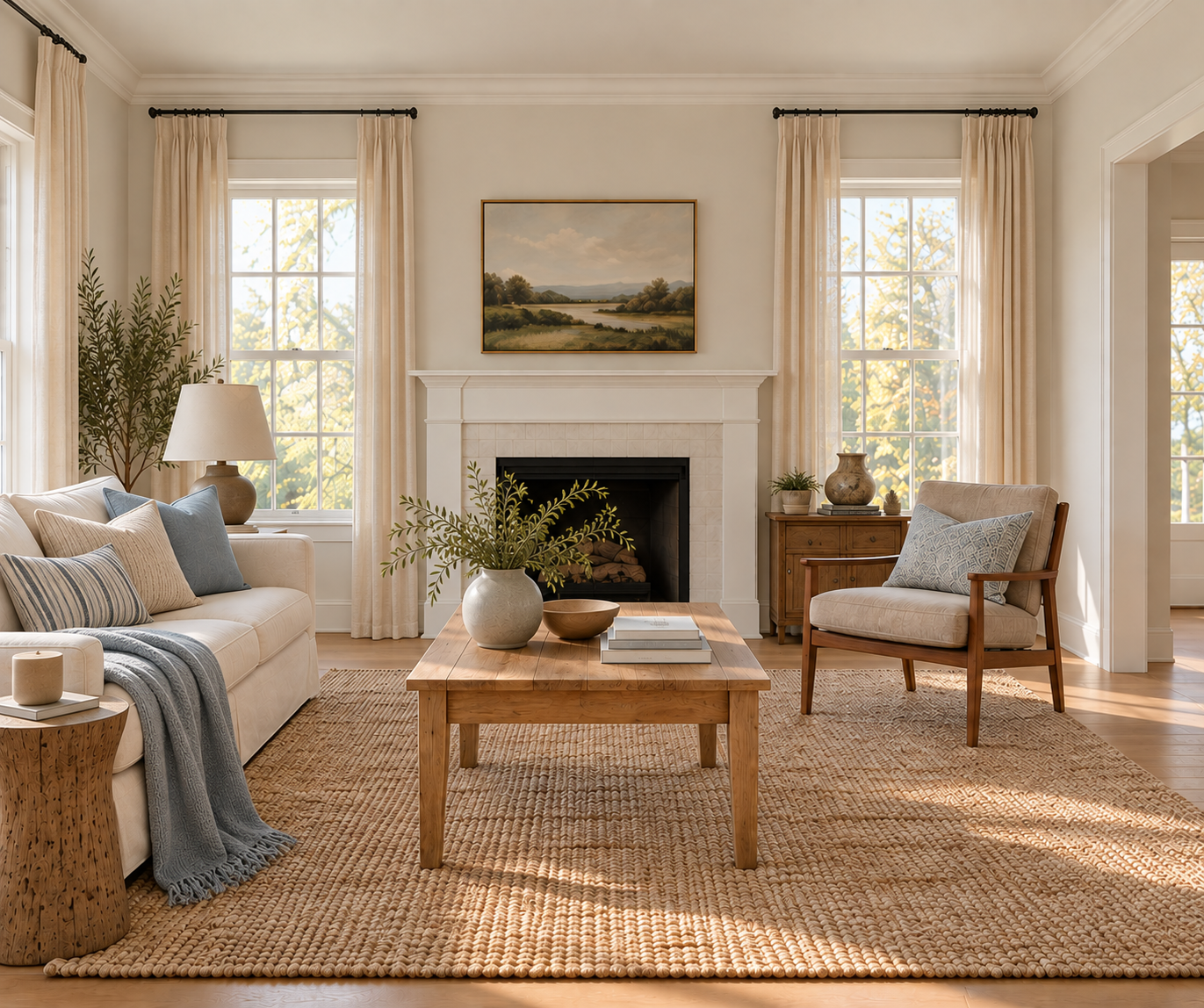
Imagine several pillows in nearly the same warm neutral palette. One is washed linen, another has subtle embroidery, and another features a heavier woven texture. Because their surfaces are different, they create interest without making the room feel overly decorated.
The same principle applies to bedding. Crisp cotton sheets, a soft linen duvet, a quilt, and a casually draped throw can all occupy a similar palette while giving the bed dimension.
You don't need every possible layer. Two or three thoughtfully chosen textiles can do more than a pile of coordinating accessories.
Texture pairing to try: Crisp cotton + washed linen + a chunky woven accent
Step 5: Bring Nature into the Mix
At this point, our room is comfortable and layered, but adding organic materials keeps it from feeling too polished.
Bring in a woven basket, rattan accent, seagrass detail, leafy branch, stone object, or piece of unfinished wood. These materials have natural variations and irregularities that manufactured surfaces often don't.
That's part of their appeal.
A handwoven basket isn't perfectly uniform. Wood grain varies from piece to piece. A branch has an unpredictable shape. These subtle imperfections make a room feel relaxed and lived in.
Natural textures also create an easy connection between indoors and out—one of the reasons they work so well in both coastal and farmhouse homes.
You don't need many. One or two natural elements placed intentionally can change the character of the entire space.
Texture pairing to try: Linen + woven fibers + natural wood
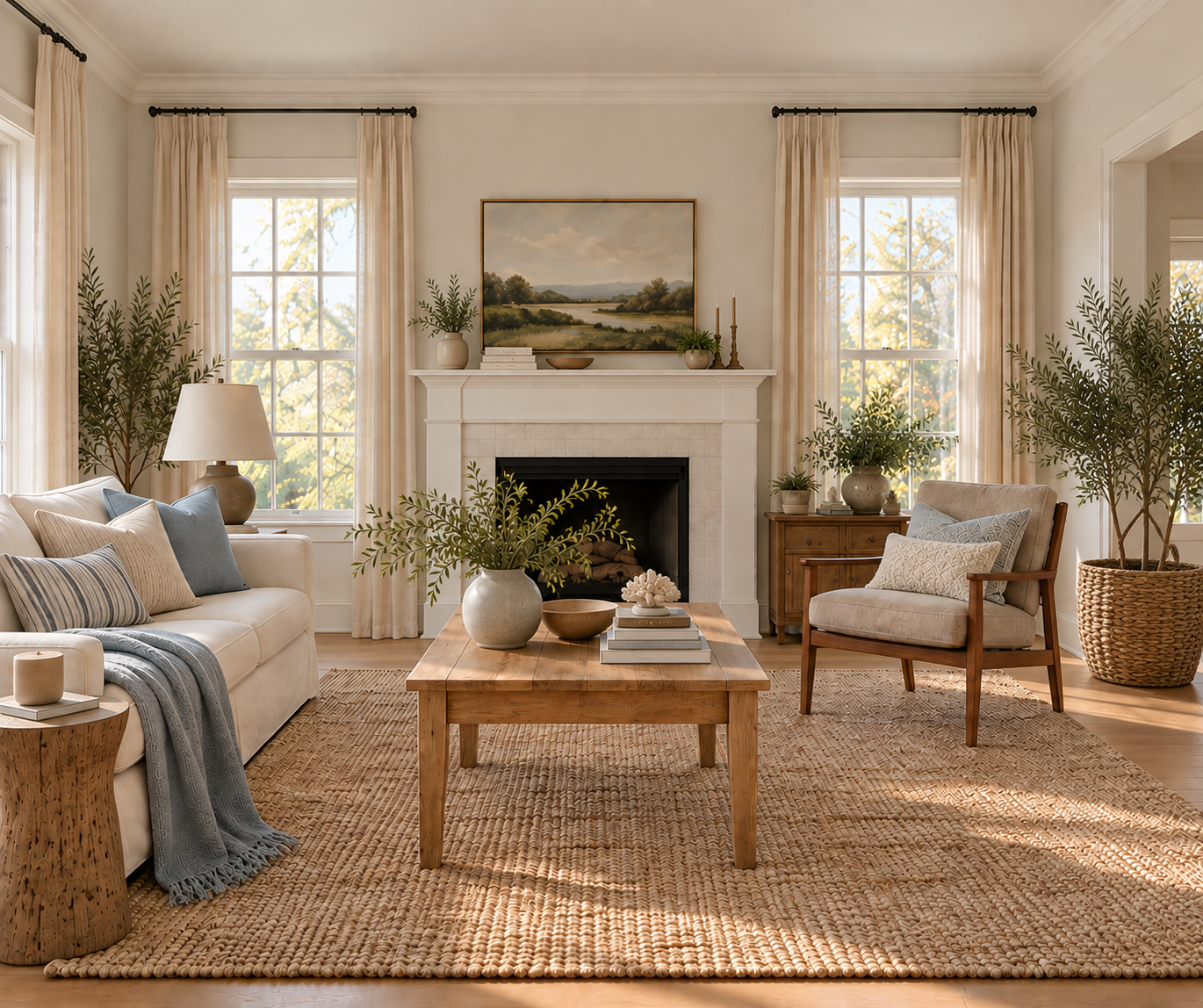
Step 6: Add the Pieces That Make It Feel Collected
Now we reach the difference between a room that is simply decorated and one that feels collected.
Texture doesn't only come from fabrics and furniture. It can come from the objects that tell the story of a home.
A stack of well-loved books. A ceramic lamp with a hand-finished surface. An aged wood frame. A piece of artwork. A vintage bowl. A basket picked up while traveling. These smaller elements introduce texture while giving the room personality.
The key is restraint.
Rather than filling every table and empty corner, choose pieces that add something—whether that's shape, history, material, or meaning. Leave enough space around them to let them stand on their own.
Our once-simple room now feels much richer, yet we haven't relied on bold color or an abundance of décor. The interest comes from layers that appear to have developed naturally over time.
Texture pairing to try: Handmade ceramics + aged wood + favorite books
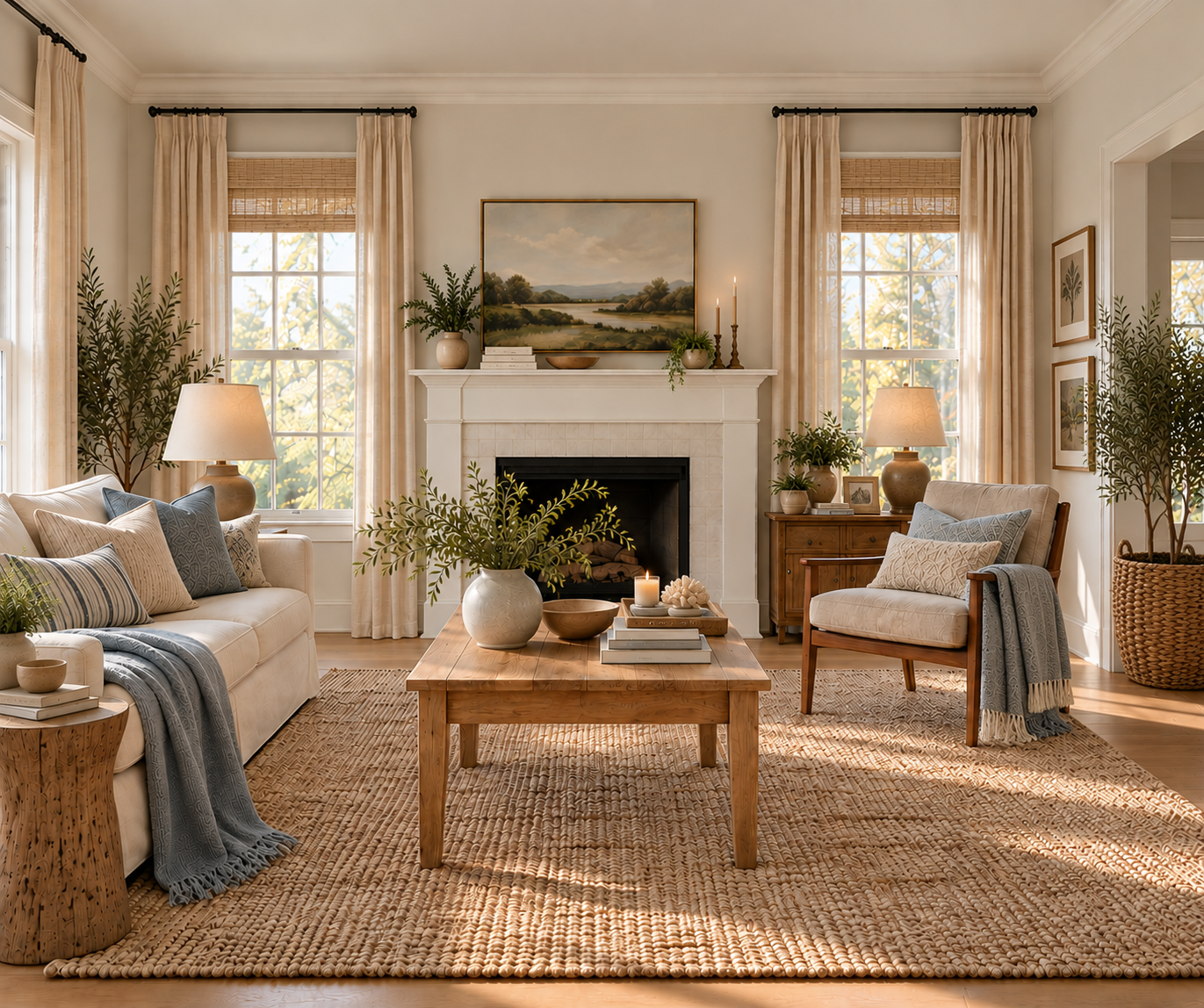
Step 7: Edit the Finished Room
The final step might seem counterintuitive: take something away.
Once you've layered the rug, furniture, textiles, natural elements, and collected objects, look at the room as a whole.
Does every layer contribute something? Are several textures competing for attention? Is there a surface that would feel better with a little breathing room?
A cozy home doesn't have to be a cluttered home.
Removing one pillow, clearing part of a tabletop, or simplifying a group of accessories can allow the textures you've chosen to become more noticeable. Empty space is part of the composition, too.
The goal is a room that feels warm and personal but still relaxed.
Texture pairing to try: Layered materials + a little breathing room
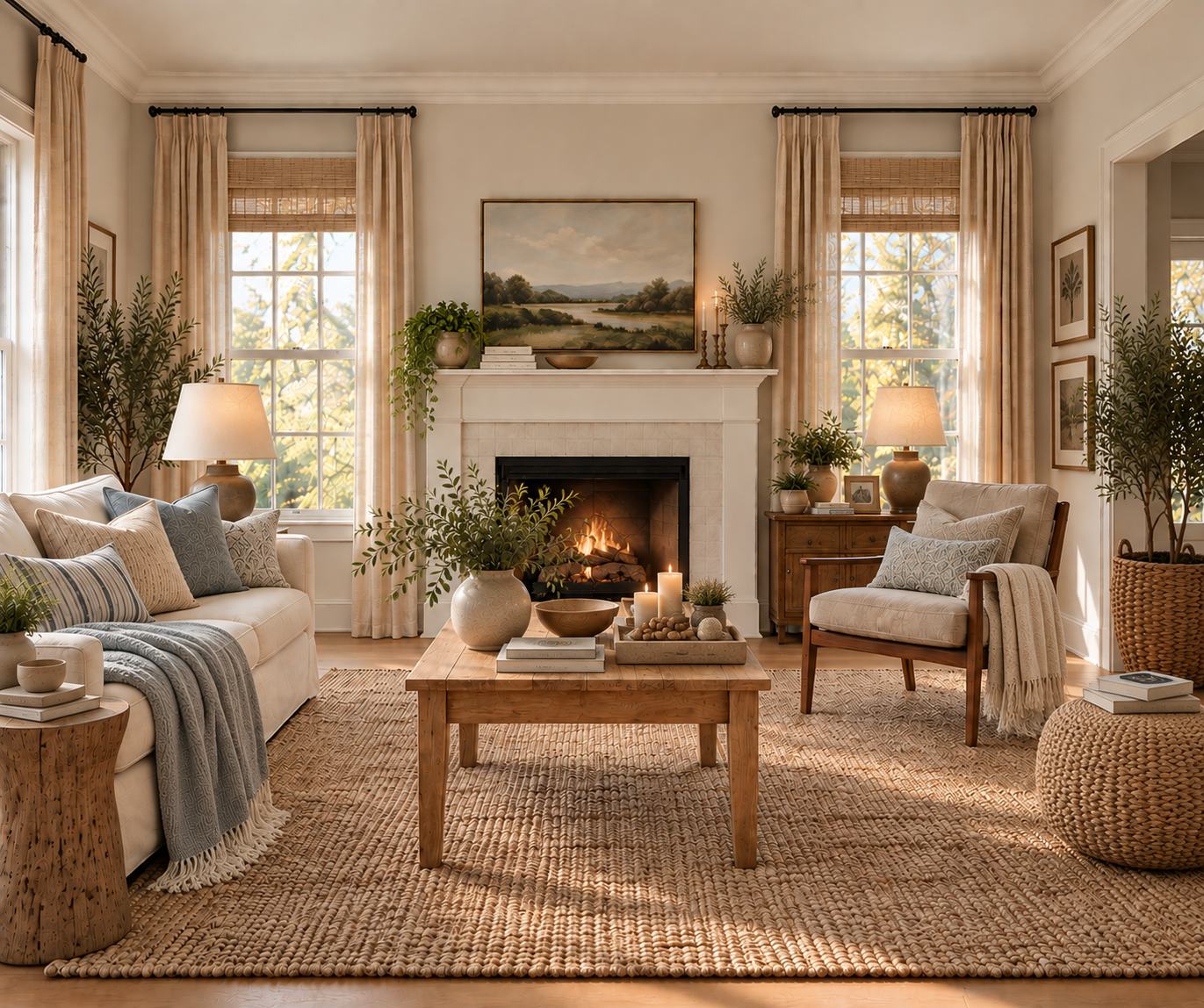
The Most Inviting Rooms Aren't Perfectly Matched
Look back at where our room began.
The foundation hasn't changed. We haven't completely redecorated or introduced a dozen new colors. Instead, we've built the room gradually: grounding it with a rug, mixing furniture finishes, adding soft textiles, bringing in natural materials, and finishing with a few pieces that give it personality.
That's the beauty of learning how to layer textures in your home.
You don't need everything to match, and you don't need to add everything at once. In fact, the most inviting spaces often feel as though they've evolved over time.
Start with what you already have. Add something soft beside something structured. Something woven beside something smooth. Something new beside something with history.
Layer by layer, a simple room becomes something much more personal: a cozy, collected home that feels entirely your own.