
How to Mix & Match Furniture for a Collected, Designer Look
Posted by Ava Johnson on 5th Oct 2026
How to Mix & Match Furniture for a Collected, Designer Look
There’s something effortlessly beautiful about a room that feels as though it came together over time. The furniture coordinates without matching exactly, different finishes and textures sit comfortably alongside one another, and each piece brings its own character while still feeling connected to the whole.
That is the essence of a collected interior—and often what separates a thoughtfully designed room from one that feels like it was purchased as a complete set.
Mixing and matching furniture can feel intimidating, especially in the bedroom, where it’s easy to assume the bed, nightstands, and dresser should all come from the same collection. In reality, some of the most interesting bedrooms are built around pieces that weren't designed to match at all. The key is finding subtle connections through shape, material, finish, scale, and style so the room feels layered rather than mismatched.
Here’s how to create that balance.
1. Begin With an Anchor Piece
Every collected room needs a starting point. Rather than trying to choose an entire furniture set at once, begin with the piece you love most and allow the rest of the room to develop around it. In a bedroom, that piece is often the bed because its size and placement naturally establish the character of the space.
A statement bed with turned posts or architectural detailing might introduce a relaxed coastal or farmhouse influence, while cane adds natural texture and a lighter feeling. A simpler wood bed can create a quieter foundation that allows more detailed pieces elsewhere in the room to stand out.
Once you have your anchor, resist the instinct to search for furniture that mimics it exactly. Instead, think about what would complement it. A highly detailed bed may look best with simpler nightstands, while a more understated bed gives you an opportunity to introduce texture, curves, or interesting drawer fronts at the bedside.
The goal isn't to repeat the design of your anchor piece. It's to build around it.
2. Repeat Something—But Not Everything
One of the easiest ways to make furniture from different collections work together is to create a subtle point of connection. That connection might be a similar wood tone, complementary hardware, a repeated curve, a shared material, or simply a consistent sense of scale.
The important distinction is that you don't need to repeat all of those things at once. In fact, leaving room for contrast is what makes a space feel more naturally collected.
The Collected Coastal Bedroom
Consider the Northshore Bed paired with the Concave Side Chest. The Northshore Bed provides the architectural statement, giving the bedroom plenty of personality on its own. Rather than repeating that detailing at the bedside, the cleaner silhouette of the Concave Nightstand provides a visual counterpoint.
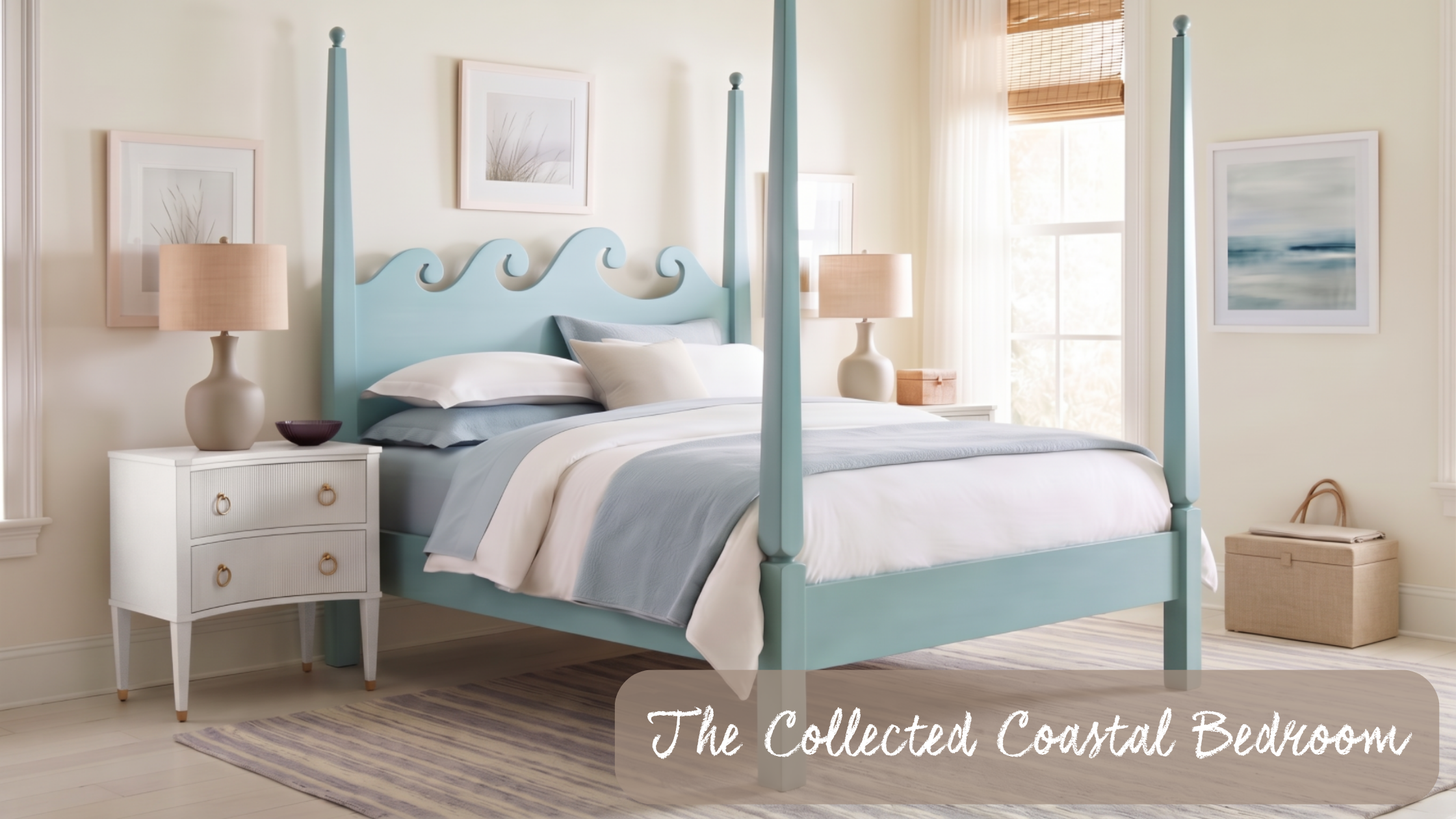
The difference between the pieces is what makes the pairing interesting, while their overall relaxed character keeps them connected. Neither piece competes with the other, and the result feels as though the room was thoughtfully assembled over time rather than selected from a single furniture suite.
Why it works: Contrasting silhouettes · balanced detailing · relaxed coastal character
3. Let Texture Create the Connection
Furniture doesn't always need to share the same shape or finish to feel cohesive. Sometimes texture is enough to create the connection.
Natural wood grain, reeded details, woven materials, cane, linen, and hand-applied finishes all introduce visual depth. When several of these materials appear throughout a room, they begin to create a common language even when the individual furniture pieces are quite different.
This approach works especially well in coastal and cottage interiors, where texture adds warmth and character without making a space feel overly formal or decorated.
The Modern Cottage Bedroom
The Maui Bed paired with the Swedish Reeded 2 Drawer Nightstand demonstrates how texture can bring different pieces together beautifully. Rather than looking for a nightstand that feels like an extension of the bed, the Swedish Reeded Chest introduces another layer of detail and gives the bedside area a personality of its own.
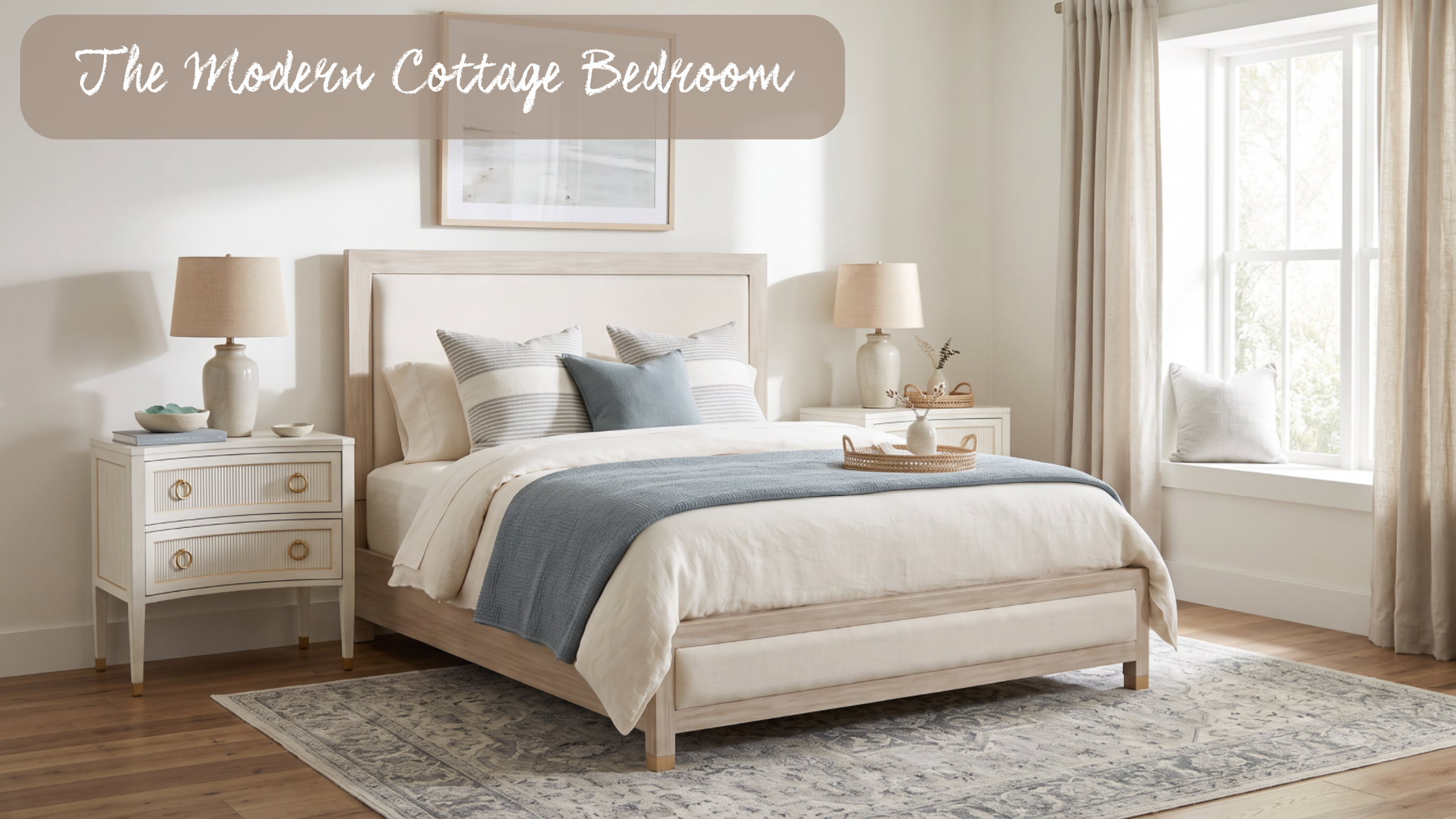
The pieces complement one another because they share the same relaxed sensibility, not because their details are identical. Adding washed linen bedding, a softly patterned rug, ceramic lamps, or a few woven accents would continue that story, creating a room with depth while allowing the furniture to remain distinct.
Why it works: Layered texture · distinct personalities · shared cottage sensibility
4. Mix Furniture Styles Within the Same Mood
Mixing furniture styles doesn't mean every piece in the room needs to represent a completely different aesthetic. The most successful collected interiors usually share an overall mood, even when individual pieces draw from different design traditions.
A coastal bedroom, for example, might include a cottage-inspired bed, a more streamlined nightstand, and a traditional dresser. On paper, those pieces may belong to different style categories, but together they can feel completely natural if they share the same relaxed, approachable character.
Instead of getting too caught up in labels such as coastal, farmhouse, cottage, or traditional, consider how the pieces feel together. Look at their proportions, materials, level of detail, and overall formality. A room can comfortably combine several influences when those elements feel balanced.
This is also what gives a collected home longevity. Rather than committing the entire room to one narrowly defined style, you're creating a foundation that can evolve as your tastes change and new pieces are added.
5. Don't Be Afraid to Combine Different Materials
A room becomes much more interesting when every surface isn't the same. Natural wood can sit beside a painted finish, cane can be paired with solid wood, and smooth surfaces can be balanced with ribbed, woven, or reeded textures.
The goal is not to introduce as many materials as possible, but to create enough contrast that each piece has its own presence.
The Coastal Farmhouse Bedroom
The Isabella Cane Bed Luxe paired with the Ribbed Nightstand is a good example of how this works. Cane gives the Isabella Bed an airy, textural quality, while the dimensional surface of the Ribbed Nightstand brings a more structured detail to the bedside. The textures are noticeably different, yet both have an organic quality that allows them to sit naturally together.
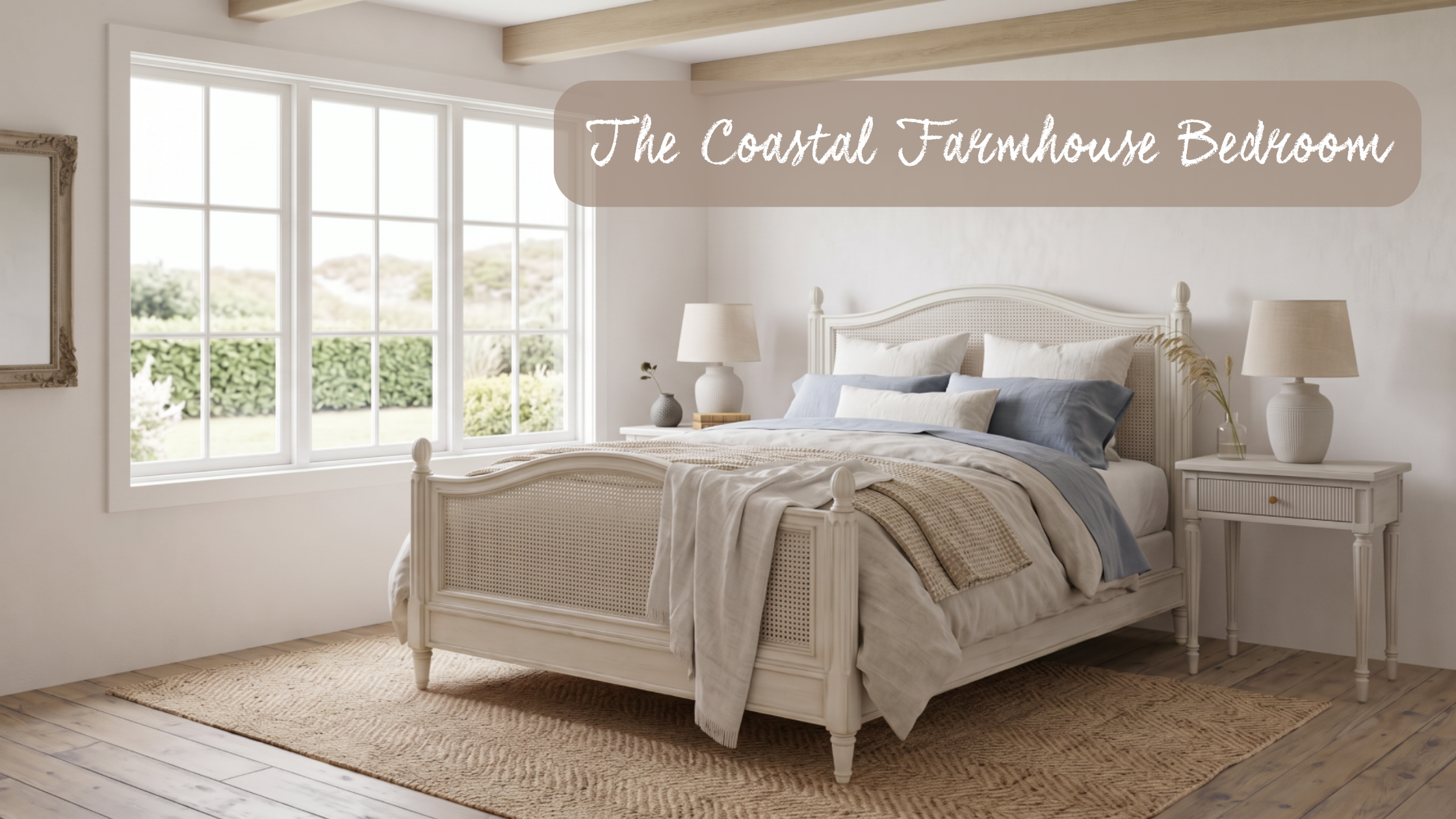
Repeating the cane on the nightstand would make the combination more predictable. Introducing a second texture instead gives the room greater depth while preserving the relaxed coastal-meets-farmhouse character.
Because the furniture already provides plenty of visual interest, the surrounding elements can remain relatively quiet. Simple bedding, understated lamps, and a natural rug would give the room softness without competing with the bed and nightstands.
Why it works: Mixed natural textures · complementary visual weight · coastal-meets-farmhouse character
6. Pay Attention to Scale and Proportion
Even beautifully designed furniture can feel wrong together when the proportions aren't balanced, which is particularly important when pairing beds and nightstands.
A substantial bed generally needs bedside furniture with enough visual weight to hold its own, while an airy or understated bed can easily be overwhelmed by nightstands that are too large or heavy. Height matters as well. Ideally, the usable surface of your nightstand should feel comfortable in relation to the top of your mattress rather than noticeably towering above or disappearing below it.
You don't need to rely on a precise formula. Instead, step back and look at the furniture as a composition of shapes. If one piece dominates everything around it or one side of the room feels noticeably heavier, adjusting the scale of a single piece can often restore the balance.
This is one reason mixing collections can work so well. You're able to choose each piece based on what the room actually needs rather than being limited to the proportions offered within a matching set.
7. Create Subtle Connections Throughout the Room
The difference between a collected room and a mismatched one often comes down to repetition. Too much repetition creates the feeling of a matching furniture set, while too much variety can make the room feel disconnected.
A good middle ground is to identify two or three ideas that can quietly appear throughout the space. Natural wood from the bed might reappear in picture frames or a bench. A curved detail on the nightstand could be echoed in a lamp or mirror. Cane in a headboard might relate to the texture of a woven basket or natural fiber rug.
These connections don't need to be obvious. In fact, the most successful rooms often use them so subtly that you notice the overall sense of harmony before you recognize exactly why everything works together.
The same restraint should apply when adding the finishing touches. Once a room has enough texture, shape, and personality, it doesn't need another decorative element simply to fill the space. Sometimes knowing when to stop is just as important as knowing what to add.
The Formula for a Collected Room
The best collected interiors aren't created by following a matching formula; they're created through balance. Begin with one piece you truly love and allow it to establish the personality of the room, then choose furniture that complements rather than copies it. Mix silhouettes, introduce texture, vary your materials, and pay attention to proportion while repeating just enough to make everything feel connected.
Most importantly, give yourself permission to choose pieces from different collections. Your bed and nightstands don't need to match, your dresser doesn't need to repeat the same detailing, and every wood finish doesn't need to be identical. A little variation is often what makes a room feel more personal.
When every piece contributes something slightly different while still sharing a common thread, the result feels layered, thoughtful, and timeless. That's the beauty of a collected home: it doesn't look like it was purchased all at once. It feels as though it has evolved naturally, one beautiful piece at a time.