

How to Use Warm Neutrals in Your Home: Paint, Wood & Decor Ideas
Posted by Ava Johnson on 22nd Aug 2024
How to Use Warm Neutrals in Your Home: Paint, Wood & Decor Ideas
Warm neutrals have become one of the most timeless ways to create a home that feels welcoming, comfortable, and effortlessly beautiful. Unlike cooler grays or stark whites, warm neutrals add softness and depth while allowing natural materials and thoughtful textures to shine.
Whether your style leans coastal, cottage, modern farmhouse, or traditional, a warm neutral palette creates a versatile backdrop that never feels dated. By thoughtfully layering paint colors, wood finishes, textiles, and natural elements, you can create spaces that feel relaxed, inviting, and full of character.
Here's how to bring warm neutrals into your home in a way that feels timeless rather than trendy.
Begin with Warm Neutral Paint Colors
Every beautifully layered room starts with the right backdrop. Warm neutral paint colors instantly make a space feel brighter, softer, and more inviting while allowing your furniture and décor to become the focal point.
Instead of choosing cool whites or gray-heavy neutrals, look for shades with creamy, beige, or soft greige undertones. These colors reflect natural light beautifully while creating a sense of warmth throughout the day.
Some of our favorite warm neutral color families include:
- Creamy white
- Soft ivory
- Warm greige
- Sandy beige
- Light taupe
- Pale linen
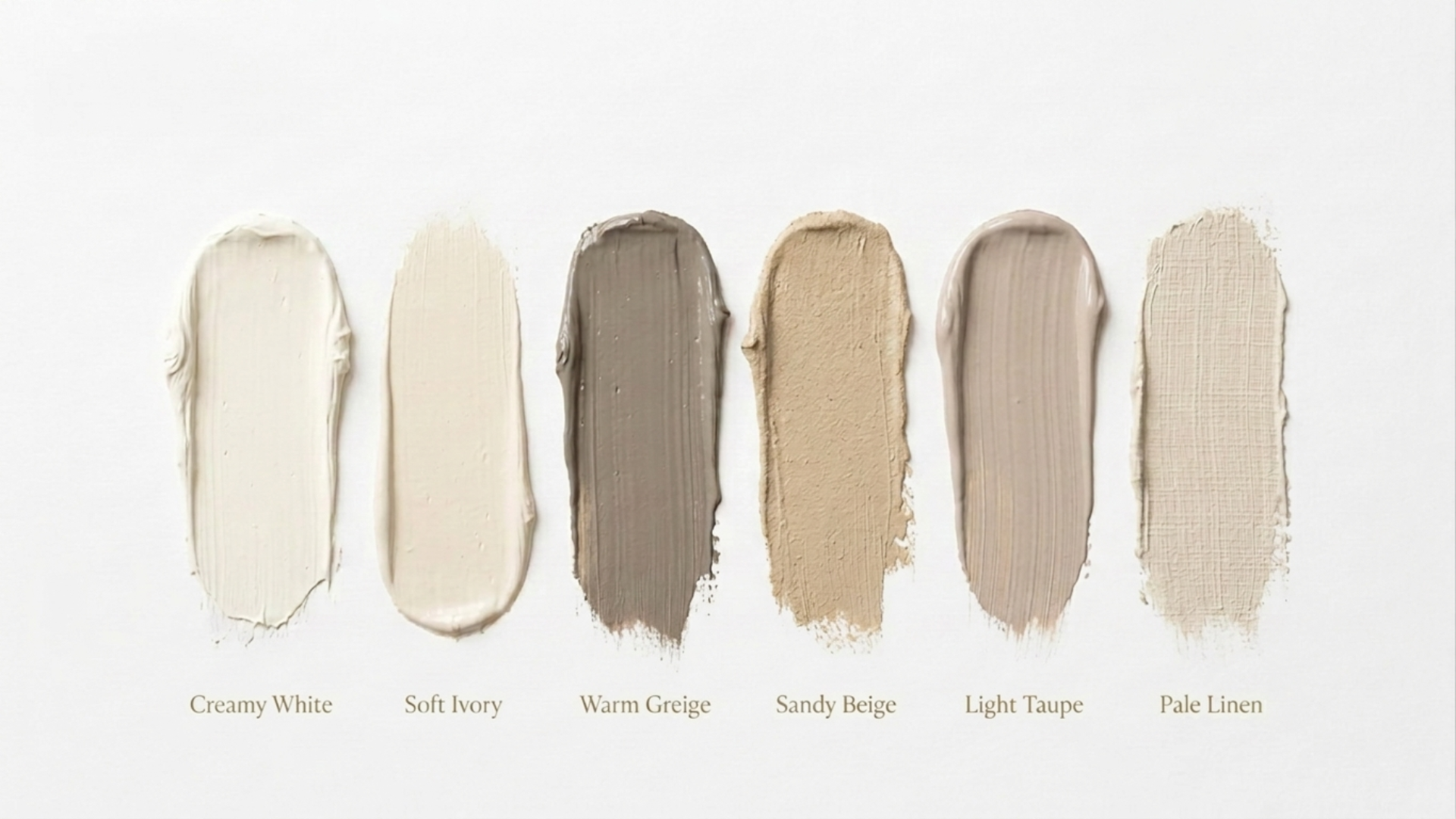
These shades create a foundation that pairs beautifully with natural materials and works in virtually every room of the home.
Pair Warm Paint with Natural Wood Finishes
One of the easiest ways to make a neutral room feel rich and layered is by incorporating solid wood furniture. Natural wood introduces warmth, texture, and character that painted finishes simply can't replicate.
Rather than trying to match every wood tone perfectly, choose finishes that complement one another. White oak feels fresh against creamy white walls, while medium walnut adds warmth to soft ivory and greige spaces. Weathered oak, reclaimed wood, and lightly distressed finishes all bring depth without overwhelming the room.
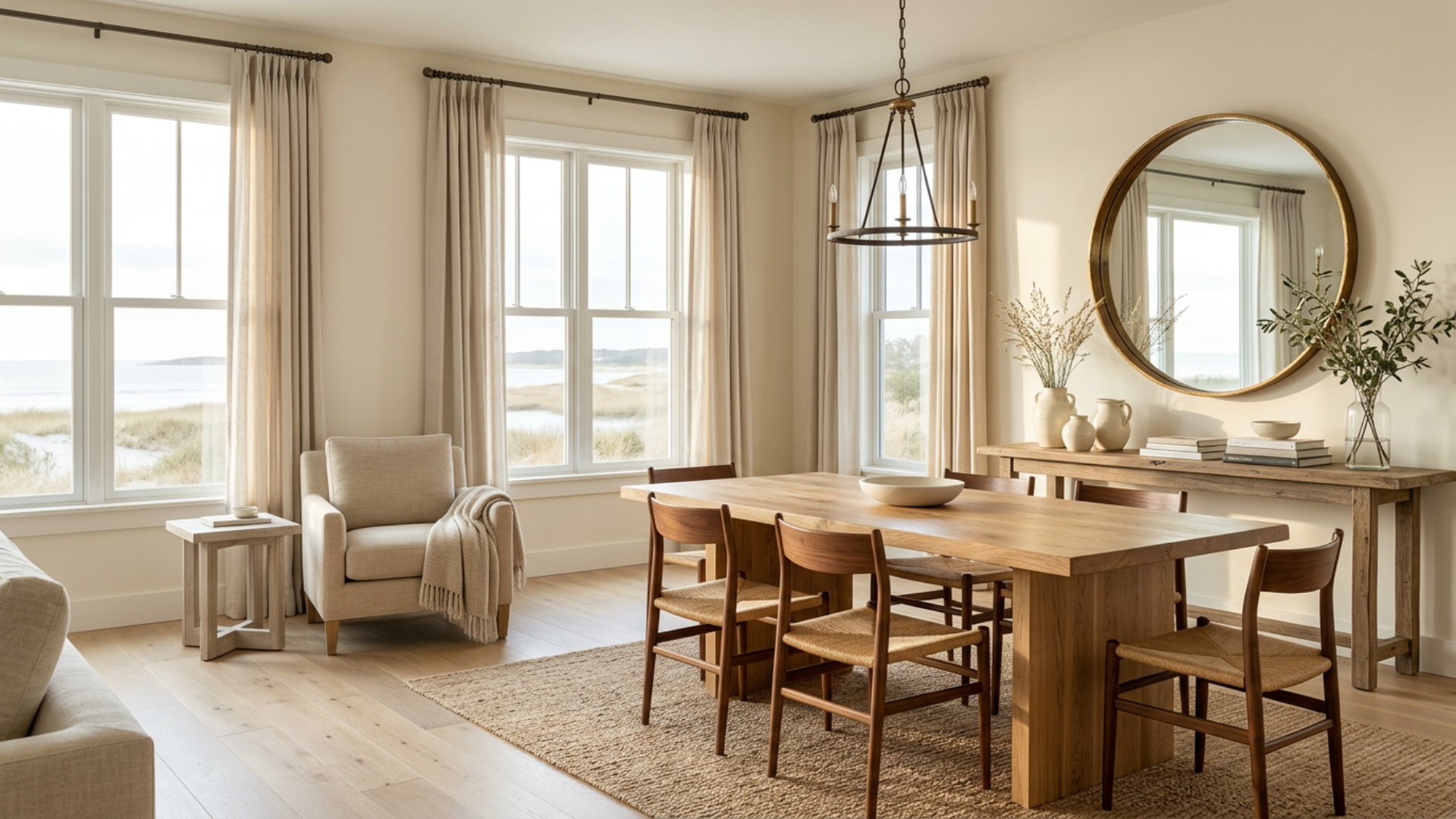
This layered approach is especially effective in coastal and cottage-inspired interiors, where the beauty of natural materials is meant to take center stage. A thoughtfully crafted wood dining table, bed, or console instantly grounds a room while adding timeless appeal.
Layer Multiple Shades of Neutral
One of the biggest misconceptions about decorating with neutrals is that everything needs to match. In reality, the most beautiful interiors combine several shades of warm white, beige, taupe, and natural wood to create subtle contrast.
Imagine an ivory sofa paired with oatmeal linen curtains, a woven jute rug, warm oak furniture, cream pillows, and a soft knit throw. None of these elements are exactly the same color, yet together they create a space that feels collected, comfortable, and effortlessly elegant.
The goal isn't to create contrast through bold color—it's to create interest through thoughtful layering.
Let Texture Do the Heavy Lifting
When your color palette is intentionally restrained, texture becomes one of the most important design elements. Layering natural materials adds visual interest while maintaining the calm, relaxed feeling that warm neutrals are known for.
Consider incorporating:
- Linen bedding and curtains
- Jute or sisal rugs
- Woven baskets
- Cane and rattan furniture
- Ceramic pottery
- Cotton throws and textured pillows
- Natural stone accents
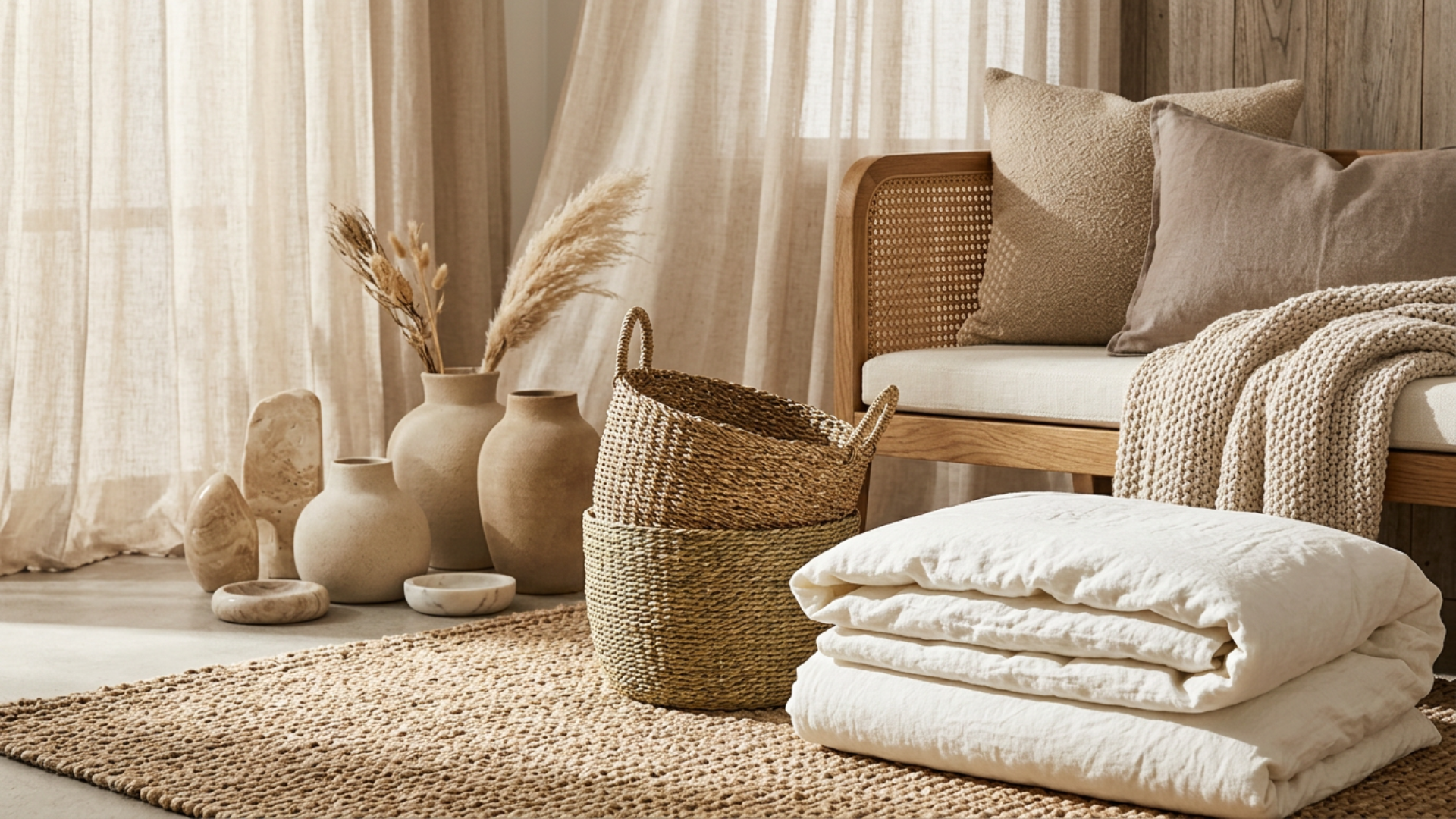
These organic materials give every room warmth and personality while reinforcing the relaxed aesthetic that makes neutral homes feel so inviting.
Bring Warm Neutrals into Every Room
One of the greatest strengths of warm neutrals is their versatility. Because the palette is understated, it transitions effortlessly from room to room, creating a home that feels cohesive without looking repetitive.
In the living room, start with comfortable upholstered seating in soft ivory or oatmeal, then layer in natural wood tables, woven baskets, textured pillows, and a natural fiber rug. The combination feels welcoming without appearing overly styled.
Bedrooms benefit from the same layered approach. Pair solid wood furniture with crisp white bedding, linen quilts, and soft neutral throws to create a retreat that feels peaceful and restorative. Warm bedside lighting and natural textures complete the look.
Dining rooms are equally well suited to warm neutrals. A beautifully crafted wood dining table paired with upholstered chairs, woven lighting, and simple ceramic accessories creates a setting that's equally appropriate for everyday meals and special gatherings.
Even a home office can benefit from a softer palette. Natural wood furniture, woven storage, neutral artwork, and warm lighting help create a workspace that feels calm, organized, and inspiring.
Add Color Through Nature
A neutral home doesn't have to feel colorless. Instead of introducing bold accent colors, look to nature for subtle variation.
Fresh greenery, olive branches, dried grasses, driftwood, and handmade pottery all add life and personality while maintaining the quiet elegance of a warm neutral palette. These organic accents create seasonal interest without requiring major decorating changes throughout the year.
Don't Overlook Lighting
Lighting has a remarkable impact on how warm neutrals appear. Natural daylight highlights creamy paint colors and showcases the grain of solid wood furniture, while warm lighting in the evening creates a cozy atmosphere that makes every room feel inviting.
Choosing lighting made from natural materials—such as woven fibers, wood, ceramic, or aged brass—further reinforces the layered look. These finishes complement warm neutrals beautifully while adding another subtle layer of texture.
Common Mistakes to Avoid
Decorating with warm neutrals is wonderfully forgiving, but a few simple guidelines will help your home feel balanced and cohesive.
- Avoid mixing warm and cool undertones within the same space.
- Layer several neutral shades instead of relying on a single beige or white.
- Add texture through natural materials rather than introducing unnecessary colors.
- Test paint colors in different lighting before making a final decision.
- Allow natural wood finishes to provide warmth and visual contrast.
Keeping these principles in mind helps create spaces that feel intentionally designed rather than overly coordinated.
Timeless Style That Never Feels Trendy
Warm neutrals have remained a favorite among designers because they create homes that feel both sophisticated and comfortable. Rather than chasing color trends, they provide a timeless foundation that allows quality furniture, beautiful craftsmanship, and meaningful décor to stand out.
Whether you're refreshing a single room or redesigning your entire home, combining warm neutral paint colors with natural wood finishes, layered textiles, and organic materials creates spaces that feel welcoming every day of the year.
At Cottage & Bungalow, we believe beautiful homes are built with timeless materials and thoughtful layers. Explore our collection of solid wood furniture, natural fiber rugs, lighting, and home décor to create a warm, inviting home you'll enjoy for years to come.