
California Dreaming: How to Bring Relaxed West Coast Style into Your Home
Posted by Ava Johnson on 9th Nov 2026
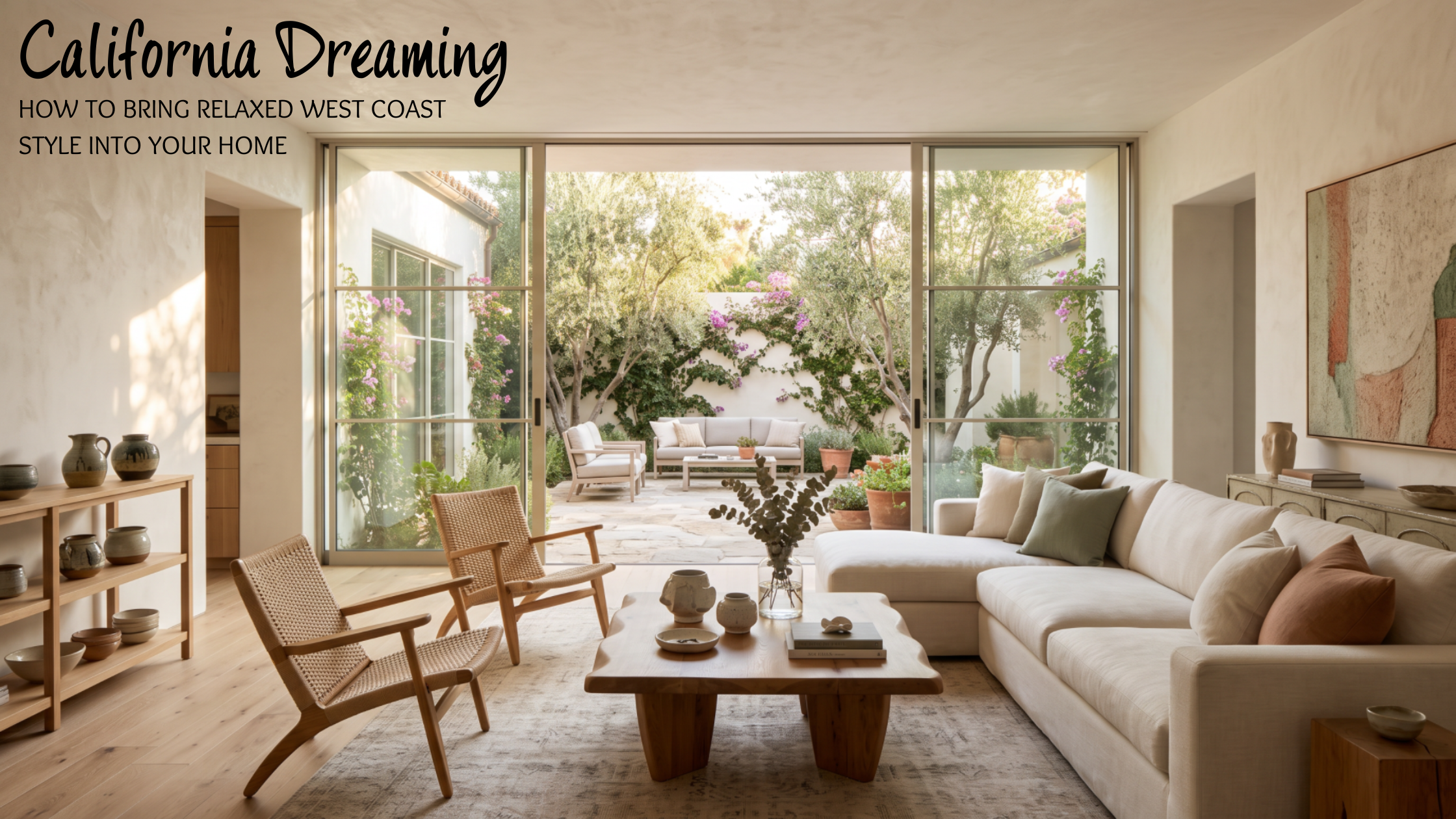
There's something undeniably appealing about the way Californians live. Perhaps it's the sunlight streaming through oversized windows, the effortless connection between indoor and outdoor spaces, or the way a beautifully weathered piece of furniture can feel just as at home beside a modern sofa as it does in a rustic farmhouse. California interiors have a certain ease about them—sophisticated without being formal, thoughtfully designed without appearing overly decorated.
What makes California style particularly interesting is that it isn't defined by a single aesthetic. Along the coast, Malibu homes embrace breezy simplicity and understated luxury. Farther south, Santa Barbara interiors reflect Spanish influences, earthy materials, and architectural character. Inland, Napa Valley offers its own interpretation of relaxed elegance, where rustic craftsmanship meets contemporary living.
While each region has a distinctive personality, they share a common philosophy: a beautiful home should feel natural, comfortable, and deeply personal. And it's a design approach that translates beautifully to homes far beyond California.
Malibu: The Art of Effortless Coastal Living
Imagine a living room where afternoon sunlight falls across pale oak floors, linen curtains move gently in the breeze, and comfortable seating invites you to settle in with a book. The ocean might be just beyond the windows, but the room doesn't need seashells, anchors, or nautical stripes to announce its coastal location.
This is the essence of Malibu style. It's coastal decorating at its most understated, where light, texture, proportion, and natural materials take center stage.
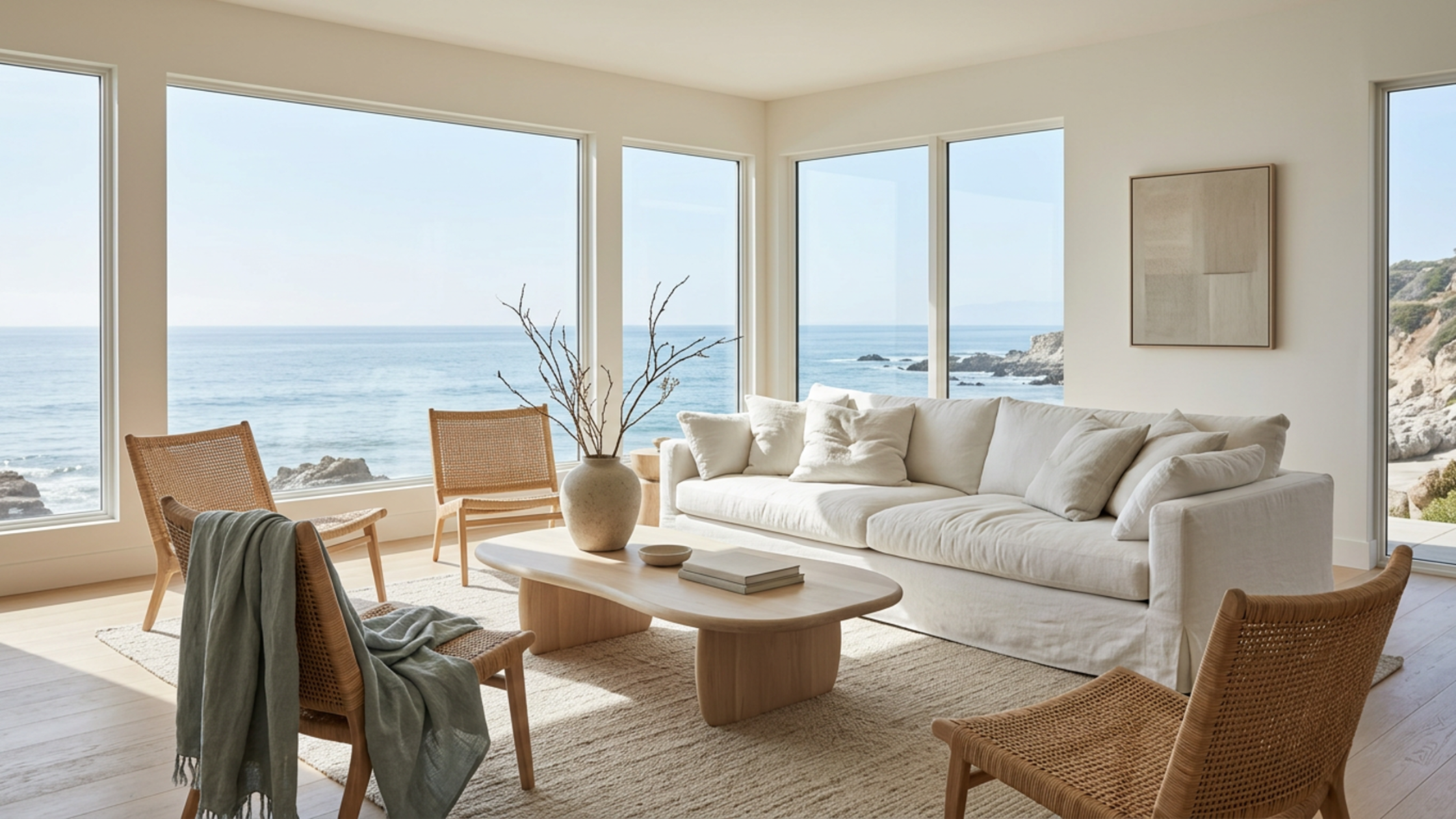
The palette is soft and sun-washed, drawing inspiration from sandy beaches, weathered driftwood, and the changing colors of the Pacific. Warm whites and creamy ivories form the foundation, layered with pale woods, sandy taupes, and occasional touches of faded blue or sage. Rather than relying on bold patterns, Malibu interiors let subtle variations in tone create interest.
Choosing the right white is particularly important. A crisp, cool white can feel stark alongside natural materials, while a warmer shade brings softness and depth. Paired with the gentle grain of oak or woven cane, these neutrals create a space that feels inviting rather than minimalist. Our guide to warm neutrals and wood finishes explores how these combinations can transform a room.
Furniture follows the same relaxed philosophy. Sofas are generous and comfortable, upholstered in linen or soft cotton. Coffee tables feature substantial wood or organic shapes, while woven accent chairs and natural fiber rugs add texture without overwhelming the space.
What makes Malibu interiors so appealing is their restraint. Rather than filling every corner, they allow beautiful materials and carefully chosen furniture to speak for themselves. A sculptural wooden table, an oversized ceramic vessel, or a single piece of artwork can provide all the visual interest a room needs.
The result is a home that feels open and peaceful, but never empty—a place where comfort and elegance exist effortlessly together.
Santa Barbara: Where Coastal Beauty Meets Old-World Charm
Travel south along the California coastline, and the aesthetic begins to shift. In Santa Barbara, the light and openness of coastal living remain, but interiors take on a warmer, more layered personality. Spanish Colonial architecture, Mediterranean influences, and handcrafted materials give these homes a distinctive sense of history.
Picture creamy plaster walls, exposed wooden beams, arched doorways, and terracotta floors softened by vintage rugs. A substantial dining table might sit beneath a contemporary light fixture, while a traditional cabinet shares the room with clean-lined upholstered seating. There's a wonderful balance between old and new, rustic and refined.
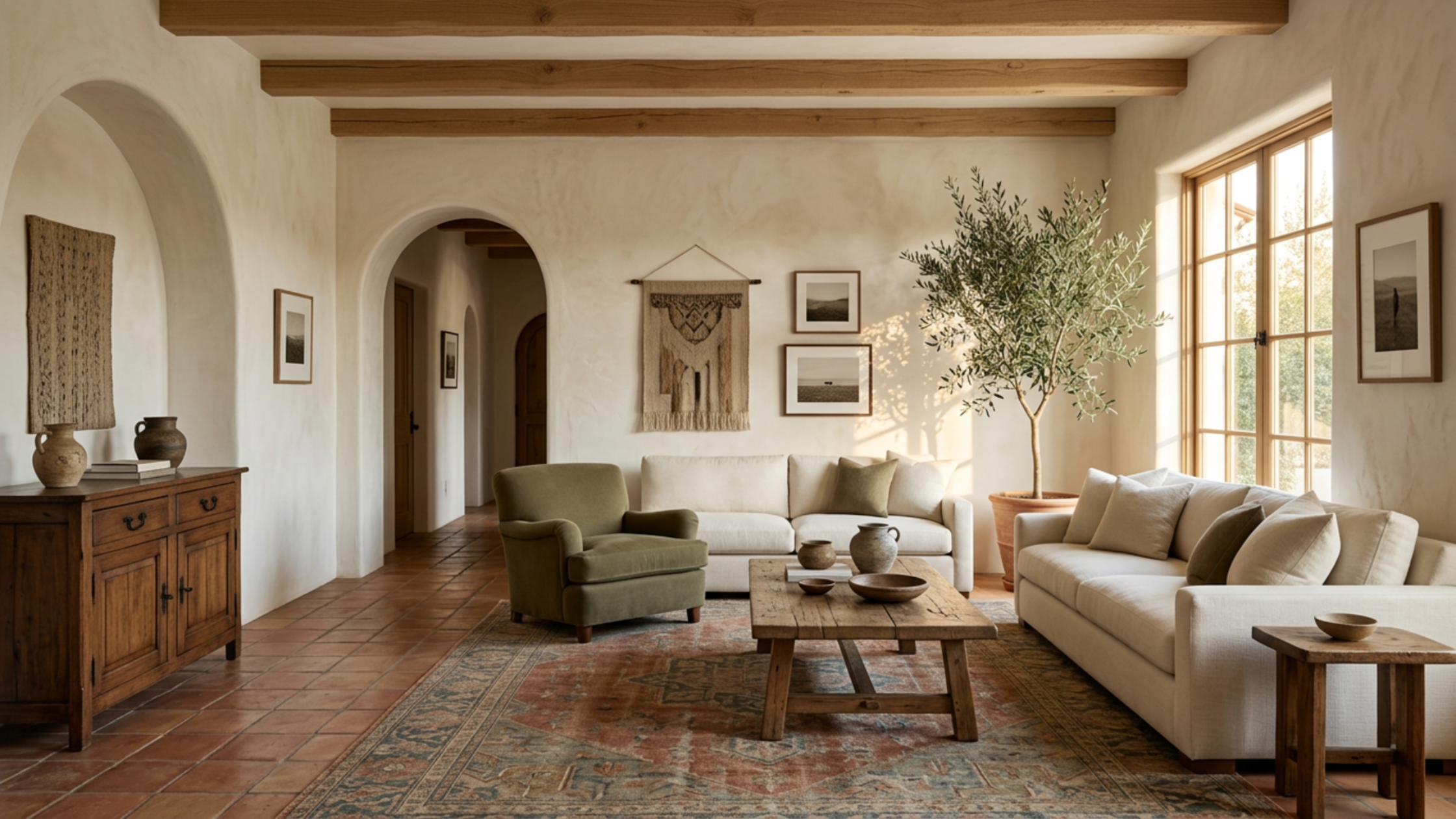
Color plays a more expressive role here than in Malibu. While warm whites and sandy neutrals still provide a foundation, the palette expands to include olive green, terracotta, muted rust, dusty blue, and richly aged wood. These colors emerge naturally through pottery, textiles, furniture finishes, and architectural details rather than feeling overly coordinated.
A faded rug might introduce rust and blue beneath a wooden coffee table. An olive-green accent chair could bring softness to creamy walls, while handmade ceramics add earthy character to a simple console. The effect is warm and inviting, with just enough color to create depth and personality.
Perhaps the most defining characteristic of Santa Barbara style is its appreciation for furniture that feels collected rather than matched. An antique-inspired chest can sit comfortably beside a modern upholstered bed, while a rustic dining table might be surrounded by contemporary chairs.
This approach works because the pieces share something beyond their individual styles—perhaps warmth in their wood tones, craftsmanship, or complementary proportions. The goal isn't to make everything match, but to create harmony through thoughtful contrast, a philosophy we explore in our guide to mixing furniture collections for a collected, designer look.
Santa Barbara style is particularly appealing for anyone who loves coastal living but wants a home with more warmth, color, and personality. It captures California's relaxed spirit while celebrating traditional craftsmanship and pieces that tell a story.
Napa Valley: Rustic Sophistication with a Collected Soul
Beyond California's coastline, the rolling vineyards and countryside of Napa Valley inspire a different kind of interior. Here, the emphasis shifts from breezy coastal simplicity to rustic sophistication, where natural materials, generous proportions, and hospitality define the home.
Napa Valley interiors draw from traditional farmhouse architecture, but the interpretation is more refined than the familiar rustic farmhouse aesthetic. Think wide-plank wood floors, substantial dining tables, comfortable linen seating, understated lighting, and vintage-inspired furniture balanced by contemporary details.
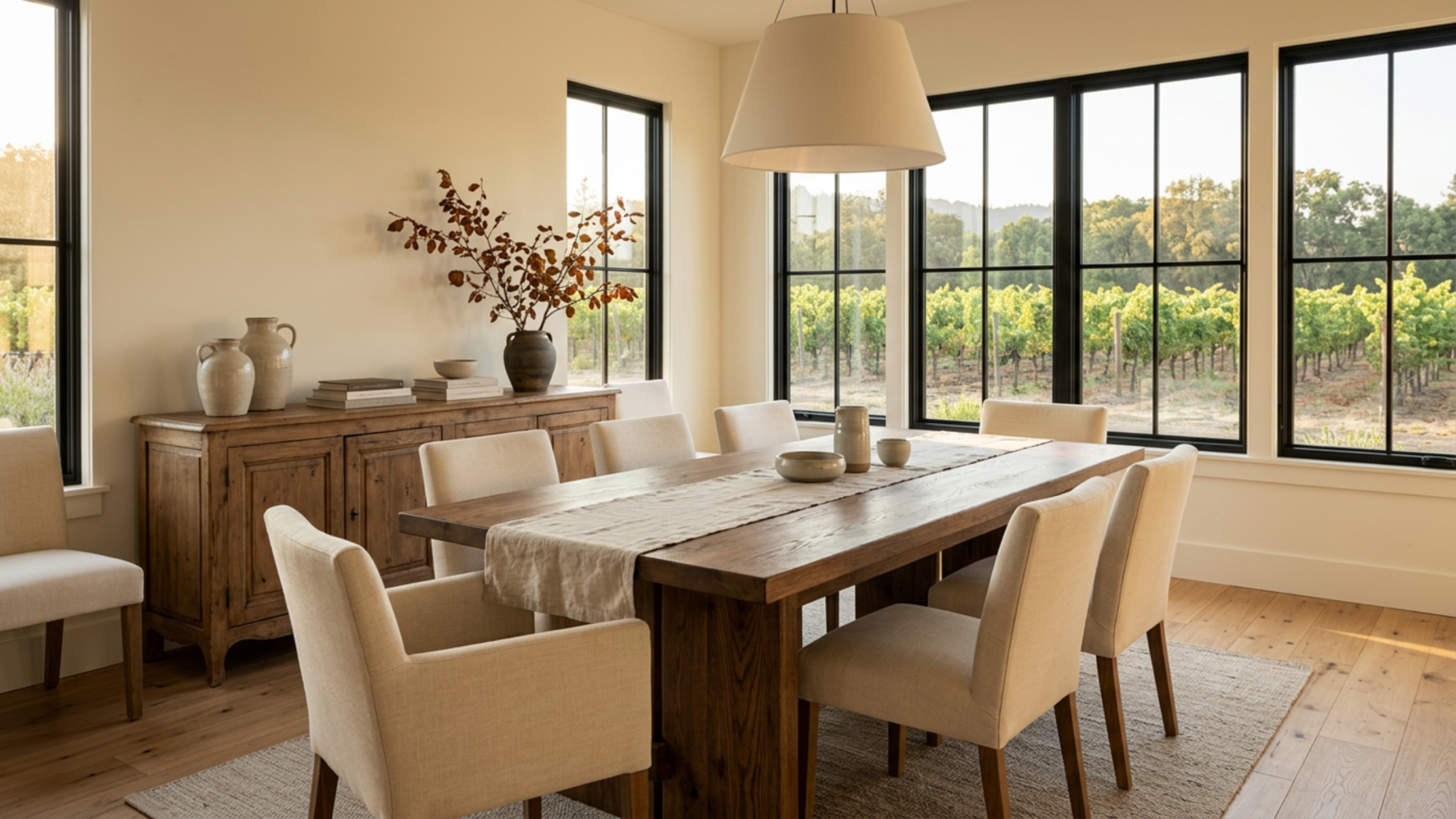
These are spaces designed as much for gathering as they are for admiring.
A Napa-inspired dining room might center around a beautifully grained wooden table, softened by upholstered chairs and a simple linen runner. Rather than an elaborate centerpiece, ceramic vessels filled with branches or seasonal greenery bring an unfussy elegance to the setting. Nearby, a vintage-inspired buffet provides practical storage and a place to display favorite objects.
Wood plays an especially important role. While Malibu favors lighter, sun-bleached finishes, Napa Valley embraces a broader range of tones, from warm oak and reclaimed timber to deeper walnut and richly aged browns.
The key is balance. Dark wood furniture adds depth, particularly when surrounded by light walls, soft upholstery, and natural textures. A substantial dining table feels less formal when paired with linen-covered chairs, a woven rug, and simple contemporary lighting.
Texture brings another layer of richness. Linen, wool, jute, woven cane, aged wood, and handmade pottery create rooms that feel comfortable and lived in. A wool throw over a linen sofa or a natural fiber rug beneath a wooden coffee table introduces subtle variation without making the space busy. Our guide to layering textures for a cozy, collected home explores this approach in more detail.
What makes Napa Valley style especially enduring is its emphasis on hospitality. Furniture is chosen not simply for appearance, but for the way it supports everyday life. Dining tables invite long conversations, living rooms encourage people to linger, and bedrooms feel like peaceful retreats.
The California Connection: Bringing the Look Home
At first glance, a breezy Malibu beach house, an earthy Santa Barbara retreat, and a rustic Napa Valley farmhouse might seem like very different interiors. Yet they share a common appreciation for natural materials, comfortable furniture, and spaces that feel personal rather than perfectly coordinated.
Their color palettes take inspiration from the landscape, whether that's Malibu's pale sand and ocean blues, Santa Barbara's terracotta and olive tones, or Napa Valley's warm woods and earthy neutrals. All three embrace the beauty of mixing old and new, allowing furniture with character to coexist with contemporary silhouettes.
And perhaps most importantly, these homes are designed to be lived in. Comfort isn't an afterthought, and beauty doesn't require formality.
The wonderful thing about California-inspired decorating is that you don't have to choose just one regional style. You might love Malibu's airy palette but prefer Santa Barbara's earthy accents, or pair Napa Valley's substantial wooden furniture with the relaxed linen upholstery of a coastal home.
Start with the atmosphere you want to create. Choose natural materials, furniture you genuinely love, and colors that make you feel comfortable. Allow different styles to mingle, leave room for pieces collected over time, and resist the temptation to make everything too perfectly coordinated.
Because California style, at its heart, isn't really about geography. It's about creating a home that feels open, welcoming, and effortlessly beautiful—a place where thoughtful design and everyday living come together naturally.
Ready to bring a little West Coast charm into your own home? Explore the timeless textures, natural finishes, and relaxed elegance of our coastal furniture collection.